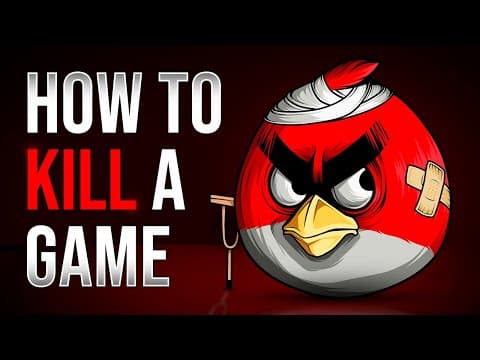
Why Rovio Removed Angry Birds Games From App Stores
Key Takeaways
- •Rovio removed beloved classic Angry Birds games from digital storefronts claiming maintenance costs, then re-released a paid 'classic' version under a renamed title — a move fans widely interpreted as deliberate audience funneling toward monetized titles.
- •Angry Birds 2 became Rovio's highest-earning game despite being its most criticized, built on aggressive microtransactions that alienated the original playerbase who built the franchise's cultural footprint.
- •Rovio's sale to SEGA followed years of layoffs, declining player sentiment, and a brand reputation damaged enough that even a successful animated film couldn't patch the underlying trust deficit with its own fans.
The Disappearing Act Nobody Asked For
At some point between 2019 and 2021, Rovio quietly pulled a string of classic Angry Birds titles from the App Store and Google Play. Not one game. Several. Angry Birds Classic, Angry Birds Seasons, titles that millions of people had paid for or grown up with, just gone. The official line from Rovio was that keeping older games updated and compatible with modern operating systems had become too costly. That's a real problem game companies face. It's also exactly the kind of explanation that sounds reasonable until you look at what happened next. The timing alone raises questions a press release can't answer.
What Maintenance Actually Looked Like
Rovio didn't just delist the games and move on. They released a version called Angry Birds Reloaded, and later re-introduced something marketed as a classic experience — for a fee. The original games were free or had been purchased already. The replacement was not. SunnyV2 points out that Rovio also reportedly changed the name of the classic re-release to reduce its search visibility on app stores, which is not something a company does when it's trying to preserve legacy content out of goodwill. That's the kind of detail that turns a corporate decision into a pattern. It's hard to call it maintenance when the solution costs the user more money than the original ever did.
The Angry Birds 2 Connection Fans Made Immediately
Angry Birds 2 launched in 2015 and became Rovio's most financially successful game. It also became their most resented one. Energy timers, pay-to-continue mechanics, spell purchases mid-level — the architecture of the game was designed around friction that money could remove. Fans who had loved the clean, skill-based simplicity of the original slingshot format felt like they were being processed rather than entertained. When the classic games then disappeared from storefronts, the reading wasn't subtle: clear the board, push the audience toward the monetized product. Whether or not that was Rovio's explicit strategy, it was absolutely the strategy their actions described. The fanbase didn't need a memo — they had a timeline.
Why the Backlash Hit Differently This Time
Mobile gaming has a long history of aggressive monetization, and players have largely been trained to shrug at it, much like how audiences have learned to spot financial predation once someone maps out the architecture clearly enough. But the Angry Birds backlash carried something extra: grief. These weren't just games people tolerated. They were games people remembered fondly from a specific era of their lives, the early smartphone years when mobile gaming felt genuinely new. Delisting them didn't just remove a product. It retroactively reframed the whole relationship. Fans felt, and said loudly across forums and social media, that Rovio had decided their nostalgia was a liability to be managed rather than an asset to be honored. That's a different kind of anger than complaining about a paywall.
From a Game Company to an Extraction Engine
SunnyV2's broader argument in the video is that Rovio's decline wasn't accidental. It was the result of a sustained, deliberate pivot away from what made the franchise valuable in the first place. The original Angry Birds worked because it was satisfying. Pick it up, fling a bird, feel the physics, beat the level. The feedback loop was tight and rewarding. Everything Rovio built after 2015 loosened that loop and inserted a cash register in the gap. The removal of classic titles was just the most visible symptom of a company that had stopped thinking about what players wanted and started thinking about what players could be made to spend. There's a version of this story where Rovio threads the needle between monetization and fan loyalty — they just never tried to find it. Much like how platform systems can quietly reshape what we enjoy without us noticing until the damage is done, Rovio restructured the entire experience of being an Angry Birds fan and called it progress.
Where the Franchise Landed
SEGA acquired Rovio in 2023, and the honest answer to whether classic Angry Birds games are fully accessible today is: sort of, sometimes, depending on the platform and which version you mean. It's a mess. Some titles exist in modified forms, some are buried, and none of it has the clean availability of a franchise that actually respects its own catalog. The sale to SEGA could mean a reset — SEGA has its own complicated relationship with beloved legacy IPs — but there's no strong evidence yet that the new ownership has a coherent plan for the games that started everything. The fans who are still paying attention are mostly just watching to see if anyone at the top has learned anything. That's not optimism. That's just what loyalty looks like after it's been worn down to its last thread.
Our Analysis: SunnyV2 frames this as a corporate greed story, and he's not wrong, but he lets Rovio off too easy. The real failure was pretending a one-note mechanic could anchor a franchise forever. No monetization strategy fixes a game concept that peaked in 2011.
Pulling classic titles from app stores wasn't just cynical, it was self-defeating. Those games were the only thing keeping older fans emotionally connected to the brand. Rovio burned the bridge and then wondered why nobody crossed it.
Sega bought what's left. That tells you everything about where this ends up.
Frequently Asked Questions
Why did Rovio remove Angry Birds games from app stores — was it really about maintenance?
What Angry Birds games were actually removed from the App Store and Google Play?
Can you still play the original Angry Birds games in 2024?
Did Rovio deliberately kill off classic Angry Birds to force players toward Angry Birds 2?
Does the SEGA acquisition mean anything will change for the Angry Birds franchise?
Based on viewer questions and search trends. These answers reflect our editorial analysis. We may be wrong.
Source: Based on a video by SunnyV2 — Watch original video
This article was created by NoTime2Watch's editorial team using AI-assisted research. All content includes substantial original analysis and is reviewed for accuracy before publication.