Your DNA's Secret: Epigenetics and Diet Gene Expression Revealed
Key Takeaways
- •Lifestyle choices — especially diet — influence roughly 75% of health outcomes, meaning genetic predispositions are far less fixed than most people assume.
- •A landmark study found that a healthy lifestyle can halve heart disease risk even in people with genetic predispositions — and a poor lifestyle can trigger disease despite 'good' genes.
- •Yo-yo dieting creates an epigenetic memory in fat cells that makes weight regain easier, but maintaining weight loss for at least six months can reverse it.
Your Genes Are a Recipe, Not a Sentence
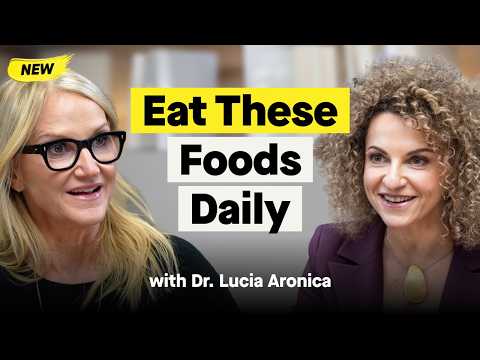
Dr. Lucia Aronica opens with a reframe that sounds simple but has real implications: food is not fuel. It's more like a pencil — something that "physically rewrites the instructions your cells are operating from." The mechanism behind this is epigenetics, the study of molecular switches that sit on top of your DNA and control which genes get expressed and which stay dormant. Your DNA sequence doesn't change. What changes is whether specific genes are turned on or off, and those switches respond directly to what you eat, how you move, and how much stress you're carrying.
Aronica is careful to distinguish between the genome (your fixed DNA sequence) and the epigenome (the layer of chemical marks that regulate it). Genes are essentially recipes for proteins — but having a recipe doesn't mean the dish gets made. The epigenome decides what gets cooked. And unlike your DNA, those marks are rewritable. That's the whole point. In a recent video, Mel Robbins frames this as one of the most empowering ideas in modern health science, and honestly, it's hard to argue with that framing once you see the study data.
The Landmark Study That Reordered the Conversation
The most concrete piece of evidence Aronica presents is a heart disease study that tracked people with high genetic risk. The finding: those who maintained a healthy lifestyle cut their genetic risk of heart disease by half. The inverse was equally striking — people with low genetic risk who lived poorly developed disease anyway. This isn't a soft correlation. It's a direct challenge to the idea that family history is a verdict.
What the study actually demonstrates is that genetic risk is probabilistic, not deterministic. You can hold a loaded deck and still play well. The 75% figure — that food (not lifestyle broadly) accounts for roughly three-quarters of health outcomes — comes from this broader body of epigenetic research, and it reorients the entire conversation around personal agency rather than inherited fate. As explored in Dr. Mike's breakdown of common health misinformation, the gap between what the science actually says and what most people believe about genetics is genuinely wide.
The Molecular Switches — What's Actually Happening
Aronica's Stanford framework, which she calls epi-nutrition, categorizes the dietary compounds that interact with these switches into two groups. First, methyl donors — nutrients like folate, B12, and betaine that provide the chemical 'ink' used to write epigenetic marks onto DNA. Second, epi-bioactives — compounds like omega-3s, colorful plant pigments, and postbiotics that act as signals to the enzymes responsible for adding or removing those marks.
The queen bee example she uses is genuinely clarifying. Worker bees and queen bees share identical DNA. The only difference is royal jelly — a dietary input that triggers a completely different epigenetic program, producing a physically distinct organism with a radically different lifespan. Same genome, different epigenome, different life. It's a clean illustration of how diet can alter biological destiny at the cellular level, and it makes the abstract concept land in a way that most explanations don't manage.
Specific Foods, Specific Mechanisms
Aronica gets granular about which foods interact with the epigenome and — critically — how preparation affects their potency. Broccoli's sulforaphane, for instance, activates over 200 protective genes, but only if the vegetable is chopped about 40 minutes before cooking, or if mustard is added to frozen broccoli to compensate for the enzyme lost during freezing. Crushed garlic produces allicin, which lowers LDL and supports immune function — but only when prepared correctly. Red tomatoes boost skin protection. Blackberries provide anthocyanins with documented cognitive benefits.
The preparation details matter more than most nutrition content acknowledges, and that specificity is what separates this from generic 'eat more vegetables' advice. The fact that you can neutralize broccoli's main benefit just by cooking it wrong is the kind of thing that should probably be on the packaging.
Epigenetic Memory and the Yo-Yo Problem
The section on yo-yo dieting is where the science gets uncomfortable. Repeated cycles of weight loss and regain don't just reset — they leave a mark. Fat cells develop what Aronica calls epigenetic memory: the genes responsible for burning fat get dialed down, while inflammatory genes get switched on. The result is a cellular environment that actively resists staying lean, which explains why each cycle of dieting tends to feel harder than the last.
The six-month threshold is the key variable here. Aronica's research suggests that maintaining weight loss for at least six months is long enough to begin 'unlearning' that cellular memory — essentially giving the epigenome time to reset toward a leaner baseline. This connects directly to why the engineered palatability of processed foods makes sustained weight loss so structurally difficult; the food environment is working against the six-month window at every meal. The idea that fat cells have a memory that can be argued out of is either deeply reassuring or deeply annoying, depending on where you are in the cycle.
Thirty Days to a Different Cellular Story
Aronica closes with a timeline that's specific enough to be useful: within 30 days of consistent dietary and lifestyle changes, most people report measurable improvements in energy, sleep quality, skin, and digestion. These aren't placebo effects — they reflect actual shifts in gene expression patterns. The epigenome responds faster than most people expect, which is both the good news and the argument for starting now rather than after some future reset point.
The broader claim is that genes are not destiny but opportunity. Every meal is, in a literal molecular sense, an instruction set. The research on how exercise reshapes mental health and gene expression runs parallel to this — lifestyle inputs stack, and the epigenome integrates all of them. What you eat, how you move, and how you manage stress are all writing to the same document.
Aronica's framework is solid, and the molecular detail is more rigorous than most nutrition content that gets this kind of platform. But the 75% figure — food accounts for 75% of health outcomes — gets repeated without much interrogation of what it actually measures or which populations it comes from. That number does real rhetorical work in the video, and it probably deserves more precision than it gets. 'Health outcomes' is a wide category, and the figure likely varies significantly by condition, age group, and baseline health status.
The preparation specifics for broccoli and garlic are the most underrated part of the whole conversation. Most people have heard 'eat more cruciferous vegetables' a thousand times. Almost nobody has heard that frozen broccoli without mustard is functionally missing its main epigenetic benefit. That's the kind of actionable detail that actually changes behavior — and it got about ninety seconds of airtime.
Frequently Asked Questions
How does epigenetics and diet gene expression actually work at the molecular level?
Can you actually reverse negative epigenetic patterns through lifestyle changes?
Does how you prepare food really change its effect on your genes?
Is genetics really only 25% of your health outcomes?
What is epigenetic memory and why does it make yo-yo dieting harder on your body?
Based on viewer questions and search trends. These answers reflect our editorial analysis. We may be wrong.
Source: Based on a video by Mel Robbins — Watch original video
This article was created by NoTime2Watch's editorial team using AI-assisted research. All content includes substantial original analysis and is reviewed for accuracy before publication.