Raised Bed Garden Cost Comparison: $1 vs $600 Beds
Key Takeaways
- •A food-safe plastic storage tote with drainage holes drilled in the bottom functions as a legitimate raised bed, producing harvests of lettuce, radishes, and more at near-zero cost.
- •The $600 metal raised bed system reached that total after adding an irrigation setup ($100) and an automated timer ($60) on top of the base bed price, making the headline figure a fully loaded cost, not a starting price.
- •The metal bed's integrated pest cover delivered a measurable crop protection advantage, particularly for cabbage, while the open tote suffered insect damage until a biological pesticide was applied.
The Free Option That Actually Works
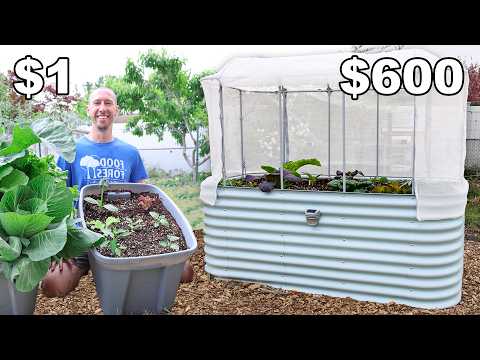
The plastic tote bed is almost offensively simple. Take a storage container, verify it's food-safe, drill drainage holes in the bottom, fill it with soil, and plant something. That's the entire setup. James Prigioni demonstrates in $1 vs $600 Raised Bed! that this approach produces real food, not just a proof of concept, with early harvests of lettuce and radishes coming in without drama. The soil volume is small, which keeps costs low and setup fast, though it also means the tote dries out faster than a larger bed in hot weather, requiring more frequent manual watering. For anyone paralyzed by the idea of starting a garden, the tote removes every excuse. If you're figuring out what to plant in April for a full harvest season, a tote is a perfectly legitimate place to start.
What $600 Actually Buys You
The metal raised bed is a 32-inch tall structure assembled with screws, built for longevity in a way that a plastic tote simply isn't. But the sticker price is context-dependent. The total cost reached $600 with everything included: the base bed plus an irrigation system that added $100 and an automated timer that pushed it another $60. The 32-inch height does eliminate most bending, and the sturdier walls hold a much larger soil volume, which in turn supports more plants with better spacing. The assembly is more involved than drilling holes in a tote, but it's a one-time effort for something designed to last seasons. Whether that math works for you depends entirely on how seriously you're gardening and how much your back has started sending you messages.
Filling a Big Bed Without Bankrupting Yourself on Soil
A 32-inch deep metal bed presents an immediate problem: filling the entire thing with quality topsoil would cost a fortune. Prigioni's solution is to pack the bottom with organic filler material, specifically logs and compost, before topping the bed with good soil. Plants don't root down to the absolute bottom of a raised bed, so the filler displaces volume without compromising growing conditions. This technique is worth knowing before you price out soil for any large bed, because the numbers shift dramatically once you factor it in. It's the kind of practical workaround that separates people who've actually built a garden from people who've only planned one.
The Pest Cover Advantage Nobody Talks About Enough
Here's where the expensive bed earns some of its premium. The metal raised bed's integrated cover system kept insects off crops like cabbage throughout the growing season. The tote bed had no such protection, and the plants showed it, sustaining insect damage until a biological pesticide was applied. Pest pressure is one of those variables that beginning gardeners consistently underestimate, and it's the kind of problem that quietly kills harvests before you realize what's happening. A physical barrier that prevents the problem entirely is a different category of solution compared to responding to damage after it starts. This is also a reason why gardens fail and end up abandoned in the first place: one bad pest season can deflate enthusiasm fast.
Irrigation and the Real Cost of Convenience
Hot weather is where the tote bed's size becomes a liability. A small soil volume loses moisture quickly, which means hand-watering becomes a near-daily obligation in summer. The metal bed's automated irrigation system, once installed, handles that task without any input. The $100 system plus $60 timer is real money, but it converts a daily chore into something that runs on its own, which has compounding value the longer the season runs. Whether that's worth it is a budget question, not a gardening question. For anyone already stretched thin on time, the irrigation math probably closes faster than expected.
Which One Should You Actually Build
Prigioni's conclusion lands where honest comparisons usually do: it depends. The tote bed is the right call for beginners, budget-constrained gardeners, and anyone who wants to test whether they'll actually stick with a garden before committing real money. The metal bed with covers and irrigation is a legitimate long-term investment for gardeners who already know they're in it for the duration and want to reduce friction. What Prigioni also flags is the middle ground, simpler metal beds or DIY wooden beds, as the practical choice for most people who fall somewhere between those two extremes. The overriding point is to start something rather than optimize indefinitely. The tote bed performing well enough that Prigioni started a second one for summer crops is probably the most honest endorsement either setup received.
Our Analysis: James nails the cost framing but skips the question that actually matters for most gardeners: how long are you staying in this house? A $1 tote makes perfect sense for renters. A $600 metal bed is a landscaping decision, not a gardening one.
The pest cover results are the most underrated finding here. That single addition likely outperforms any soil upgrade or irrigation tweak in terms of yield impact, and it gets maybe 10% of the video's attention. It's also worth noting that pest covers represent a broader principle: passive prevention almost always beats reactive treatment, whether you're dealing with insects, weeds, or moisture loss. The gardening content space tends to focus on inputs — better soil, better fertilizer, better seeds — while underweighting structural decisions that remove whole categories of problems before they start.
The filler-at-the-bottom tip is practical and saves real money. That part deserved more screen time than the price tag comparison did. For anyone seriously considering a deep raised bed, the soil cost without that technique can easily rival the bed itself, which quietly makes the $600 figure look like an undercount if you skip that step.
Frequently Asked Questions
Is it cheaper to make a raised garden bed or buy one?
What is the least expensive way to build a raised garden bed?
What are three mistakes to avoid when gardening with raised beds?
Does a $600 metal raised bed actually produce a better harvest than a cheap DIY alternative?
How do you fill a deep raised bed without spending a fortune on soil?
Based on viewer questions and search trends. These answers reflect our editorial analysis. We may be wrong.
Source: Based on a video by James Prigioni — Watch original video
This article was created by NoTime2Watch's editorial team using AI-assisted research. All content includes substantial original analysis and is reviewed for accuracy before publication.