Mathematical Miracles in the Quran: Unpacking Viral Claims
Key Takeaways
- •A viral reaction mashup from Bayt of Us Global presents what it calls mathematical miracles in the Quran — specific word repetition patterns that allegedly encode moral ratios, biological facts, and geographic proportions.
- •The claims include 'forgive' appearing exactly twice as often as 'punishment', 'man' and 'woman' each appearing 23 times (matching human chromosome pairs), and the frequency of 'land' versus 'sea' producing percentages that mirror Earth's actual surface distribution.
- •Several non-Muslim reactors expressed genuine shock at these claims.
What Are Mathematical Miracles in the Quran?
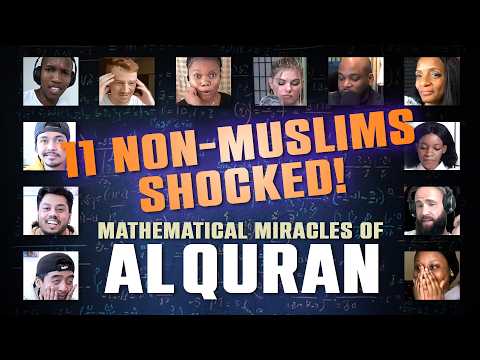
The phrase 'mathematical miracles in the Quran' refers to a category of claims that have circulated in Islamic apologetics for decades. The basic argument: count specific words across the entire Quranic text, and you find symmetries, ratios, and numerical patterns too precise to be accidental. The THEIR MINDS BLOWN! 11 Non-Muslims React to Quranic Mathematical Miracles | Reaction Mashup from Bayt of Us Global is a reaction mashup format — it compiles non-Muslim content creators watching a presentation of these claims for the first time — but the substance underneath the reactions is what matters here.
The presenter walks through a series of word pair counts. Some reflect conceptual dualities. Others allegedly mirror scientific facts that weren't measurable until centuries after the Quran's revelation. The argument, stated plainly: a 7th-century human author couldn't have engineered this. Therefore, something else did. Related: Atheist Converted to Christianity Near-Death Experience
It's a clean rhetorical structure — and it's exactly the kind of argument that rewards closer examination rather than just an emotional response either way.
The 1:2 Ratio of Punishment and Forgiveness
'Punishment' appears 117 times in the Quran. 'Forgive' appears 234 times. That's not approximately double — it's exactly double. The video presents this as a structural moral message: the text itself, through sheer repetition, encodes the principle that forgiveness should outweigh punishment by a factor of two. Related: Christian Scholar on Historical Evidence for Jesus' Resurrection
Companion examples reinforce the pattern. 'Say' and 'they said' each appear 332 times. 'World' and 'hereafter' each appear 115 times — a perfect symmetry between earthly life and what follows it. 'Devil' and 'angel' both clock in at 88. These aren't presented as poetic coincidences but as evidence of intentional architecture in a text that was, historically, transmitted orally before being compiled into written form.
The forgiveness-to-punishment ratio is the most rhetorically effective of the bunch, because it directly challenges a common Western perception of Islam as punitive — and does so using the text's own internal arithmetic. Related: Surah Maryam Christian Reaction Comparison: Twelve Non-Muslims React
Man and Woman: The 23 Chromosome Connection
This is the claim that lands hardest in the reactions. 'Man' and 'woman' each appear exactly 23 times in the Quran. Human reproduction requires 23 chromosomes from each parent, combining to form the standard 46-chromosome human genome. That science wasn't formally established until the 20th century. The Quran dates to the 7th century CE.
The video frames this as the kind of correspondence that simply shouldn't exist if the text had a human author working from available knowledge. You can't stumble into that number accidentally, the argument goes — not when it maps so precisely onto a biological mechanism that wouldn't be discovered for over a millennium.
For anyone who's spent time around similar claims in other religious traditions — and there are comparable arguments made about the Bible — this one still stands out for its specificity. It's not a vague metaphor that can be retrofitted to science. It's a number, matched to another number, with a claimed causal link between them. Whether that link holds is a separate question, but the precision of the claim itself is harder to wave away than most.
Land and Sea: Matching Earth's Proportions
'Land' appears 13 times in the Quran. 'Sea' appears 32 times. Convert those to percentages of their combined total: 13 divided by 45 gives approximately 28.88%. The remaining 71.11% covers 'sea.' Earth's surface is roughly 29% land and 71% water — numbers that have been measured with precision only in the modern era.
The video presents this as perhaps its most scientifically grounded claim, because it's verifiable against real-world data rather than relying purely on internal textual ratios. The figures are close enough to Earth's actual proportions that the correspondence is striking on first encounter — and strange enough that it doesn't obviously reduce to coincidence.
That said, 'close enough' is doing some quiet work in that sentence, and it's worth keeping that in mind.
Symmetrical Word Pairs and Conceptual Balance
Beyond the science-adjacent claims, the video builds a case from the simpler symmetrical pairs. 'World' and 'hereafter' at 115 each. 'Angel' and 'devil' at 88 each. These pairings reflect theological concepts that exist in opposition — the earthly versus the eternal, the divine versus the adversarial — and their identical word counts are framed as intentional balance built into the text's fabric.
Angel and Devil Counts (88 Each)
The angel-devil pairing at 88 each carries a specific theological implication in the video's framing: that these forces are presented in the Quran as equal counterweights in the human moral landscape. Not that they're morally equivalent, but that they occupy equivalent space in the text — and by extension, in the human experience the text is meant to address.
Paired with the punishment-forgiveness ratio, it builds an internal picture of a text that is numerically structured around balance rather than domination of one concept over another.
World and Hereafter Symmetry (115 Each)
The 'world' and 'hereafter' count is the most theologically loaded of the symmetric pairs. At 115 occurrences each, the argument is that the Quran treats earthly life and the afterlife as equally weighted in its attention — neither is an afterthought. For a religious text that critics sometimes characterize as otherworldly and dismissive of material life, the symmetry is presented as a structural rebuttal.
It's a clever framing. Whether the word counts are accurate is a separate methodological question — but the interpretive move being made here is unusually sophisticated for a genre that often leans on spectacle over substance.
Scientific Accuracy or Numerical Coincidence?
Here's where the honest accounting has to happen. The mathematical miracles in the Quran genre faces several documented methodological challenges that the video does not address — and that the non-Muslim reactors, understandably, aren't positioned to raise in the moment.
First, counting methodology matters enormously. Arabic is a morphologically rich language: a single root word generates dozens of derived forms. Whether you count root forms, derived forms, or both — and how you handle plurals, verb conjugations, and contextual variations — can change word counts significantly. Independent verification of these specific numbers by neutral linguists is not straightforward, and different counters have produced different totals for the same claimed pairs.
Second, the land-sea percentage is often cited as 29% land and 71% water, but more precise measurements put it closer to 29.2% and 70.8%. The Quranic ratio of 13:32 gives 28.88% and 71.11% — which is close, but not exact. In scientific contexts, that margin matters. In apologetic contexts, it's usually absorbed into the word 'approximately.'
Third, there's the selection problem. The video highlights the pairs that work. It doesn't address the pairs that don't — or the pairs where counts are disputed. This is sometimes called the Texas Sharpshooter fallacy: draw the target around where the bullet already landed. A text as long and complex as the Quran contains thousands of words. Finding some symmetrical pairs among thousands of possible combinations is statistically less surprising than it initially appears.
None of this definitively debunks the claims. It does mean the claims haven't been established by the evidence presented. There's a difference, and it's an important one. Similar debates have played out around Based on viewer questions and search trends. These answers reflect our editorial analysis. We may be wrong. Source: Based on a video by Bayt of Us Global — Watch original video This article was created by NoTime2Watch's editorial team using AI-assisted research. All content includes substantial original analysis and is reviewed for accuracy before publication.Frequently Asked Questions
Are the mathematical miracles in the Quran statistically significant or just coincidence?
Does the Quran really mention 'man' and 'woman' exactly 23 times each, matching human chromosome pairs?
How does the Quran's land-to-sea word ratio compare to Earth's actual surface percentages?
Can similar numerical patterns be found in other religious texts like the Bible?
Is the 1:2 forgiveness-to-punishment ratio in the Quran actually exact, and what does it mean?