Turkmenistan Travel Restrictions and Visa Requirements
Key Takeaways
- •Journalists and YouTubers cannot obtain Turkmenistan visas — travelers must misrepresent their profession on applications to gain entry.
- •Movement inside Turkmenistan is tightly controlled: guides accompany visitors, hotel curfews are enforced by guards, and leaving after 11 PM is prohibited.
- •Turkmenistan is frequently compared to North Korea in terms of isolation and regime control, making it one of the most restrictive tourist destinations on earth.
Turkmenistan Visa Requirements and Entry Restrictions
Getting into Turkmenistan is not a matter of booking a flight and filling out a form. The country operates a tightly controlled tourism system where the government decides who enters, under what conditions, and — as it turns out — under what professional identity. Journalists are not welcome. Neither are YouTubers, documentary makers, or anyone whose job involves pointing a camera at things and telling people what they saw. The visa application process requires travelers to declare their occupation, and certain answers will get an application rejected outright.
Why Travelers Must Conceal Their Professions
The Turkmen government's hostility toward independent media is not incidental — it's structural. A country that controls its own press has a strong incentive to keep foreign observers out. According to the video, this creates a practical problem for travel content creators: tell the truth and you don't get in. Bald and Bankrupt describes this as a known workaround among travelers to closed states — not a personal moral failing, but a choice the system essentially forces.
The Financial Advisor Cover Story
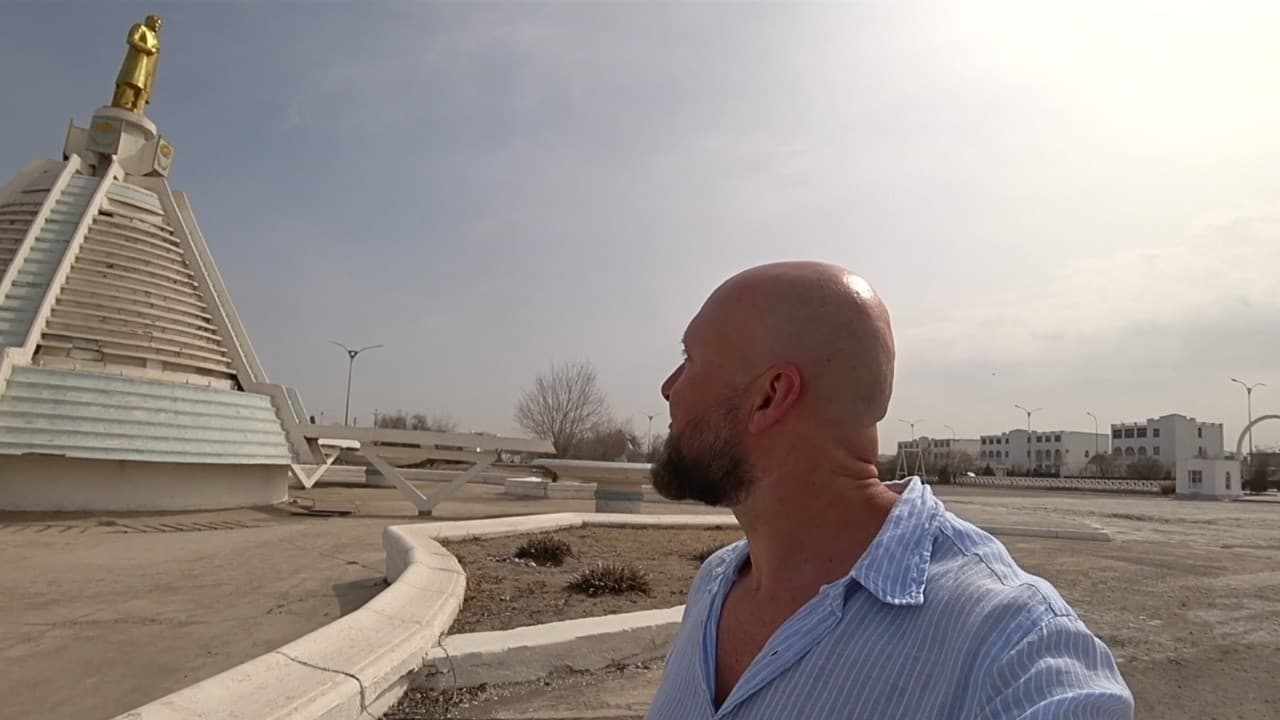
In I Visited The Strangest Country On Earth, Bald and Bankrupt details how he listed his occupation as 'financial advisor' on the visa application — a deliberate misdirection that is, by his account, a standard adaptation among journalists and creators trying to access countries that would otherwise refuse them entry. The guide assigned by the government accompanies visitors throughout the trip, controlling access and effectively monitoring what gets filmed. Travelers are subject to a hotel curfew at night, enforced by staff, meaning the government's oversight doesn't end when the formal tour does.
Our Analysis: The video is honest about the visa deception in a way that most travel content isn't — it names it, explains why it happens, and moves on without either defending it at length or performing guilt about it. That's the right call. What it doesn't do is follow the implication: if the only way to document a country is to lie to get in, every piece of content produced there exists under a constraint that shapes what gets filmed, what gets said on camera, and what gets left out to avoid jeopardizing the guide's position or the presenter's ability to leave.
The curfew detail is the sharpest thing in the video and it gets treated almost as a curiosity. A government that locks tourists in their hotels at night isn't managing optics — it's telling you exactly how much it trusts the story you'll tell when you get home.
There's a broader question the video gestures at but doesn't fully sit with: what is travel content actually worth when it's produced under state supervision? Turkmenistan isn't unique in this regard — North Korea tourism videos, heavily guided China travel vlogs, and similar content from closed or semi-closed states all carry the same asterisk. The presenter can only film what the guide permits. He can only say so much on camera before the calculus of getting out safely takes over. The audience gets a version of the country, not the country.
That doesn't make the content valueless. A constrained view of Turkmenistan is still more than most people will ever see, and the constraints themselves are part of the story. But it does mean the most interesting editorial work here isn't in the marble cities or the gas crater — it's in reading what's absent. What questions didn't get asked on camera? What moments ended up on the cutting room floor because airing them might have caused problems for the guide, or for the presenter's ability to leave? Travel content from authoritarian states is always partly a negotiation, and audiences are rarely shown the terms.
Frequently Asked Questions
Why is it so hard to get into Turkmenistan?
Are US citizens allowed to visit Turkmenistan?
What are the actual Turkmenistan travel restrictions and visa requirements tourists face on the ground?
Can you visit Turkmenistan independently, without a government guide?
What is the current visa policy in Turkmenistan for foreign travelers?
Based on viewer questions and search trends. These answers reflect our editorial analysis. We may be wrong.
Source: Based on a video by Bald and Bankrupt — Watch original video
This article was created by NoTime2Watch's editorial team using AI-assisted research. All content includes substantial original analysis and is reviewed for accuracy before publication.