Why YKK Zippers Dominate: The Physics & History
Key Takeaways
- •The three letters on your zipper — YKK — belong to Yoshida Manufacturing Corporation, now the world's dominant zipper maker.
- •Veritasium's video "Why are these 3 letters on almost all of my zippers?" explains how they got there and why the zipper is stranger engineering than it looks.
- •The mechanism dates back to Gideon Sundback's 1914 patent, built on the ruins of Whitcomb Judson's notoriously unreliable 1893 prototype, and the physics behind it — a Y-shaped cavity tilting teeth into alignment — is genuinely non-obvious.
How Do Zippers Work? The Y-Shaped Slider Mechanism Explained
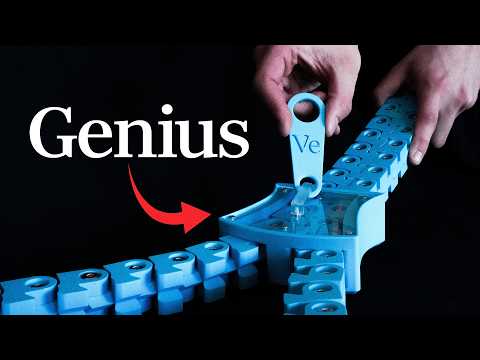
In Why are these 3 letters on almost all of my zippers?, Veritasium breaks down a piece of engineering most people never think twice about. Understanding how zippers work mechanism-wise starts with one counterintuitive fact: you cannot push two zipper teeth together head-on. Try it — they just resist. The slider solves this by routing each row of teeth through a Y-shaped internal cavity that tilts them at an angle before they meet, so they drop into each other rather than collide. That's the whole trick, executed in a piece of metal roughly the size of your thumbnail.
The History of Zipper Invention: From Judson to Sundback
Whitcomb Judson's 1893 Fastener: The Flawed Foundation
Before zippers, you dealt with hooks, buttons, and laces — tedious, but at least they worked. Whitcomb Judson's 1893 "clasp locker," pitched mainly as a shoe fastener, was supposed to replace all that with a single motion. It jammed constantly, fell apart in the wash, and the Universal Fastener Company that backed it struggled badly.
Gideon Sundback's 1914 Breakthrough: The Modern Zipper Design
Gideon Sundback, a Swedish-American engineer who joined the flailing company, scrapped the hook-and-eye approach entirely and in 1914 patented something close to what you'd find on your jeans today. His design used rectangular metal teeth, each with a small nib on one side and a corresponding scoop on the other, creating a positive mechanical lock when joined. The grief from losing his wife reportedly focused him; he filed the patent the same year she died.
Zipper Manufacturing: How Precision Machinery Ensures Reliability
The Role of Automated Production in Zipper Durability
Sundback didn't just design the zipper — he designed the machines to build it, which was arguably the harder problem. Each nickel-alloy tooth had to be stamped to tight tolerances and crimped onto a non-stretch fabric tape at perfectly consistent spacing. That tape does more work than it gets credit for: it takes the tension load off the teeth so the whole assembly doesn't pull apart under stress.
Types of Zippers: Coil vs. Metal and Their Differences
Metal zippers ruled until around the 1940s, when plastic coil zippers showed up and gradually took over most of the market. Instead of individual teeth, a coil zipper is one continuous spiral of monofilament stitched onto the tape — meaning a single tooth can't fall off and trigger a cascading failure. They're cheaper, more flexible, and now the default on most luggage and casual clothing. Metal zippers still dominate on denim, where rigidity is a feature.
Why YKK Dominates the Global Zipper Market
When Sundback's patent expired in 1934, Tadao Yoshida founded what became YKK — Yoshida Kogyo Kabushikigaisha — and made a strategic call that separated them from competitors like Talon: manufacture everything in-house, from the brass to the finished zipper. That vertical integration meant tighter quality control and lower defect rates, and over decades it compounded into market dominance. YKK now makes roughly half the world's zippers, doing billions in annual sales.
Specialized Zippers: Watertight and Airtight Applications
At the extreme end, zippers are machined to hold pressure differentials that would destroy a standard design — watertight zippers used in deep-sea diving suits and airtight variants fitted to spacesuits rely on the same interlocking geometry but with elastomeric seals and far tighter manufacturing tolerances. A diver suiting up for an emergency doesn't want to think about their fastener.
How Zipper Locking Mechanisms Prevent Accidental Unzipping
Most zippers have a locking pin built into the slider — a Sundback design — that drops into the teeth when the pull tab hangs at rest, preventing the slider from creeping down on its own. It disengages automatically when you pull the tab forward. More than half of all zippers sold today include this feature, and most people have no idea it exists.
How to Fix Common Zipper Problems: Sticking and Separation
A zipper that sticks usually has debris caught in the teeth or a dry slider; rubbing graphite from a pencil along the teeth fixes the latter without making a mess. One that separates at the bottom often has a worn slider that's no longer gripping the teeth tightly enough — carefully crimping the slider body with pliers closes the gap and restores tension without replacing the whole zipper.
Our Analysis: Veritasium nails the mechanics and history, but undersells how bizarre it is that one company (YKK) quietly captured ~40% of global zipper production by just... being really good at making zippers.
This connects to a broader trend in precision manufacturing where dominance goes to whoever controls the full supply chain — YKK makes its own machines, brass, and even the boxes.
Forward-looking: coil zippers are already being adapted for soft robotics and wearable tech, so the 80-year-old design you're wearing right now has a second career ahead of it.
Frequently Asked Questions
What does YKK actually stand for?
If my zipper keeps splitting open after I zip it, is that a slider problem or a teeth problem?
Has anyone ever seriously challenged YKK's market dominance, or is it essentially a monopoly at this point?
What city is considered the zipper capital of the world?
Is the story about Sundback's grief over his wife's death actually driving his 1914 patent a verified historical fact?
Based on viewer questions and search trends. These answers reflect our editorial analysis. We may be wrong.
Source: Based on a video by Veritasium — Watch original video
This article was created by NoTime2Watch's editorial team using AI-assisted research. All content includes substantial original analysis and is reviewed for accuracy before publication.