AI-generated scientific papers academic fraud: A Looming Crisis?
Key Takeaways
- •AI is making it easier than ever to commit academic fraud, and the publishing industry's business model is about to make that much worse.
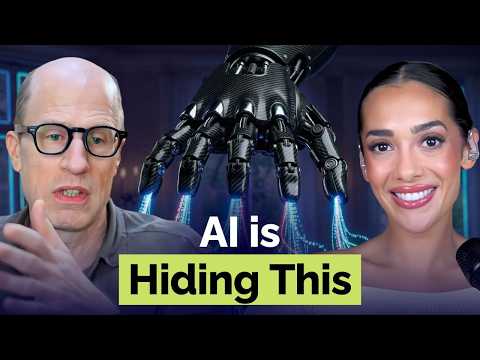
- •Physicist and science communicator Sabine Hossenfelder argues in "AI Is About to Break Science… Then Save It" that AI-generated scientific papers are no longer a fringe concern — it's a structural crisis already unfolding across economics, sociology, and beyond.
- •The short version: publishers have a financial incentive to publish more papers, AI can write those papers in hours, and nothing in the current system is designed to stop either of those things.
How AI Is Generating Fraudulent Scientific Papers
Language models can now produce complete academic papers — methodology, citations, results — in a matter of hours. In her video AI Is About to Break Science… Then Save It, Sabine Hossenfelder points out that while AI models initially push back when asked to fabricate research, it doesn't take much nudging to get them past that resistance.
That's the part that should worry people. It's not that AI spontaneously writes fraudulent papers. It's that the barrier to commissioning one is low enough that almost anyone with a publication pressure problem and a ChatGPT subscription can clear it.
Economists and sociologists are raising the alarm specifically because these fields are newer to AI-assisted research than physics or mathematics. Professors in those disciplines are now openly expressing shock at how fast and how completely AI can replicate what used to take months of graduate student labor.
The Business Model Problem: Why Publishers Profit From Low-Quality Research
Open access fees incentivizing volume over quality
Here's the part economists proposing higher submission fees are missing, according to Hossenfelder: the major publishers have already shifted their revenue model. They're no longer primarily making money from institutional subscriptions. They're making it from open access publication fees — charges paid by authors, or their institutions, to make papers freely available.
That means every paper accepted is revenue. Reject a paper and you lose a fee. The financial incentive now points directly at volume, not quality.
Subscription revenue decline and publisher adaptation
As universities and libraries have pushed back on expensive journal bundles, subscription income has declined. Publishers adapted by leaning into open access — which sounds like a win for science, and sometimes is, but it also means their income now scales with how many papers they process rather than how many subscribers value their content.
An AI-generated paper that clears a cursory peer review pays the same fee as a genuinely novel piece of research. From the publisher's balance sheet, those are identical.
Can AI Help Detect Academic Fraud Instead?
Hossenfelder doesn't think AI is purely the villain here. The same models that can write a fraudulent paper can also be used to screen for statistical manipulation, flag implausible data distributions, or cross-reference citations that don't quite say what the paper claims they say.
Peer review has always been under-resourced and easy to game. AI detection tools won't be perfect, but neither is the current system — which, by most accounts, misses a substantial amount of fabricated or selectively reported data already.
Rethinking Academic Metrics Beyond Publication Counts
The deeper problem Hossenfelder identifies is that academic careers are still largely evaluated on publication volume. If AI can generate dozens of passable papers per year, then the metric that was already gameable becomes completely meaningless.
The flood of AI-assisted, publicly funded, low-quality research that's coming isn't just a quality problem — it's an accountability problem. Taxpayers are paying for it, and university hiring committees are still counting it.
A reckoning over how academic output gets measured was probably overdue anyway. AI is just accelerating the timeline. It's worth noting — actually, scratch that — it's just obvious that any replacement metric will be harder to game by volume alone.
The Short-Term Risks and Long-Term Promise of AI in Science
How AI resistance to statistical cheating could improve research
One genuinely surprising finding Hossenfelder highlights: some AI models, when integrated into the research process rather than just used to write it up, actively resist the kind of p-hacking and selective reporting that human researchers do constantly, often without realizing it.
Human cognitive bias is baked into the scientific process in ways that are hard to audit. A researcher who really wants a result to come out a certain way will make dozens of small decisions — about outliers, about stopping rules, about which comparisons to run — that nudge the data in that direction. Some AI systems, apparently, just don't do that. That's not nothing. Science has been fighting its own biases for decades with limited success, and an external system with no career stake in the outcome is a genuinely different kind of tool. For more on how structural constraints shape the practice of science, AI Is About to Break Science… Then Save It is worth watching in full.
Our Analysis: Hossenfelder is right that AI is turbocharging a publishing ecosystem already broken by perverse incentives — but the villain here isn't AI, it's publish-or-perish culture that made fraud rational before ChatGPT existed.
This connects to a longer collapse of peer review as a quality signal; citations and paper counts have been gaming metrics for decades.
The optimistic pivot feels rushed — AI reducing bias in research is a real possibility, but we're probably one full generation of retracted papers away from institutions actually rethinking how they measure scientific output.
What's undersold in this conversation is the reputational asymmetry at play. A fraudulent paper that gets cited a dozen times before retraction has already done its damage — to policy decisions, to follow-on research, to public trust. AI detection tools operating downstream of publication don't fix that lag. The more uncomfortable implication is that the institutions best positioned to reform these incentives — elite universities, major funders, government research bodies — are also the ones most invested in the current prestige economy. That's not a technology problem AI can solve from the outside.
Frequently Asked Questions
How are researchers actually using AI to commit academic fraud with scientific papers?
Why is the open access publishing model making AI-generated academic fraud worse?
Can AI tools actually detect AI-generated scientific papers, or is it too easy to fool them?
What could actually replace publication count as a measure of academic performance?
Is AI actually better than human researchers at avoiding statistical bias like p-hacking?
Based on viewer questions and search trends. These answers reflect our editorial analysis. We may be wrong.
Source: Based on a video by Sabine Hossenfelder — Watch original video
This article was created by NoTime2Watch's editorial team using AI-assisted research. All content includes substantial original analysis and is reviewed for accuracy before publication.