Keir Starmer Political Strategy Comeback: The Inside Story
Key Takeaways
- •Survival over momentum: Starmer's recent stabilisation is built on tactical manoeuvring — blocking rivals, avoiding unpopular conflicts, controlling parliamentary timing — rather than any genuine shift in public support or policy direction.
- •The structural problem remains: Labour's polling weakness and Starmer's underlying unpopularity are unresolved. The leadership threat has been deferred, not defused, and the next pressure point is likely already forming.
- •Context shapes everything: His approval bump on Iran was real, but it was the product of a specific moment aligning with public sentiment. It doesn't represent a durable change in how the public sees him or the government.
From the Polling Floor to Breathing Room
Before the recent sequence of events, Keir Starmer's position looked genuinely precarious. Approval ratings were in the gutter, Labour was trailing not just the Conservatives but multiple parties in the polls, and expert opinion — according to TLDR News — held that he might not survive as Prime Minister beyond May. That is not the kind of political climate where you're thinking about your legacy. That's the kind where you're watching your back at cabinet meetings.
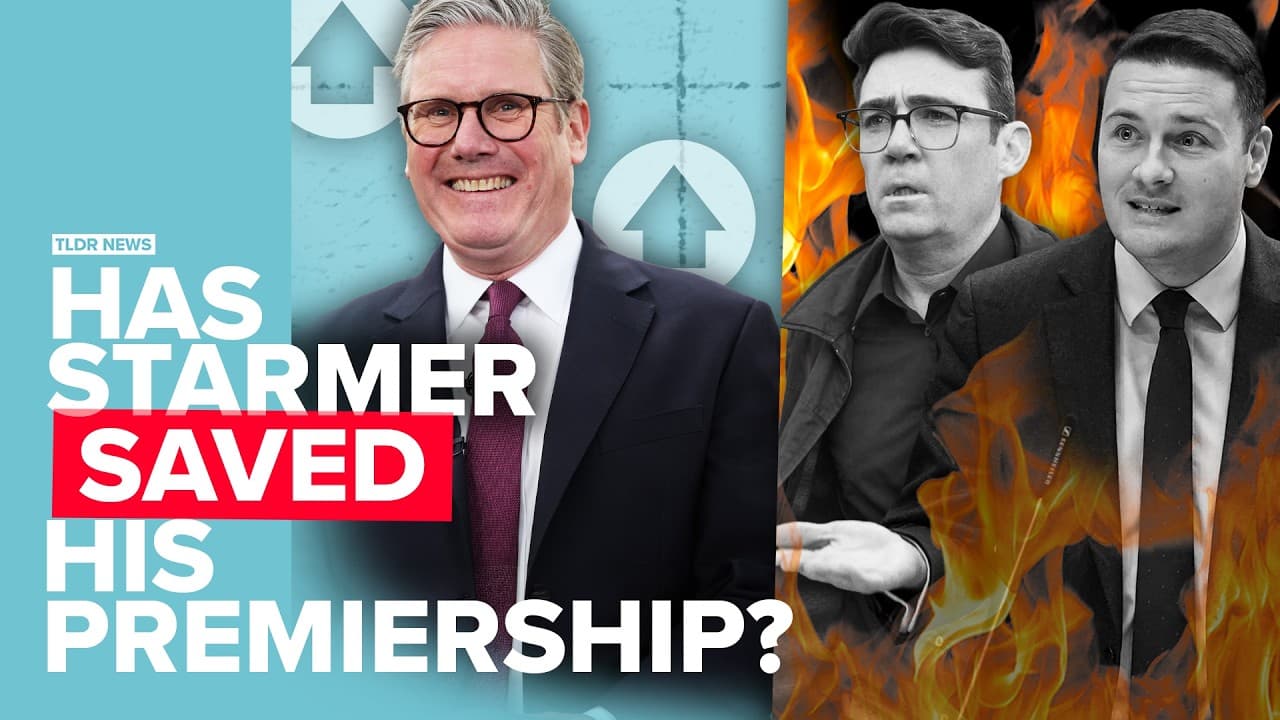
What changed wasn't a policy revolution or a sudden surge of public affection. It was three specific tactical plays, each one buying time rather than building momentum. The distinction matters. In their recent video How Starmer Pulled it Back, TLDR News walks through each move in sequence — and the picture that emerges is less of a leader regaining his footing and more of one carefully managing a floor beneath which he cannot afford to fall. Related: Sykes-Picot Agreement Middle East borders Explained
The Burnham Calculation
Andy Burnham, Mayor of Greater Manchester, was the most dangerous figure in Labour's orbit — not because he was plotting openly, but because he didn't need to. His popularity was the threat. A return to Parliament would have given Burnham a platform, a mandate, and a ready-made story about what Labour could be instead of what it currently is.
Starmer blocked him from standing in a by-election. The decision drew criticism. But the political logic is hard to fault: allowing your most credible rival into the chamber — where he'd shake hands with your MPs and appear nightly on the news — would hand him a structural advantage that no amount of messaging could undo. Burnham outside Parliament is a mayor. Burnham inside Parliament is a countdown clock. Related: Pam Bondi Attorney General Firing: The Real Story
The Rest of the Field, For Now
Wes Streeting is dealing with NHS pressures and past associations that keep him from making any serious leadership move. Angela Rayner is waiting on the outcome of a tax affairs inquiry. Neither is positioned to mount a challenge right now — not because they don't have ambitions, but because the timing is wrong for them specifically. Starmer didn't engineer those problems, but he's benefiting from them, which is how political survival usually works.
Iran and the Approval Rating Nobody Expected
When Trump launched military action against Iran, Starmer declined to join — citing concerns about international law. The initial reaction in some quarters was predictably critical. But polling told a different story: the British public, by a significant margin according to TLDR News, opposed US military action and supported a defensive UK role. Starmer had, whether by calculation or conviction, landed on exactly the right side of British public opinion at exactly the right moment. Related: AIPAC lobbying influence US Congress: Kiriakou's view
His personal approval ratings moved in response. Not dramatically, not permanently, but measurably — which, given where he was starting from, counts as something.
Key Takeaways
- Survival over momentum: Starmer's recent stabilisation is built on tactical manoeuvring — blocking rivals, avoiding unpopular conflicts, controlling parliamentary timing — rather than any genuine shift in public support or policy direction.
- The structural problem remains: Labour's polling weakness and Starmer's underlying unpopularity are unresolved. The leadership threat has been deferred, not defused, and the next pressure point is likely already forming.
- Context shapes everything: His approval bump on Iran was real, but it was the product of a specific moment aligning with public sentiment. It doesn't represent a durable change in how the public sees him or the government.
Frequently Asked Questions
- Why did Starmer block Andy Burnham from standing in a by-election?
- According to TLDR News's analysis in How Starmer Pulled it Back, Burnham's presence inside Parliament would have given him a platform and a visible alternative narrative about Labour's direction — making him a structural threat regardless of whether he was actively campaigning for the leadership. Keeping him in Manchester removes that platform.
- Did Starmer's decision on Iran actually improve his poll numbers?
- Yes, measurably — though not dramatically. TLDR News reports that British public opinion opposed US military strikes against Iran by a significant margin, meaning Starmer's refusal to participate aligned with where voters already were. The approval movement was real but narrow and unlikely to be permanent.
- Is Starmer now safe as Labour leader?
- The immediate threat has receded. The by-election block, the King's Speech timing, and the Iran decision have collectively bought him room to operate. But the underlying conditions — weak polling, low personal approval, an uninspiring policy offer — haven't changed. He's stable for now, not secure in any lasting sense.
Our Analysis: The most telling detail in TLDR News's analysis in How Starmer Pulled it Back is the Burnham move — not because blocking a rival is unusual in politics, but because of what it reveals about how Starmer reads risk. Burnham wasn't an active challenger. He hadn't declared anything. Starmer acted against a hypothetical threat and absorbed real criticism to eliminate it. That's not the behaviour of a leader who's comfortable. That's someone who has looked at his internal numbers and decided that even the possibility of Burnham in Parliament is too dangerous to allow.
What the video doesn't press on is whether any of this changes Labour's structural problem — which is that the party hasn't convinced enough people it knows what it wants to do in government. Starmer surviving isn't the same as Labour recovering. The polling gap doesn't close because the leadership challenge got delayed.
There's a longer-term question worth sitting with here: tactical survival and strategic recovery are not just different things, they can actively work against each other. Every move Starmer makes to shore up his position internally uses political capital that might otherwise go toward building a coherent public argument for what Labour is for. Blocking Burnham was smart politics in the short term. But it also reinforced a narrative — that this is a leadership operating defensively, managing threats rather than making a case. The British public is not particularly forgiving of governments that appear to be governing for their own continuation rather than for any visible purpose. Starmer has bought time. What he does with it is the question the next few months will answer.
Source: Based on a video by TLDR News — Watch original video
This article was created by NoTime2Watch's editorial team using AI-assisted research. All content includes substantial original analysis and is reviewed for accuracy before publication.