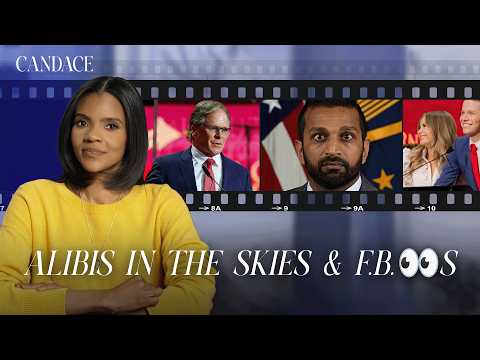
Charlie Kirk Death Investigation Netanyahu: Owens Explores
Key Takeaways
- •A Candace Owens deep investigation connects Benjamin Netanyahu and Mitt Romney through a friendship dating back to 1976, framing it as the backbone of a web that allegedly links Utah power structures, CIA recruitment at BYU, and defense contracting families to the circumstances surrounding Charlie Kirk's death.
- •The episode scrutinizes Kirk's final phone call with Netanyahu, the FBI's seizure of Timpanogos Hospital security footage, and the reintroduction of a forensic technique discredited after the JFK assassination.
- •Owens also names Andrew Zenger, Robbie Hill, and the Karashy-Qureshi family as central figures in an alleged network spanning military contracts, intelligence recruitment, and political influence.
The Netanyahu-Romney Alliance
According to Candace Owens, Benjamin Netanyahu and Mitt Romney have known each other since 1976. Not a brief political acquaintance — a genuine, decades-long friendship that Owens treats as the foundation everything else is built on. The Romney family's generational power in Utah, and separately in Mexico, gives that friendship structural weight. This isn't two guys who met at Davos once. It's a relationship old enough to have shaped careers on both sides.
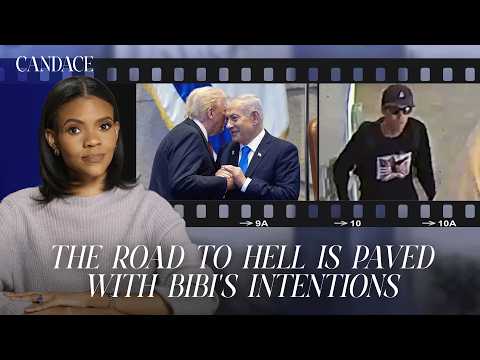
Owens frames this connection as the thread that, once pulled, starts unraveling a much larger picture — one involving BYU, Israeli intelligence, and the circumstances of Charlie Kirk's final weeks. She develops this argument at length in Friends In High Temples: Charlie's Final Call With Bibi... | Candace Ep 320, where the Netanyahu-Romney dynamic serves as the entry point into a sprawling set of allegations.
Kirk's Last Call and the 'Elevation' Offer
The episode revisits what Owens describes as Kirk's final phone conversation with Netanyahu, framed as an intervention about Israel policy. According to Owens, Netanyahu offered to "elevate" Turning Point USA during that call — with the implication that the offer came with strings attached around maintaining a reliable pro-Israel position. The obvious question — who was funding that offer, and what was it contingent on — goes unanswered officially, which is precisely why she's asking it.
She links this to alleged war profiteering connected to a potential conflict with Iran. The implication is that Kirk was being positioned, financially or otherwise, to remain a reliable pro-Israel voice at a moment when that voice had specific strategic value. For context on how Iran war advocacy has been scrutinized elsewhere, the episode points to a broader ecosystem of think tanks and media figures whose funding trails, Owens argues, deserve the same scrutiny she's applying here.
Owens also examines the FBI's seizure of Timpanogos Hospital security footage and what she describes as the deliberate reintroduction of a forensic technique that was discredited in the aftermath of the JFK assassination. The combination — missing footage, questionable forensics — forms the evidentiary core of her skepticism about the official account of Kirk's death. She further names Andrew Zenger, Robbie Hill, and the Karashy-Qureshi family as figures whose connections to military contracting and intelligence recruitment she believes are underreported and relevant.
Our Analysis: What makes this episode worth watching — regardless of where you land on Owens politically — is the structural argument underneath the more explosive claims. The Netanyahu-Romney friendship, if as deep and longstanding as Owens contends, is genuinely underexamined in mainstream political coverage. Friendships forged in the 1970s between future heads of state and future presidential candidates don't get the biographical treatment they probably deserve. That's a legitimate gap, and Owens is right to flag it even if her conclusions about what that gap conceals remain unverified.
The Charlie Kirk angle is where the episode will draw the most scrutiny. Owens is operating in territory where the absence of official answers is treated as evidence of official concealment — a logical move that is also, by definition, impossible to falsify from the outside. That doesn't make it wrong. It makes it a particular kind of argument that requires either corroborating documentation or a source willing to go on record. Neither appears in full here, which is a genuine limitation of the episode's evidentiary foundation.
The forensic technique angle is perhaps the most specific and therefore the most testable claim in the episode. If a method was discredited after the JFK investigation, its reintroduction in a high-profile case is a story in its own right — one that forensic journalists and legal analysts could pursue independently of everything else Owens is arguing. That specificity is actually a strength of the episode: it gives investigators, amateur or professional, something concrete to verify or debunk.
The Karashy-Qureshi family and the BYU-CIA recruitment pipeline are the parts of the episode that feel most underdeveloped on first watch. Owens names them and connects them to a network of military contracts and intelligence relationships, but the connective tissue between those names and the Kirk narrative is thinner than the Netanyahu-Romney thread. It reads more like a map of further investigation than a completed argument — which may be intentional, given that Owens has structured several of her recent episodes as ongoing series rather than standalone conclusions.
The broader pattern here — political media figures dying under circumstances that generate unanswered questions, followed by institutional non-responses that fuel alternative explanations — is one that media critics across the ideological spectrum have noted. The specific details Owens is working with are hers alone, but the underlying dynamic of information asymmetry between official sources and independent investigators is a structural feature of the current media environment, not a fringe concern. Whether Candace Owens is the right vessel for this particular investigation is a separate question from whether the investigation is worth having.
Frequently Asked Questions
What is the Charlie Kirk death investigation connecting Netanyahu and Romney actually based on?
What was Charlie Kirk's final phone call with Netanyahu about?
Why did the FBI seize security footage from Timpanogos Hospital?
Is there documented evidence of CIA recruitment at BYU in Utah?
How far back does the Netanyahu and Romney friendship actually go?
Based on viewer questions and search trends. These answers reflect our editorial analysis. We may be wrong.
Source: Based on a video by Candace Owens — Watch original video
This article was created by NoTime2Watch's editorial team using AI-assisted research. All content includes substantial original analysis and is reviewed for accuracy before publication.
Related Articles
You Might Also Like
Apr 2
True Crime | Tyler Robinson Trial: DNA Evidence Admissibility Criminal Trial Under Scrutiny
Apr 2
World News | US intelligence failure Iran policy: Ex-CIA on Misconceptions
Mar 28
World News | Candace Owens Exposes Lies in Erica Kirk's Story
Mar 28
World News | Candace Owens: Charlie Kirk Assassination Timeline Conflicting