Candace Owens Reacts: The Charlie Kirk Footage Editing Controversy
Key Takeaways
- •YouTuber Nicci identified that Terrell's footage of Charlie Kirk's collapse was cropped to exclude the ground — an inconsistency not seen in footage from comparable events.
- •Terrell retained the SD card and waited two days before sharing the footage, despite federal agents being present at the scene — raising questions about why it was never confiscated.
- •The camera placement directly behind Kirk's head was described as new for 2025 events and unusual for a Q&A format, adding to suspicions about the event setup.
The Camera That Didn't Show the Floor
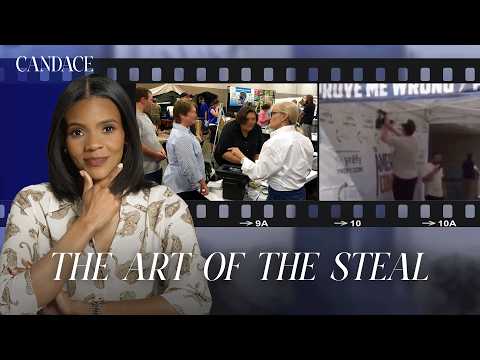
A YouTuber named Nicci did the kind of frame-by-frame comparison work that most people don't bother with. What she found, according to Owens in Lori Frantzve's Gun Deal? Terryl's Footage Faux Pas. | Candace Ep 328, is that the footage Terrell shared from Charlie Kirk's final event — shot from a camera positioned directly behind Kirk — was cropped in a way that removed the ground from view entirely. That detail matters because footage from other comparable events, shot from similar angles, does show the ground. It's not a technical limitation of the camera. It's a choice someone made in post.
Owens' read is that whatever was on the ground immediately after Kirk collapsed is the thing being hidden. Whether that's medical equipment, the absence of it, or something else entirely, she doesn't speculate beyond the crop itself — but the implication is clear enough. You don't cut out the floor by accident when the floor is exactly where the story is.
The SD Card That Should Have Been Gone
Here's the part that Candace Owens finds harder to explain away than the editing itself. Terrell had the SD card. He took it to Arizona. Federal agents were at the scene of Kirk's collapse, and standard procedure in a situation involving a high-profile death would be to confiscate evidence — including footage. The fact that Terrell walked away with the card, and that this apparently went unmentioned in any account of what happened at the scene, is the thread Owens is pulling on hardest.
She also notes that Terrell's stated reason for the two-day delay — that he wanted to protect Erica Kirk from seeing the footage — doesn't hold up well under scrutiny. Protecting someone from distressing footage and controlling when and how that footage enters the public record are two very different things, and Owens isn't buying that the first explains the second.
Our Analysis: The strongest part of Owens' case here is the Nicci comparison — showing that the ground appears in footage from other events but not in Terrell's is the kind of concrete, visual evidence that's difficult to argue with on technical grounds alone. The weakest part is the leap from 'this was cropped' to 'someone is hiding something specific.' Cropped footage is suspicious. It doesn't, by itself, tell you what was cropped out or why.
The SD card question is actually the more damaging detail, and Owens undersells it. If federal agents were present and the card was never confiscated, that's either a procedural failure worth documenting or evidence that the scene wasn't treated as one requiring evidence preservation — and neither of those options is reassuring.
What's worth adding here is a broader point about how footage custody works in high-profile cases — or is supposed to. When law enforcement is present at the scene of a prominent figure's death, the expectation is that anything potentially relevant gets logged, tagged, and accounted for. That's not a conspiracy-minded standard; it's basic evidentiary protocol. If that didn't happen here, the question isn't just why Terrell still had the card — it's whether anyone in an official capacity ever asked for it. The absence of that ask, if confirmed, is arguably the bigger story.
The two-day delay framing also deserves more attention than it's getting. In the age of immediate uploads and real-time documentation, a deliberate hold on footage from a public figure's death isn't just unusual — it's a decision with consequences for the public record. Whether that decision was made out of grief, legal caution, or something more calculated, the effect is the same: whoever controlled the timing also controlled the narrative around what the footage showed and what it didn't. That kind of leverage doesn't evaporate just because the footage eventually got released.
Frequently Asked Questions
What specific evidence supports the Charlie Kirk footage editing controversy?
Why is the Terrell SD card situation considered suspicious in Kirk's death investigation?
Why did Terrell wait two days to release the Charlie Kirk event footage?
What was potentially hidden by the cropping in the Kirk death video?
Who is Nicci, and how credible is her Kirk footage analysis?
Based on viewer questions and search trends. These answers reflect our editorial analysis. We may be wrong.
Source: Based on a video by Candace Owens — Watch original video
This article was created by NoTime2Watch's editorial team using AI-assisted research. All content includes substantial original analysis and is reviewed for accuracy before publication.
Related Articles
You Might Also Like
Mar 28
World News | Candace Owens Exposes Lies in Erica Kirk's Story
Mar 28
World News | Turning Point USA Breakdown: Candace Owens vs. Blake's Rant
Mar 28
World News | Candace Owens: Charlie Kirk Assassination Timeline Conflicting
Apr 2
True Crime | Tyler Robinson Trial: DNA Evidence Admissibility Criminal Trial Under Scrutiny