How to Prevent Alzheimer's Disease Naturally: Sherzais on Mel Robbins
Key Takeaways
- •Lifestyle interventions — diet, exercise, sleep, stress management, and cognitive engagement — can reduce Alzheimer's risk by 30–60%, according to the neurologists.
- •Amyloid plaques and tau tangles, the hallmarks of Alzheimer's, can begin accumulating 20+ years before any symptoms appear — making early habits the only real prevention window.
- •One daily serving of leafy greens is associated with a brain that appears 11 years younger on neuroimaging.
How Lifestyle Choices Can Reduce Alzheimer's Risk by Over 50%
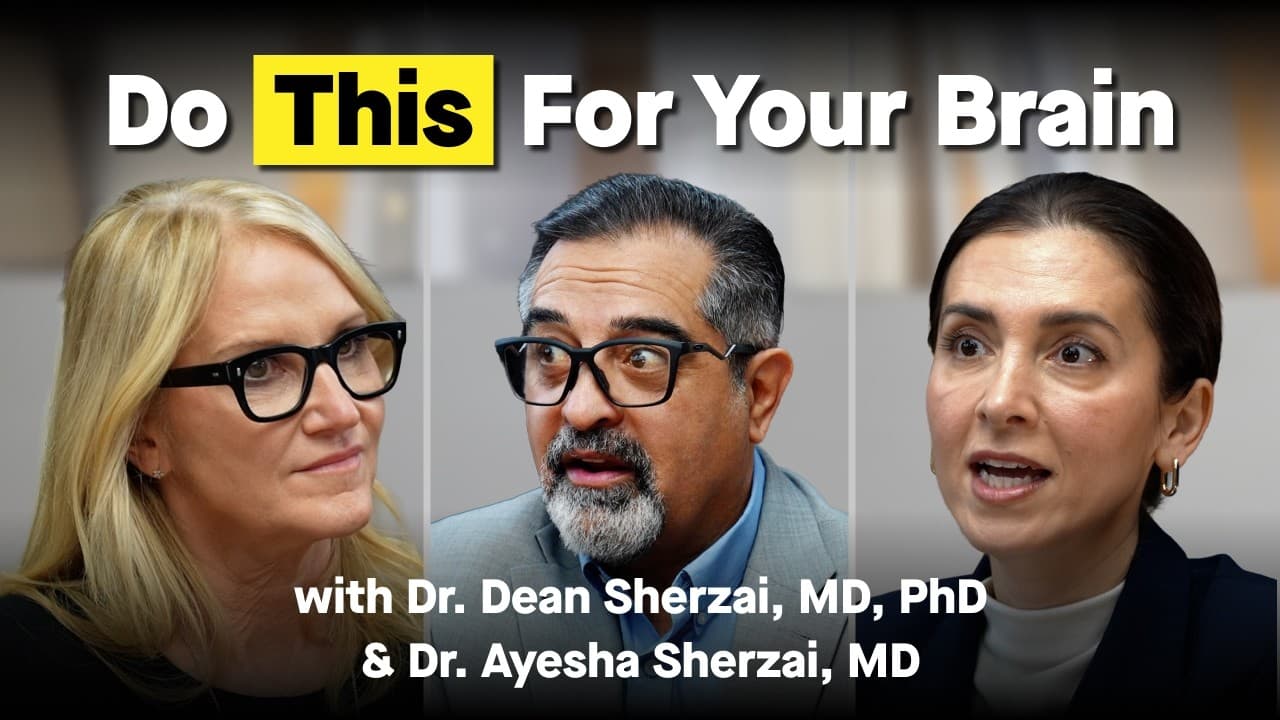
In #1 Neurologists: What You Can Do to Prevent Alzheimer's & Dementia, Mel Robbins sits down with Drs. Aisha and Dean Sherzai to dismantle the assumption that dementia is random, genetic, and inevitable. The research they cite suggests that more than half of dementia risk is tied to controllable lifestyle factors: what you eat, whether you move, how well you sleep, and whether chronic stress has quietly taken up permanent residence in your nervous system. These aren't marginal tweaks. Implemented consistently, the NEURO framework they've developed is associated with a 30–60% reduction in Alzheimer's risk across multiple studies. That's not a supplement company's claim — that's the kind of number that should make you put down the ultra-processed snack you're currently holding.
The Brain's Energy Demands and Vulnerability
Here's a fact that reframes everything: the brain accounts for roughly 2% of your body weight but consumes a disproportionate share of your body's total energy and oxygen. It is also, according to the doctors, the most vascular organ in the body — meaning it is threaded through with more blood vessels per unit than anything else you've got. That vascularity is what makes it so responsive to good habits. It's also what makes it so brutally sensitive to bad ones. Smoking, excessive alcohol, sedentary living, ultra-processed food — the brain absorbs the damage from all of these faster and more completely than most other organs. The same highway that carries nutrients in carries toxins in too.
The NEURO Framework: 5 Pillars of Brain Health
The doctors use the acronym NEURO — Nutrition, Exercise, Unwind, Restorative Sleep, Optimize — as a structure for what is essentially a complete lifestyle overhaul repackaged into something you can actually remember. Each pillar addresses a distinct biological mechanism, and the cumulative effect is what produces the dramatic risk-reduction numbers. None of these are exotic. That's either the most reassuring or the most annoying thing about this conversation, depending on how you feel about being told the answer was vegetables all along.
Nutrition: Why Leafy Greens Make Your Brain 11 Years Younger
Dr. Aisha — who is both a neurologist and a trained chef, which is a combination that should be more common — is emphatic that brain nutrition isn't about chasing superfoods. It's about adopting a consistent dietary pattern: plant-heavy, rich in leafy greens, cruciferous vegetables, nuts, seeds, legumes, and berries. The MIND diet and Mediterranean diet are the reference points. The specific stat that lands hardest: just one daily serving of leafy greens is associated with a brain that looks 11 years younger on neuroimaging. Beans and lentils get a specific callout for their fiber and complex carbohydrates, which help regulate glucose and counteract the inflammation and oxidative stress that accelerate cognitive decline. A healthy diet alone, they say, can reduce Alzheimer's risk by 53%.
The 600% elevated dementia risk for partners of dementia patients is the number that deserves more attention than it gets in this conversation. The doctors mention it, but they don't fully sit with what it implies: that dementia is, in a meaningful sense, socially contagious — not through infection, but through the lifestyle collapse that caregiving produces. Chronic sleep loss, no exercise, no mental stimulation, sustained cortisol elevation. The caregiver essentially replicates the conditions that caused the disease in the person they're caring for. That's a public health problem with almost no infrastructure around it.
The NEURO framework is solid and the evidence base is real, but the conversation largely sidesteps socioeconomic access. Leafy greens, gym memberships, low-stress environments, and eight hours of sleep are not equally available to everyone. Framing dementia prevention as a series of individual choices works well for the audience already watching a wellness podcast — it's less useful as a complete picture of why cognitive decline rates look the way they do across different populations.
Frequently Asked Questions
What is the difference between Alzheimer's and dementia?
What is the number one food to prevent Alzheimer's?
Why is there no cure for Alzheimer's yet?
How do you prevent Alzheimer's disease naturally, according to neurologists?
Can chronic stress actually cause dementia, or does it just make symptoms worse?
Based on viewer questions and search trends. These answers reflect our editorial analysis. We may be wrong.
Source: Based on a video by Mel Robbins — Watch original video
This article was created by NoTime2Watch's editorial team using AI-assisted research. All content includes substantial original analysis and is reviewed for accuracy before publication.