Dr. Mike Debunks Medical Misinformation Health Lies: What You Don't Know
Key Takeaways
- •Online health 'experts' who give definitive answers to complex medical questions are a red flag — real doctors admit uncertainty.
- •Chemophobia (fear of chemicals) is scientifically illiterate and actively exploited by misinformation peddlers; water is a chemical.
- •The anti-aging industry pathologizes a normal biological process and routinely uses preliminary research to sell products that don't work.
The Confidence Problem
Dr. Mike's core argument about medical misinformation isn't complicated, but it cuts through a lot of noise: the people online who sound the most certain are usually the ones you should trust the least. Real medicine is full of uncertainty. A doctor who tells you they're not sure what's causing your symptoms and wants to investigate further is doing their job correctly. A person on YouTube who diagnoses your headache in 90 seconds and sells you a supplement in the next breath is doing something else entirely. Dr. Mike started building his social media presence specifically to push back against this dynamic — the idea that confidence equals competence is one of the most dangerous assumptions people bring to health content.
Chemophobia Is a Marketing Strategy
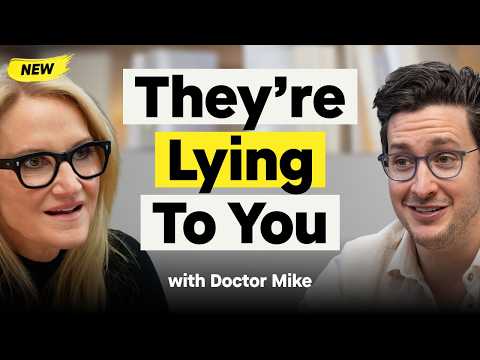
The fear of chemicals — chemophobia — is one of the most successfully exploited anxieties in the wellness space. Dr. Mike is blunt about this: everything is a chemical. Water is a chemical. The oxygen you're breathing right now is a chemical. When a product markets itself as 'chemical-free,' it is either lying or the label writer never passed high school chemistry. The fear gets weaponized particularly around food preservation, medicines, and skincare — areas where 'natural' gets treated as synonymous with 'safe' and 'synthetic' with 'dangerous,' which is not how any of this works. If you've ever gone down a rabbit hole worrying about ingredients you can't pronounce, this is worth watching in The Top 5 Health Lies & The Truth You Need to Feel Better Today | Doctor Mike, hosted on the Mel Robbins channel.
Our Analysis: Dr. Mike is good at this — the debunking format, the accessible explanations, the social media instincts. But the video spends a lot of time on chemophobia and anti-aging without naming the specific accounts or products driving the worst of it. That's a choice, probably a legal and platform-friendly one, but it means the advice stays abstract. Telling people to watch out for overconfident health claims is useful. Telling them which overconfident health claims are currently circulating and why they're wrong would be more useful.
The chemophobia section is the sharpest part of the conversation because it's the most falsifiable — you can actually demonstrate that water is H2O and that 'chemical-free' is nonsense. The anti-aging critique is correct but softer, because the line between legitimate longevity research and grift is genuinely blurry, and the video doesn't do much to help people draw it.
There's a broader structural problem worth naming here that the video gestures at without fully unpacking: the wellness misinformation economy isn't just a knowledge problem, it's an incentive problem. The people spreading chemophobia and anti-aging pseudoscience are usually selling something — a supplement, a detox protocol, a membership community. The fear is the product funnel. Dr. Mike's corrective works on the level of facts, but facts alone have a poor track record against emotionally resonant misinformation, especially when the person delivering the misinformation has already built a parasocial relationship with their audience. The supplement seller who posts daily about your toxic tap water feels like a friend by the time they're asking for your credit card number.
What's underexplored in conversations like this one is what makes people vulnerable to this content in the first place. It's rarely pure stupidity. It's usually a combination of legitimate distrust in institutions, previous experiences of being dismissed by doctors, and the very human desire for control over your own health. The wellness grift exploits all three. A more complete version of this conversation would spend as much time on why people fall for health misinformation as on what the misinformation actually says — because understanding the emotional mechanics is what makes you resistant to the next wave of it, not just the current one.
Frequently Asked Questions
What are the biggest medical misinformation health lies debunked by doctors like Dr. Mike?
How do you spot unreliable health advice online?
Is 'chemical-free' actually a meaningful label on food or skincare products?
Why do people believe health misinformation on social media even when it's wrong?
What's a concrete warning sign that someone is selling fake health advice?
Based on viewer questions and search trends. These answers reflect our editorial analysis. We may be wrong.
Source: Based on a video by Mel Robbins — Watch original video
This article was created by NoTime2Watch's editorial team using AI-assisted research. All content includes substantial original analysis and is reviewed for accuracy before publication.