How to Start Tomato Seeds Indoors for Stronger Plants
Key Takeaways
- •Next Level Gardening's video 'Best Way to Start Tomato Seeds Indoors to Grow Strong Plants' argues that how you start tomato seeds indoors matters far more than how deep you plant them outside.
- •The method centers on building a serious root system before a single seedling touches garden soil, using larger cups, bottom watering, strategic stem burial, and grow lights positioned just 2-3 inches above plants.
- •Most gardeners lose their edge at the germination stage by using small cell trays and weak light, and this video makes a compelling case for why that early window is where strong tomato plants are actually made or lost.
The Root System Is Built Indoors, Not in the Garden
Most gardeners have heard that tomatoes can be planted deep outside because the buried stem grows new roots. True. But in Best Way to Start Tomato Seeds Indoors to Grow Strong Plants, Next Level Gardening flips the priority: the real root-building opportunity happens indoors, in warm and controlled conditions, weeks before the garden is even an option. The argument is that waiting until transplant day to trigger stem rooting wastes the most favorable growing window you have. If you want to know how to start tomato seeds indoors in a way that actually produces strong plants rather than just surviving ones, the answer starts before the seed even germinates. That reframing alone changes how you think about the entire process.
Why an 18-Ounce Cup Beats a Seed Tray
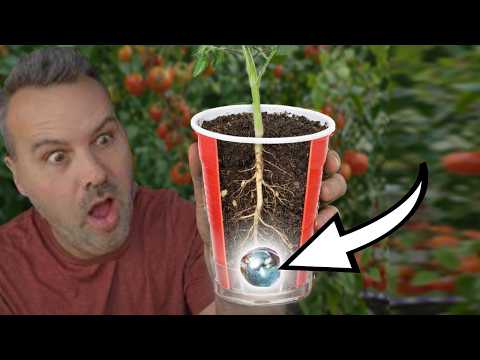
Traditional small cell trays are convenient and they do work, in the way that a folding chair works when you need somewhere to sit. The problem is that roots hit the walls fast, the plant stalls while you repot it, and every repotting step is a small trauma the seedling has to recover from. Next Level Gardening recommends starting in an 18-ounce plastic cup with three small drainage holes punched into the bottom, filled only halfway with pre-moistened sterilized potting mix. Two seeds go in per cup, covered with a quarter-inch of soil or vermiculite. The half-full cup is not laziness. It is a deliberate reservation of space for the stem burial technique that comes later. Skipping the cell tray entirely means skipping two or three repotting steps, which means the plant just keeps growing without interruption, and that uninterrupted momentum is exactly what you are after.
Bottom Watering and the Two-Cup Setup
Overwatering from the top is one of the most common ways seedlings die. The soil stays wet at the surface, damping off sets in, and suddenly your carefully planted seeds are gone. The fix is almost embarrassingly simple. The planted cup sits inside a second, preferably clear, outer cup that holds water reaching just halfway up the drainage holes. The soil wicks moisture upward as needed, stays consistently damp without becoming saturated, and the clear outer cup lets you see exactly how much water is left. A humidity dome, something as basic as a plastic bag, goes over the top until germination happens, then comes off. The whole system costs almost nothing and solves the two biggest seedling killers at once. For anyone building out a proper growing setup, understanding your soil moisture management is just as important as the light situation above the canopy.
Our Analysis: Solid fundamentals, well sequenced. The bottom watering advice alone will save a lot of seedlings that would have otherwise rotted out from surface watering habits.
What's missing is any honest talk about grow light distance. Telling beginners to "get adequate light" without specifying that a cheap LED needs to sit 2 to 3 inches above the canopy is where the leggy seedling problem actually starts. That gap in the advice is where most people fail.
Pinching the first flower cluster is a harder sell for impatient growers. A sentence on what you actually gain from that delay would land better than just telling people to do it.
There's also a broader principle worth naming here that the video gestures at but never quite states directly: indoor seed starting is not a waiting room. It is the actual training ground. The gardeners who treat the indoor phase as just a way to get seeds to sprout are the same ones who wonder why their transplants sulk for two weeks after going in the ground. The cup method, the bottom watering, the stem burial — these are all techniques that treat the seedling as something to be developed, not just kept alive. That distinction matters more than any single tip in the video, and it is the mindset shift that separates growers who consistently produce strong transplants from those who get inconsistent results year after year. If there is one editorial note worth adding, it is that: the system works because it respects what the plant is trying to do, not because any one step is magic.
Frequently Asked Questions
What is the best method for starting tomato seeds indoors?
What month should you start tomato seeds indoors?
How long does it take for tomato seeds to sprout indoors?
Why do tomato seedlings get leggy indoors, and how do you prevent it?
Is bottom watering actually better for tomato seedlings than watering from the top?
Based on viewer questions and search trends. These answers reflect our editorial analysis. We may be wrong.
Source: Based on a video by Next Level Gardening — Watch original video
This article was created by NoTime2Watch's editorial team using AI-assisted research. All content includes substantial original analysis and is reviewed for accuracy before publication.