Growing Tomatoes from Hybrid Seeds: McDonald's Quarter Pounder
Key Takeaways
- •Seeds extracted from McDonald's burger tomatoes germinated at high rates within 8 days, proving commercial produce seeds are viable despite their processed-food origin.
- •Hybrid tomato seeds do not grow true to type — plants grown from a likely-hybrid beefsteak burger tomato produced Roma-style fruit instead, smaller and different in shape.
- •Ground-planted tomatoes dramatically outperformed container-grown counterparts; inconsistent watering in the container caused blossom end rot and slashed the yield.
Can You Actually Grow Tomatoes from a McDonald's Burger
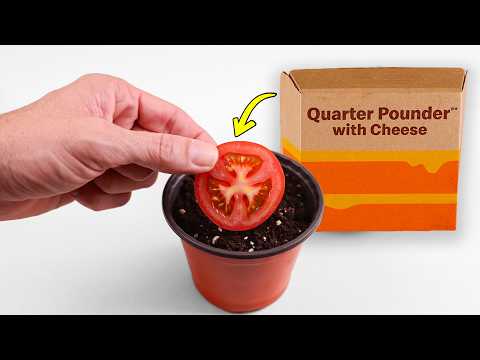
In What Happens When You Grow a Tomato from a McDonald's Burger?, James Prigioni starts with two Quarter Pounder Deluxe burgers and pulls the tomato slices out. From there, he went two routes: manually extracting individual seeds and stripping their translucent casings, and planting one whole slice directly into prepared soil. Both went onto a heat mat. Both sprouted. Within eight days, he had seedlings from a burger he bought at a drive-through, which is either the most impressive thing a heat mat has ever done or the most embarrassing thing McDonald's quality control has ever allowed.
Why Hybrid Tomato Seeds Never Give You What You Expect
Here is where growing seeds from hybrid tomatoes gets interesting, and slightly humbling. The tomatoes used in McDonald's burgers are almost certainly hybrid varieties, bred for uniformity, shelf life, and the ability to survive a supply chain that would destroy most produce. When you save seeds from a hybrid plant and grow them out, the offspring revert toward the parent genetics in unpredictable ways. Prigioni anticipated something resembling a beefsteak. What he got were Roma-type tomatoes, smaller and more oblong, with characteristics neither parent variety would have predicted. This is not a failure of the experiment. It is exactly what hybrid seed biology does, and it is the reason commercial growers never save seed from their own crops.
Ground vs. Container — Where the Real Gap Opens Up
Prigioni ran both plants simultaneously, which turned out to be the smartest decision in the whole experiment, because the contrast was stark. The ground-planted tomato had access to consistent moisture, stable soil temperature, and room for root expansion. It responded by producing an almost unreasonable quantity of fruit, enough that branches needed support just to stay upright. The container plant had none of those advantages by default, and when watering became inconsistent during a hot stretch, the plant paid for it immediately.
What Blossom End Rot Actually Tells You
Blossom end rot showed up on the container plant, and it is one of those problems that looks like a disease but is really a symptom of management. The dark, sunken rot at the base of the fruit happens when calcium uptake is disrupted, and the most common cause is irregular watering. Calcium does not move through the plant efficiently when soil moisture swings from dry to waterlogged and back again. Container plants are especially vulnerable because they have no buffer, no surrounding soil to draw from when the gardener forgets to water for a day. The ground plant, sitting in stable earth, never had this problem. It just kept producing.
Managing a Harvest That Gets Out of Hand
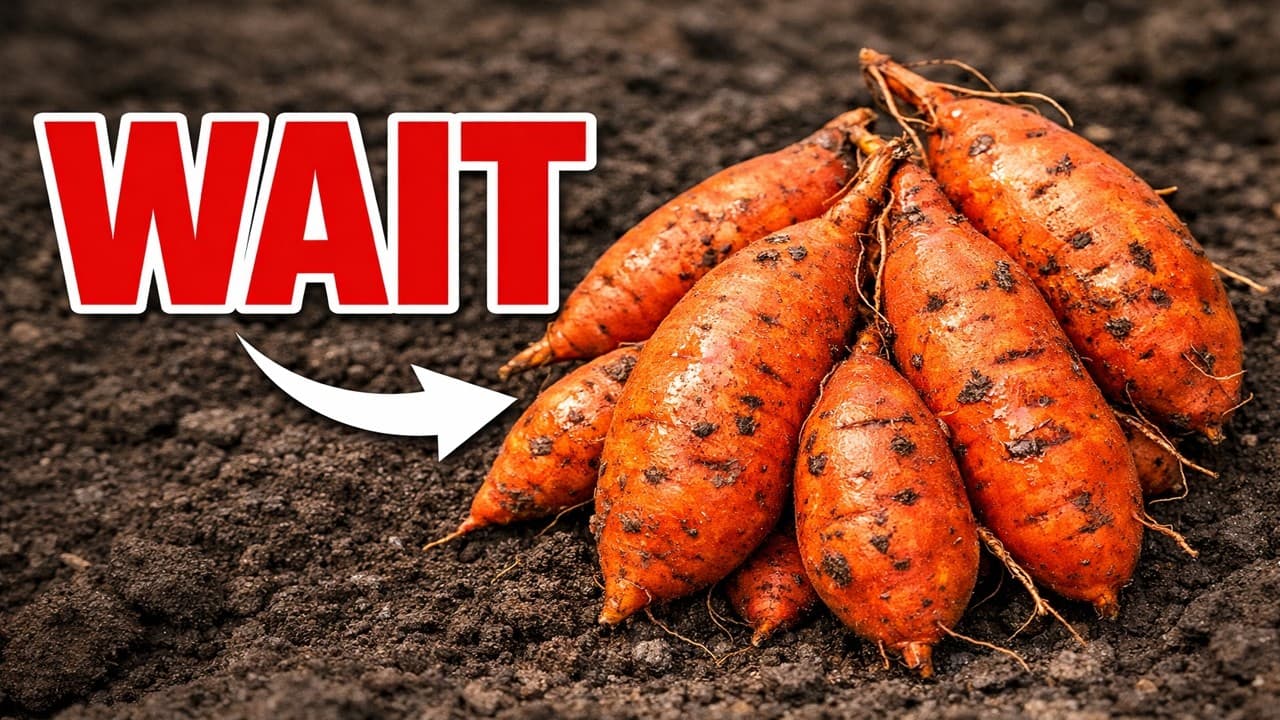
The ground tomato produced so much fruit that ripening became a logistics problem. Prigioni's solution was practical and grounded in actual plant biology: place unripe tomatoes in a cardboard box with an apple, seal it, and let ethylene gas do the work. Apples are among the highest ethylene-producing fruits, and ethylene is the gas that triggers ripening in climacteric fruits like tomatoes. The closed box concentrates it. This is not folk wisdom, it is the same principle commercial ripening facilities use at industrial scale, just without the warehouse. The fact that you can replicate it with a cardboard box and a Granny Smith is one of those gardening details that sounds too simple to be real until you try it.
What the Experiment Actually Proved
Growing seeds from hybrid tomatoes sourced from a fast-food burger is not a viable long-term seed-saving strategy, and Prigioni does not pretend otherwise. What the experiment did prove is that germination rates from commercial produce seeds can be surprisingly high, that ground planting consistently outperforms container growing when conditions are not tightly managed, and that hybrid offspring are genuinely unpredictable in ways that are more interesting than they are disappointing. The Roma-type tomatoes that came out of a Quarter Pounder were productive, sweet, and completely functional. They just were not what anyone ordered.
Our Analysis: Prigioni buries the most useful finding. The ground-planted tomato went berserk while the container plant underperformed, and he treats it like a fun bonus rather than the whole point. If you're replicating this, skip the pot entirely.
The hybrid seed disclaimer also deserves more weight. Growing from commercial produce is a coin flip on fruit quality, and casual gardeners will expect a McDonald's tomato and feel cheated when they get something else. That expectation gap matters.
The apple-in-a-box ripening trick is genuinely practical and most people have never heard it. That alone makes the video worth a watch.
Frequently Asked Questions
Will seeds from hybrid tomatoes actually grow into healthy plants?
What is the biggest disadvantage of growing tomatoes from hybrid seeds?
Why does growing tomatoes from hybrid seeds produce such dramatically different results between plants?
Does putting tomatoes in a box with an apple actually speed up ripening?
Can you grow tomatoes from McDonald's burger seeds as a legitimate seed-saving strategy?
Based on viewer questions and search trends. These answers reflect our editorial analysis. We may be wrong.
Source: Based on a video by James Prigioni — Watch original video
This article was created by NoTime2Watch's editorial team using AI-assisted research. All content includes substantial original analysis and is reviewed for accuracy before publication.