Why Inflation Doesn't Match Real Prices (Video Breakdown)
Key Takeaways
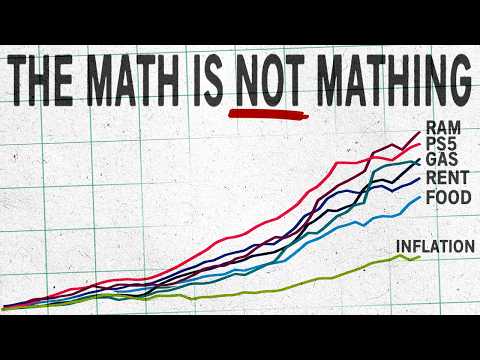
- •Official inflation sits around 3%, but How Money Works breaks down exactly why that number doesn't match what people are actually paying in the video 'How Is The Price Of Everything Outpacing Inflation At The Same Time?' The Bureau of Labor Statistics uses measurement methods — including quality adjustments for technology and an indirect housing metric called Owner's Equivalent Rent — that systematically undercount the real cost of living increases most consumers experience.
- •On top of the statistical quirks, real-world tactics like shrinkflation and dynamic pricing are quietly making everything more expensive in ways that never show up in a headline figure.
- •The gap between reported inflation and lived reality is widest for younger professionals, who are absorbing all of these pressures at once.
The Number Nobody Actually Believes
Inflation is officially around 3%. Ask almost anyone paying rent, buying groceries, or replacing a broken appliance how that number feels, and you will get a very specific look. How Money Works frames this gap as the central problem: the Consumer Price Index is a real methodology built by serious economists, and it still manages to produce a figure that bears almost no resemblance to the financial experience of the average person. The basket of goods is supposed to average out, with some things getting cheaper to offset the things getting more expensive. The uncomfortable truth is that very few people can name the things that are actually getting cheaper.
When Your Phone Gets 'Cheaper' Without Getting Cheaper
Here is where the Bureau of Labor Statistics starts making choices that sound reasonable in a textbook and feel insane in a store. When a new smartphone hits shelves with better processing power, a sharper camera, and more storage than last year's model at the same retail price, the BLS doesn't record that as flat. It records it as a price decrease, because you are getting more capability per dollar. Statistically, your phone got cheaper. Your bank account disagrees. How Money Works points out that this quality adjustment logic only holds if you actually use those features, which a meaningful portion of consumers simply don't. Paying the same amount for specs you'll never touch is not a discount by any normal human definition.
The Housing Metric That Lives in an Alternate Universe
If you want one single methodological choice that explains most of the disconnect between official inflation and real life, Owner's Equivalent Rent is probably it. Rather than tracking home prices directly, the BLS estimates what homeowners would theoretically pay to rent their own homes and uses that as a housing cost proxy — a number that lags actual market conditions, sometimes by years. It also ignores mortgage interest, property taxes, insurance premiums, and maintenance costs entirely — the exact expenses that eat a homeowner's budget every single month. Housing is the largest line item for most households, and the official inflation rate is measuring it with an instrument that isn't pointed at it. That's not a minor rounding error; it's a structural blind spot, and it produces predictably optimistic results. The broader conversation about how supply constraints warp pricing across entire economies is something we tracked in the context of the How Is The Price Of Everything Outpacing Inflation At The Same Time? — a recent video from How Money Works that lays out each of these mechanisms in sequence and is worth watching alongside this piece.
Our Analysis: The video is right that CPI is a political document as much as an economic one. When the government smooths out housing costs using a fictional rent number instead of actual mortgage payments, they're not measuring your life. They're measuring a model of your life.
What the video soft-pedals is the class split this creates. A 3% official rate is defensible if you own assets. If you're renting and buying food and replacing a car, you're living in a completely different economy that nobody in Washington is officially tracking.
There's a second layer worth naming: the people designing these metrics are not malicious, but they are insulated. Academic economists and government statisticians tend to own homes, hold investment accounts, and upgrade their phones on employer plans. The methodology reflects a lifestyle where quality adjustments feel intuitive, because more capability per dollar genuinely registers as value. For someone on a fixed income replacing a washing machine they can't afford, the nuance that the new model has a better motor is not a comfort.
The shrinkflation angle is particularly corrosive because it operates below conscious awareness. You don't notice the bag of chips lost half an ounce. You just notice, eventually, that your grocery budget doesn't stretch as far as it used to, with no obvious explanation. That diffuse, hard-to-articulate sense that something is wrong with the numbers is exactly what makes official inflation figures feel so alienating — not just inaccurate, but gaslit. The gap between what institutions report and what people experience erodes trust in ways that go well beyond economics, and that's a cost no index is currently measuring either.
Frequently Asked Questions
Why is inflation low but prices still high?
Why doesn't inflation match real prices — what's actually causing the gap?
How much does inflation actually undercount real cost of living increases?
What is Owner's Equivalent Rent and why does it matter for inflation measurement?
What is shrinkflation and does it actually show up in official inflation data?
Based on viewer questions and search trends. These answers reflect our editorial analysis. We may be wrong.
Source: Based on a video by How Money Works — Watch original video
This article was created by NoTime2Watch's editorial team using AI-assisted research. All content includes substantial original analysis and is reviewed for accuracy before publication.