Print-on-Demand Business Model: How He Built 7-Figure Brands with AI
Key Takeaways
- •The Sloth Hiking Club store generated $848,067 in its first year with a net profit of ~$139,715 after fulfillment (40%), advertising (38%), fees (4%), and software costs.
- •AI tools like Claude are used to identify niche humor, generate design concepts, and create image prompts — cutting the creative bottleneck that kills most POD stores early.
- •Print-on-demand fulfillment partners handle production, shipping, and misprints entirely, making the model scalable without inventory or physical overhead.
What Is the Print-on-Demand Business Model, Really?
Most people hear 'print-on-demand' and picture someone uploading clip art to Redbubble and waiting for passive income that never comes. The actual print-on-demand business model is more structured than that. You create designs, list them on your own Shopify store, run paid ads, and when an order comes in, a fulfillment partner like Printify or Printful prints and ships the product directly to the customer. No warehouse. No bulk orders. No inventory sitting in your garage.
The model sits somewhere between dropshipping and white-labeling. Dropshipping removes inventory risk but gives you zero control over product quality. White-labeling gives you quality control but requires upfront stock. POD threads the needle — you get quality control through vetted print partners, faster domestic shipping, and no capital tied up in stock. The tradeoff is margin: you pay roughly $1–2 more per shirt compared to bulk ordering, and fulfillment costs average around 40% of revenue. That's the price of running lean. In UpFlip's video How This Guy Uses Ai To Build a $25M Print-on-Demand Business., these cost structures are laid out with enough specificity to make the model feel real rather than theoretical. Related: How to Create a Budget That Works: Mel Robbins & The Budgetista
Why T-Shirts and Nothing Else (At First)
The product focus here is deliberate and specific: t-shirts only, until you hit at least $10,000 in sales. Not hoodies. Not mugs. Not tote bags. T-shirts. The reasoning is straightforward — the average person owns many of them, they wear out and get replaced, and they're one of the most gifted items in any niche. High giftability plus consumability equals repeat purchase potential without a loyalty program.
Three shirt options come up repeatedly: the Gildan 64000 for reliability, the Bella Canvas 3001 for softness, and Comfort Colors for premium positioning. The point isn't to obsess over which blank is best — it's to pick one, learn what your niche responds to, and not dilute your attention across product types before you've proven the design concept works. Even after expanding to hoodies, t-shirts tend to remain the dominant revenue driver. That's not a coincidence — it's a signal worth respecting. Related: Elon Musk's Hiring Strategy for Executives: The Stress Test
Using AI to Do the Creative Heavy Lifting
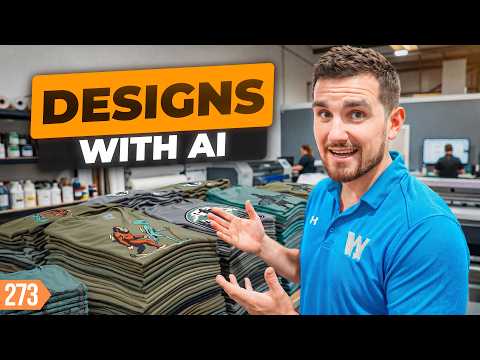
The design process starts with market research: identifying what's already selling in a niche using tools like Everbee to surface top-performing products. Then Claude — Anthropic's AI, not ChatGPT — gets prompted to identify the inside jokes, common slogans, and shared references within that niche community. From there, it generates concepts for designs that haven't been done yet, which then get turned into image prompts for a visual AI tool called Nano Banana. Related: Canada Housing Crisis Affordability: A Global Warning
The output gets cleaned up — backgrounds removed, resolution increased for print — and then it's ready to upload. The whole pipeline from 'I need a new design' to 'this is ready for Printify' is faster than hiring a freelance designer for every concept, and it scales in a way a single designer never could.
Our Analysis: The Sloth Hiking Club numbers are real and the model is legitimate, but the video glosses over the part that actually determines whether someone succeeds or fails: the 38% ad spend only works if you already know how to run Meta campaigns. A beginner spending $12.50 a day with no prior ad experience will almost certainly burn through their budget optimizing for the wrong signals before they figure out what a good ROAS actually looks like in practice. The math presented assumes competence the target audience doesn't yet have.
There's also a quiet tension in the AI design workflow. Claude and image generators can produce volume fast, but the designs that actually sell in niche communities tend to come from someone who understands the in-jokes from the inside. Sloth Hiking Club worked because the humor landed. AI can generate prompts — it can't tell you whether a hiking joke is actually funny to hikers or just plausible-sounding to an algorithm.
What the video also leaves largely unaddressed is the platform dependency risk baked into the entire model. Running paid traffic to a Shopify store means you're simultaneously exposed to Meta's ad policy shifts, Printify or Printful's fulfillment reliability, and Shopify's own fee structure. Any one of those three legs can wobble. The entrepreneurs who've built durable POD businesses tend to be the ones who diversified their traffic sources early — SEO, email lists, organic social — rather than staying 100% reliant on paid acquisition once they found a winning product. The $848,067 first-year number is compelling, but it's worth asking how much of that growth compounds into year two versus needing to be re-bought with ad spend every single month.
Frequently Asked Questions
Is print-on-demand actually profitable, or do the margins make it not worth it?
How hard is it to start a print-on-demand business with no experience?
Do you need an LLC to run a print-on-demand business?
How does the print-on-demand business model compare to regular dropshipping?
Can AI tools actually replace a designer for print-on-demand, or is that overstated?
Based on viewer questions and search trends. These answers reflect our editorial analysis. We may be wrong.
Source: Based on a video by UpFlip — Watch original video
This article was created by NoTime2Watch's editorial team using AI-assisted research. All content includes substantial original analysis and is reviewed for accuracy before publication.