Private Credit Crisis Default Rates Hit Warning Levels

Key Takeaways
- •Private credit institutions, acting as largely unregulated shadow banks, are now carrying default rates of 9% to 15% — already above the 8% threshold that cracked the 2008 housing market — and most investors have no idea they're exposed.
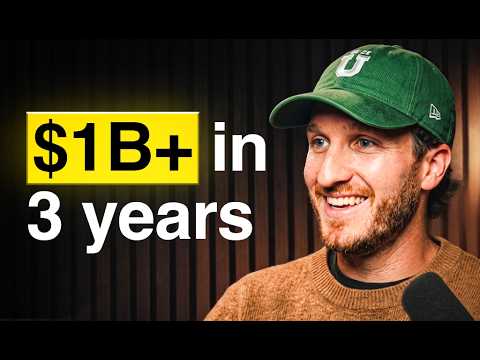
- •In a video titled 'The #1 Biggest Threat To The US Economy Since 2008 - Most Are Missing This,' Minority Mindset breaks down how post-Dodd-Frank regulations pushed lending into the shadows and created systemic risk with no obvious exit.
- •The Federal Reserve can't cut rates fast enough to help because inflation won't cooperate, the Treasury Secretary has ruled out bailouts, and millions of ordinary Americans are sitting inside this exposure through their 401ks and pension funds without knowing it.
The Shadow Banks Nobody Regulated
After 2008, regulators came for the banks. Dodd-Frank tightened lending standards, restricted risk-taking, and made it genuinely harder for traditional banks to offer large loans or high-yield products. Which created a gap. And private credit walked straight through it. These firms function like banks — they take investor capital, lend it out to businesses at high interest rates, and pocket the spread — but without the regulatory oversight that comes with a banking license. No reserve requirements. No stress tests. Fewer questions. Investors were attracted by the promise of returns that looked a lot better than anything a savings account was offering. The whole setup worked beautifully, right up until it didn't.
Default Rates Already Past the 2008 Watermark
Here is the number that should be making more headlines. Private credit loan default rates are currently sitting at 9%, with some estimates pushing toward 15%. The default rate that broke the housing market in 2008 was 8%. The industry crossed that line and kept going. In The #1 Biggest Threat To The US Economy Since 2008 - Most Are Missing This, Minority Mindset points out that a large share of these loans were originated during the low-interest-rate environment of the early 2020s, when businesses could afford the debt. Then rates climbed sharply starting in 2022, and adjustable-rate loans repriced accordingly. Businesses that could service their debt at 3% suddenly couldn't at 7% or 8%. The defaults followed. This is not a warning about something that might happen — it is a description of something already in progress, and the broader market has been slow to price it in, which is either a lag or a denial, and neither answer is comforting.
Our Analysis: The video nails the core problem but buries the scariest part. Private credit firms insuring their own CLOs through their own insurance subsidiaries is not just a conflict of interest. It is the same circular logic that made 2008 catastrophic, just wearing a different hat.
What it misses is the exit. The Treasury Secretary dismissing bailouts sounds tough until $400 billion in pension-adjacent capital starts bleeding out. Politicians have never actually let that happen.
Watch insurance company balance sheets. That is where this unravels first, not the credit firms themselves.
There is a deeper structural problem worth naming. The entire post-2008 regulatory architecture was built to make banks safer. It succeeded, more or less. But it also guaranteed that risk would migrate somewhere less visible, somewhere without capital requirements or stress tests, somewhere ordinary savers would follow chasing yield without fully understanding what they were buying into. Private credit did not emerge despite Dodd-Frank. It emerged because of it. That is not an argument against regulation — it is an argument for regulators to run faster than the capital looking for exits.
The 401k and pension exposure angle is the one that keeps this from being a Wall Street-only story. When the losses are confined to sophisticated investors who understood the risk, the political pressure to intervene stays manageable. When teachers and nurses and retirees are on the wrong end of it, the calculus changes fast. The Treasury Secretary's current posture on bailouts will be tested the moment that constituency becomes visible, and the numbers suggest that moment is closer than most people realize.
The honest read here is that this is a slow-moving crisis being treated like a market correction. Those two things require very different responses, and the window for the right one is not staying open indefinitely.
Frequently Asked Questions
What is the current default rate on private credit loans?
What is the default rate outlook for private credit in 2025 and 2026?
How do CLOs make private credit default rates a systemic risk rather than just a private investment problem?
Are 401k and pension fund investors actually exposed to private credit defaults?
Why can't the Federal Reserve just cut interest rates to fix the private credit crisis?
Based on viewer questions and search trends. These answers reflect our editorial analysis. We may be wrong.
Source: Based on a video by Minority Mindset — Watch original video
This article was created by NoTime2Watch's editorial team using AI-assisted research. All content includes substantial original analysis and is reviewed for accuracy before publication.