Religion & Science: Debunking the Conflict Argument
Key Takeaways
- •A YouTube channel called Whaddo You Meme?
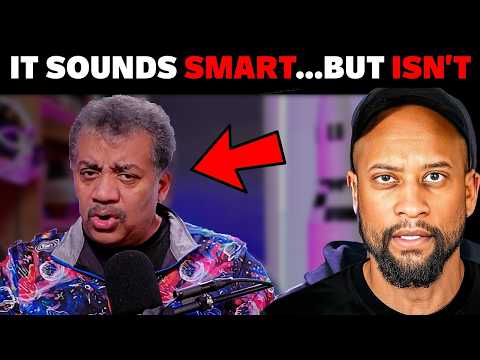
- •is pushing back on a widely-shared argument — most recently associated with Neil deGrasse Tyson's Startalk podcast — that religion is inherently dangerous because it relies on belief rather than evidence.
- •In a video titled "Millions are Falling For This LIE About Christianity," the presenter dismantles the claim that science resolves conflict rationally while belief systems resort to violence, arguing the real problem is human nature itself.
The Popular Argument: Why Scientists Say Religion Causes Conflict
The science vs religion conflict debate has a version that keeps going viral, and it sounds airtight on the surface: science resolves disagreements by seeking better evidence, while belief systems — lacking that mechanism — end up coercing people instead.
Neil deGrasse Tyson's Critique of Belief-Based Systems
On his Startalk podcast, Neil deGrasse Tyson has framed religion as structurally prone to conflict precisely because its claims can't be empirically verified. The argument lands well because it comes wrapped in the authority of a working scientist presenting himself as a neutral observer — which is exactly what makes it worth examining closely.
The Fatal Flaw in the Science vs. Religion Debate
The Whaddo You Meme? presenter identifies a problem the argument never addresses: the claim that science is the only reliable path to objective truth is itself a belief. Science didn't prove that. It can't.
Science's Own Unproven Assumptions About Truth
The idea that truth is worth pursuing, that evidence matters, that conclusions should follow from data — these are foundational values that sit underneath science, not inside it. They're not derivable from a lab result. Calling religion irrational for holding unverifiable beliefs, while standing on unverifiable beliefs yourself, is the kind of contradiction that tends to get glossed over in a confident enough delivery.
Historical Evidence: How Christianity Actually Spread
The argument assumes that belief systems without rational proof eventually turn to force. Christianity's early history is a fairly direct test case for that claim — and it doesn't hold up.
Early Christian Martyrdom vs. Forced Conversion
The first generations of Christians spread their message while being fed to lions, not while commanding armies. They were tortured, executed, and scattered across the Roman Empire, and the movement grew anyway — through persuasion and example. Jesus Christ's own teaching explicitly ruled out violence and commanded love toward enemies. That's not the profile of a movement that defaults to coercion when arguments fail.
Science Isn't Immune to Destructive Ideologies
The historical record gets uncomfortable here for anyone arguing that scientific thinking is a natural safeguard against mass violence.
Scientific Racism and Nazism: When Science Justified Evil
Eugenics was presented as rigorous biology. Scientific racism used empirical-sounding language to rank human beings by supposed evolutionary fitness. Nazism drew on both. These weren't fringe rejections of science — they were embraced by credentialed researchers and published in academic journals. The point isn't that science caused the Holocaust. The point is that scientific framing didn't prevent it, which chips away at the premise that rational, evidence-based thinking is a structural barrier to atrocity.
What Science Cannot Tell Us: The Morality Gap
Science is genuinely good at describing what is. It has essentially nothing to say about what should be.
Why Empirical Data Fails to Answer 'What Should Be'
When someone argues that we'd all be better off in a more peaceful world, that's a moral claim. No amount of data produces it. Human rights, the value of a life, the wrongness of cruelty — these are beliefs, and treating them as self-evident doesn't make them scientific. Tyson's argument that religion causes harm implicitly relies on a moral framework it never identifies or defends. You can't derive "this is bad" from a graph.
The Real Root Cause of Human Conflict
Whaddo You Meme? actually agrees with the starting observation — humans cause an extraordinary amount of harm to each other. The disagreement is over why.
Human Nature, Sin, and Tribalism Beyond Ideology
The presenter's argument is that the root problem isn't religion, or irrationality, or insufficient data — it's something deeper that theologians call sin and secular thinkers call tribalism or the will to power. This internal corruption doesn't care what flag it flies under. It has animated religious wars, yes. It has also animated purges carried out in the name of scientific materialism. The container changes; the contents don't. This isn't entirely unlike what other faith traditions identify as the core problem — as we explored in coverage of Our Analysis: The video lands its sharpest punch when it turns the skeptic's argument back on itself — "science alone determines truth" is a philosophical claim, not a scientific one. That's a genuinely good catch most people skip past. Where it gets thinner is assuming that naming "sin" as the root problem will satisfy anyone who isn't already sympathetic. The diagnosis is fair; the prescription assumes the conclusion. The broader trend here is apologists moving from defense to offense, challenging secular humanism on its own logical terms. That's a smarter fight, and expect to see a lot more of it. Based on viewer questions and search trends. These answers reflect our editorial analysis. We may be wrong. Source: Based on a video by Whaddo You Meme? — Watch original video This article was created by NoTime2Watch's editorial team using AI-assisted research. All content includes substantial original analysis and is reviewed for accuracy before publication.Frequently Asked Questions
What is the science vs religion conflict actually about, and does science really prevent violence better than religion?
Is Neil deGrasse Tyson's argument that religion causes conflict based on solid evidence?
Did Christianity actually spread through violence, or is that a misconception?
Can science answer moral questions, or does it have limits when it comes to ethics?
If religion isn't the root cause of human conflict, what is?
Related Articles
You Might Also Like