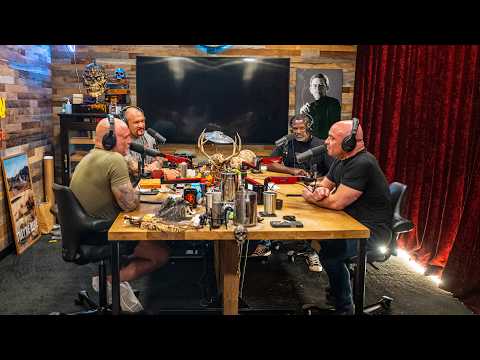
David Cross comedy career Boston stand-up: From Nomad to Netflix Star
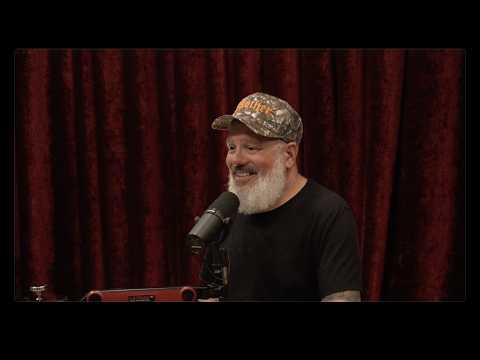
Key Takeaways
- •David Cross started stand-up in Boston in 1988 and was discovered by a manager during an impromptu set — acting was never part of the plan.
- •The Boston comedy scene produced serious talent but trapped many of its best comics in a 'velvet prison' of local success and recycled material.
- •NewsRadio worked because showrunner Paul Simms gave actors and writers genuine creative input — a level of trust Cross says most productions never come close to.
A Childhood Built on Relocation
Cross's parents divorced when he was five. His mother remarried two years later, and his stepfather's career in architecture turned the family into serial movers. New Jersey gave way to San Francisco during the Vietnam War era, then Florida, then eventually Boston. Each move dropped a kid into a new social reality with no warm-up. San Francisco in that period meant counterculture by default — his parents were hippies, broadly anti-violence, the kind of household where Muhammad Ali was respected not for boxing but for refusing the draft. Florida was a different education entirely, the place where Cross first encountered racial slurs directed at him. You don't develop a sharp, politically uncomfortable comedic voice in a vacuum, and Cross's itinerary makes his sensibility feel less like a choice and more like an inevitability.
Boston's Velvet Prison
Cross landed in Boston and started doing stand-up in 1988. The scene there was genuinely dense with talent — remarkable, given the city's size — but it had a self-defeating streak baked into it. Comics could make decent local money, perform the same set for years, and never feel the pressure to grow. The ones who stayed became legends in a five-mile radius. The ones who left, like Steven Wright, got resented for it. Cross describes this as a 'velvet prison': comfortable enough that ambition quietly suffocates. Barry Crimmins was the scene's gravitational centre — politically engaged, high-standards, intimidating, and later known for his activism against child abuse. His 'State of the Union' shows were apparently something to witness. The Boston scene also had a cash-in-hand roughness to it; Cross recounts being paid at Nick's Comedy Stop, finding himself staring at an open safe containing both money and a gun, and being too rattled to count what he was owed. That's not a comedy club anecdote — that's a threat assessment.
The Accidental Television Career
A manager caught Cross doing an impromptu set, which led to New York, which led to Los Angeles, which led to a pilot that got canceled, which somehow led to NewsRadio. Cross is clear that acting was never an aspiration. He found sitcom work surprisingly easy compared to stand-up — a different muscle group entirely, and one he hadn't trained for. What made NewsRadio work, according to Cross, was showrunner Paul Simms's willingness to let actors and writers actually contribute. Ideas were heard. That collaborative atmosphere is apparently rare enough that it still stands out decades later as the benchmark everything else gets measured against. In Joe Rogan Experience #2484 - David Cross, Cross and Rogan also dig into the underappreciated craft of radio performers like Phil Hendrie and Art Bell — figures whose influence on comedic and improvisational work rarely gets the serious treatment it deserves.
Our Analysis: The 'velvet prison' concept is the sharpest thing in this conversation and Cross doesn't fully press on it. He describes Boston comics who stayed local, made comfortable money, and calcified — but the same logic applies to him landing on NewsRadio and finding it easy. Easy work that pays well is its own kind of trap, and Cross seems aware of that without quite saying it out loud. The fact that he still frames NewsRadio as the gold standard suggests it set a ceiling he's been measuring against ever since.
The Phil Hendrie discussion is genuinely underserved. Rogan and Cross treat him as a punchline about listener gullibility, but Hendrie was doing something technically extraordinary — live character work with no editing, no retakes, sustained across hours of broadcast. That's closer to what TJ and Dave do on stage than either of them acknowledges, and the through-line between those two things would have been worth pulling.
There's also a broader point hiding behind Cross's career trajectory that the conversation never quite surfaces: the comedy pipeline that ran through Boston in the late 1980s was anomalous in ways that still haven't been fully explained. The city produced a disproportionate share of significant comedic voices in a short window, and yet the infrastructure that generated them — the clubs, the scene politics, the Barry Crimmins gravitational pull — was actively hostile to the kind of ambition that would take those voices elsewhere. That tension between a fertile environment and a self-limiting culture is genuinely interesting as a case study in creative ecosystems, and it maps onto plenty of other scenes in other art forms. Cross lived it rather than theorised about it, which is probably why he can describe it so precisely without fully explaining it.
Frequently Asked Questions
Where did David Cross get his start in comedy?
What is David Cross most famous for?
Who were the most influential comedians in the Boston comedy scene in the 1980s and 1990s?
How did David Cross develop such a politically sharp comedic voice?
Why did so many talented Boston comedians never break out nationally?
Based on viewer questions and search trends. These answers reflect our editorial analysis. We may be wrong.
Source: Based on a video by Joe Rogan Experience — Watch original video
This article was created by NoTime2Watch's editorial team using AI-assisted research. All content includes substantial original analysis and is reviewed for accuracy before publication.
Related Articles


You Might Also Like
May 1
Health | Joe Rogan & RZA: Unlocking Exercise Mental Health Anxiety Clarity
Apr 26
Life Stories | Why Do Ancient Flood Narratives Across Cultures Exist? Rogan Explores
Apr 24
Life Stories | Rogan & Gomez: content moderation YouTube pandemic lab leak
Apr 11
Sports | MMA Scoring System Flaws Grappling: Rogan Breaks It Down