Seismic Base Isolation Buildings: Earthquake-Proof Design
Key Takeaways
- •Only one hospital stayed open after the 1994 Northridge earthquake — the one sitting on a base isolation system.
- •Practical Engineering's video "The Wild Engineering of Earthquake Isolation" breaks down why seismic base isolation buildings survive major quakes while everything around them falls apart, and why standard building codes were never designed to keep the lights on.
- •From laminated rubber bearings to friction pendulum systems, here's what actually separates a building that functions after a disaster from one that just doesn't collapse.
What is Seismic Base Isolation?
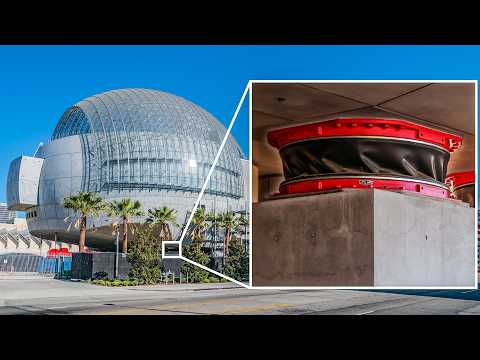
Seismic base isolation buildings are built on a flexible layer between the structure and the ground, so when the earth moves, the building doesn't have to.
Instead of fighting seismic forces by being stiff and strong, an isolated building simply decouples from the shaking — the foundation moves, the structure above it mostly doesn't.
How Base Isolation Decouples Buildings from Ground Motion
Every building has a natural period — the frequency at which it wants to oscillate. Earthquakes dump energy across a range of frequencies, and if your building's natural period lines up with the peak energy in the ground motion, you're in trouble.
Base isolation physically lengthens that natural period, pushing the building's response away from the destructive sweet spot of most earthquakes. The ground can shake at whatever frequency it likes — the building above is tuned to ignore it.
The Northridge Earthquake: Why Base Isolation Matters for Hospitals
The 1994 Northridge earthquake hit the Los Angeles area hard, killing dozens and injuring thousands. Most hospitals in the region were forced to close — the last thing you want when people need emergency care.
USC University Hospital was the exception. Its base isolation system kept shaking at the foundation level, and the hospital kept operating. One building, functional. Everything else around it, not so much. As we explored in the wild history of the Los Angeles Aqueduct, the LA basin has a complicated relationship with infrastructure under stress — Northridge was just another reminder.
Two Types of Modern Base Isolation Systems
There are two main technologies doing the heavy lifting in modern base isolation — rubber bearings and friction pendulum systems. Both work, both have trade-offs.
Laminated Rubber Bearings with Lead Cores
Rubber bearings stack alternating layers of rubber and steel plates. The steel keeps them stiff vertically so the building doesn't sink, while the rubber allows horizontal flexibility — that's where the isolation happens.
Adding a lead core to the bearing gives you damping. Lead deforms under load and dissipates energy as heat, which slows the building's oscillation down and stops it from swinging back and forth long after the shaking stops.
Friction Pendulum (Curved Surface Sliding) Bearings
Friction pendulum systems work differently — a slider sits on a curved concave surface and literally acts like a pendulum. The curve provides a restoring force that pulls the building back to center, while friction between the slider and the surface absorbs energy.
The geometry of the curve determines the period of the isolation system, which means engineers can dial in exactly how the building responds. Advanced versions stack multiple curved surfaces to handle larger displacements and finer control — the engineering is a bit like suspending something heavy on a carefully tuned dynamic system, just with fewer sparks.
Base Isolation vs. Traditional Seismic Building Codes
Standard seismic codes are built around one goal: keep people alive. They're not designed to keep buildings functional.
A code-compliant building is expected to absorb earthquake energy through controlled damage — cracking, bending, deforming. The structure doesn't collapse, but it might be unusable afterward. For a house or an office, that's an acceptable trade-off. For a hospital during a disaster, it isn't.
Building Resilience: Why Critical Facilities Need More Than Life Safety
Hospitals, emergency operations centers, data infrastructure — these are buildings that need to work precisely when everything else has failed. In The Wild Engineering of Earthquake Isolation, Practical Engineering breaks down how isolation systems achieve exactly that, and why the gap between "won't collapse" and "still operational" is wider than most people assume.
Our Analysis: Grady nails the core tension most people miss — seismic codes are written to keep you alive, not to keep your building usable. That distinction matters enormously if you're a hospital or a data center.
This connects to a broader DIY drift toward resilience-first thinking: people aren't just building things to survive, they're building to keep functioning after the disaster. Generators, water storage, now base isolation for serious projects.
The retrofit angle is where this gets interesting for DIYers — older structures are the real vulnerability, and isolation systems are quietly becoming the smarter play over traditional reinforcement. What the video doesn't dwell on is the cost and logistical reality of retrofitting existing buildings: jacking up a structure to insert bearings underneath is a serious undertaking, which is why most base isolation projects happen at the new construction stage. The economic case is strongest for buildings where downtime after a disaster carries its own catastrophic cost — a hospital that closes during an emergency isn't just damaged, it's actively dangerous. That framing is starting to influence how insurers and municipalities think about critical infrastructure investment, and it's worth watching whether updated building codes eventually push functional resilience — not just life safety — as the baseline standard.
Frequently Asked Questions
What buildings use seismic base isolation systems?
How long do base isolation systems actually last?
Is base isolation worth the cost compared to standard seismic design?
Can existing buildings be retrofitted with base isolation, or does it only work for new construction?
Why don't seismic base isolation systems work the same way in every earthquake?
Based on viewer questions and search trends. These answers reflect our editorial analysis. We may be wrong.
Source: Based on a video by Practical Engineering — Watch original video
This article was created by NoTime2Watch's editorial team using AI-assisted research. All content includes substantial original analysis and is reviewed for accuracy before publication.