The Wild Los Angeles Aqueduct: History & Impact
Key Takeaways
- •The Los Angeles Aqueduct is a 300-mile gravity-fed system that turned a desert city into one of the largest metropolises on Earth — and it's been controversial since day one.
- •Built in 1913 under chief engineer William Mulholland, it pulls water from the Sierra Nevada's Owens Valley and delivers it to LA without a single pump.
- •Practical Engineering's video 'The Los Angeles Aqueduct is Wild' breaks down how the system works and what it cost the people upstream.
What Is the Los Angeles Aqueduct?
A 300-Mile Gravity-Fed Water System
The Los Angeles Aqueduct engineering story starts with a simple problem: LA was running out of water, and it needed more from somewhere else — specifically, the Sierra Nevada, 300 miles away.
Opened in 1913, the aqueduct gave the city access to a water supply large enough to fuel decades of explosive growth, well beyond what any local source could have supported.
How the Los Angeles Aqueduct Works
Gravity-Based Engineering Without Pumps
Here's the part that still sounds made up: the entire system runs on gravity, no pumps required.
The Owens Valley sits roughly 2,500 feet higher than Los Angeles, and Mulholland's team graded the route carefully enough to let water flow the full distance on its own.
Construction Methods: Canals, Concrete Channels, and Underground Conduits
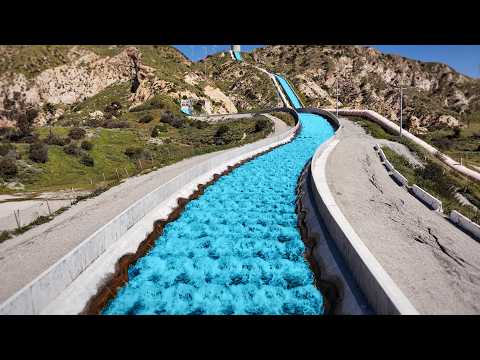
Not all 300 miles look the same. Early sections used unlined canals, but the system transitions to concrete-lined channels at the Alabama Gates to cut down on seepage.
Past the Haiwee Reservoir — which doubles as a settling buffer — the water moves through closed underground conduits, which reduce evaporation and keep the water cleaner across the long desert stretch.
The Controversial Origins: The California Water Wars
Owens Valley Water Rights and Environmental Degradation
LA didn't just build a pipe — it bought up water rights across the Owens Valley, effectively drying out the local farming economy to feed a city 300 miles south.
Residents pushed back hard. The California Water Wars involved protests, political fights, and people literally blowing up sections of the aqueduct infrastructure.
The Drying of Owens Lake and Dust Pollution
Diverting the Owens River had one particularly ugly side effect: Owens Lake dried up completely.
The exposed lakebed became one of the largest sources of particulate dust pollution in the US, and LA has since spent over a billion dollars trying to manage it — which is a fairly expensive way to learn a lesson.
Advanced Engineering Features of the Aqueduct
Inverted Siphons and Canyon Crossings
Flat terrain is easy. Canyons are not. The aqueduct handles deep drops using inverted siphons — essentially U-shaped pipes that let water dive down one side and climb the other using pressure alone.
The siphon at Jawbone Canyon is one of the bigger examples, carrying a serious volume of water across a dramatic elevation change.
Hydroelectric Power Generation Along the System
All that falling water generates electricity. The aqueduct runs eight hydroelectric plants along its route, which helped make the project pay for itself over time.
Historical Disasters and Lessons Learned
The St. Francis Dam Failure of 1928
Mulholland's reputation didn't survive the 1920s intact. A dam built to support the aqueduct system collapsed catastrophically in 1928, killing hundreds of people downstream.
The St. Francis Dam failure is still studied in engineering programs as a case study in what happens when confidence outruns caution.
Modern Expansion and System Reliability
The Second Aqueduct and Water Transfer Facilities
A second aqueduct was added in the 1960s, nearly doubling the system's total capacity.
The network also connects with the California Aqueduct, which allows water managers to shift supply between systems depending on availability — useful when one source runs short.
Climate Change and the Future of the Aqueduct
Uncertain Water Supply in a Warming Climate
The whole system was designed around predictable Sierra Nevada snowmelt. Climate change is making that snowpack less reliable, with earlier melts and deeper droughts throwing off the timing the infrastructure depends on.
The aqueduct worked brilliantly for a century by assuming a stable climate. That assumption is no longer safe to make.
In a recent video, Practical Engineering covers the full story — mechanics, history, and climate outlook — in The Los Angeles Aqueduct is Wild.
Our Analysis: Practical Engineering nails the mechanics but breezes past how nakedly corrupt the land and water acquisition actually was — Mulholland's people basically tricked Owens Valley farmers into selling, then watched their valley die.
This fits the DIY trend of systems-thinking content, where understanding why something was built matters as much as how it works.
The real forward-looking angle is sobering: a gravity-fed marvel engineered around predictable Sierra snowpack is now racing against a climate that's making that snowpack wildly unreliable — and LA still has no great backup plan.
Frequently Asked Questions
Is the LA Aqueduct still actually being used today?
Who actually designed the LA Aqueduct — was it really all Mulholland?
Did LA ever compensate Owens Valley residents for what it took from them?
How much of LA's water actually comes from the aqueduct versus other sources?
What happened to the people responsible for the St. Francis Dam disaster?
Based on viewer questions and search trends. These answers reflect our editorial analysis. We may be wrong.
Source: Based on a video by Practical Engineering — Watch original video
This article was created by NoTime2Watch's editorial team using AI-assisted research. All content includes substantial original analysis and is reviewed for accuracy before publication.