Colin Furze's Magnetic Suspension Skateboard Floats!
Key Takeaways
- •Colin Furze built a working magnetic suspension skateboard that genuinely floats over bumps, and the whole messy engineering journey is documented in 'The MAGNET Suspension SKATEBOARD.' A viewer suggested adapting his earlier magnetic bike work to a skateboard, and Furze ran with it — spending weeks iterating through three distinct prototypes to solve one stubborn problem: how do you steer a board that's floating on magnets?
- •The final design pulls it off, delivering "a measurably smoother ride" with a frictionless feel that spring suspension simply can't replicate.
What Is a Magnetic Suspension Skateboard DIY Build?
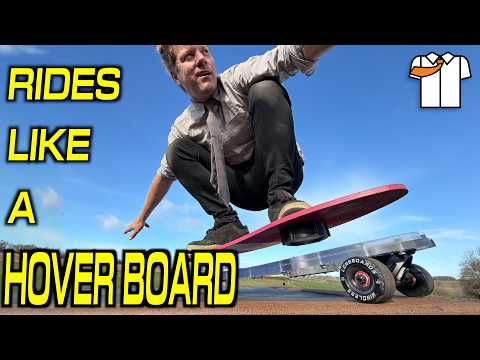
A magnetic suspension skateboard uses repelling magnets between two stacked board layers to create a floating gap — so instead of your trucks eating every crack in the pavement, the magnets absorb it.
The concept borrows from hoverboard fantasies but lands closer to reality: it rolls on wheels, it steers, and it actually works on normal surfaces.
How Magnetic Repulsion Supports Human Weight
Furze's first move was building a bare test rig — just magnet housings on a truck frame with a second board sitting above — to find out whether repulsion forces could even hold a person before committing to a full build.
They could, easily, which surprised even him.
The Evolution of Colin Furze's Magnetic Skateboard Prototypes
Three prototypes, each teaching him something the previous one couldn't.
Prototype 1: Pin-Stabilized Magnetic Board Design
The first version used magnets between two boards with vertical pins running through them to stop lateral drift — crude, but it held his weight and bounced in a way that confirmed the magnetic suspension skateboard DIY concept was worth pursuing.
The pins kept the boards aligned but introduced friction, which killed the floaty feeling.
Prototype 2: Hinge-Steered Longboard System
Switching to a longboard platform, Furze added a rigid hinge at the rear so the top deck could pivot for steering while the magnets kept doing their job at the front.
The hinge side steered fine; the magnet side genuinely floated — and that split sensation confirmed the frictionless feel was real, not imagined.
Prototype 3: Cable-Stabilized Refinement
The hinge worked but added unwanted rigidity, so the next attempt replaced it with diagonal cables meant to guide movement without a fixed pivot point.
It didn't hold together well enough to be useful, but eliminating what doesn't work is half the job.
Engineering Challenge: Adding Steering to Magnetic Suspension
Traditional hoverboard concepts fail as skateboards because they don't steer — you're floating in a straight line until you're not.
Furze's core problem was connecting the two board layers in a way that allows pivoting for turns without reintroducing the mechanical friction that kills the suspension feel.
Connection Mechanisms Compared: Rigid Pins vs. Flexible Hinges vs. Cables
Rigid pins: stable, zero steering, lots of friction. Hinges: decent steering, better float on the free end, but mechanically stiff. Cables: theoretically elegant, practically wobbly.
The final build pulled the best bits from each iteration — a refined connection that guides without binding, letting the magnets do what magnets do.
Frictionless Ride vs. Traditional Skateboard Suspension
Spring-based suspension compresses and rebounds through physical contact — there's always some friction in the system, always a point where it pushes back mechanically.
Magnetic repulsion has no contact point, so the 'give' feels more like riding on a cushion of air than sitting on a spring.
Performance Testing: Vibration Reduction on Uneven Terrain
In The MAGNET Suspension SKATEBOARD, Colin Furze ran direct comparisons between the magnetic board and a standard deck over rough ground, and the difference in vibration transfer to the rider was obvious enough to validate the build beyond novelty.
It's not just a trick — it's a measurably smoother ride.
Material Selection and Structural Rigidity in Magnetic Skateboard Design
Getting the magnets to float the board is the easy part; keeping the whole assembly from flexing, rattling, or binding internally is where most of the build time went.
Furze went through multiple material and structural iterations on the magnet housings and connection points — rigidity in the right places, controlled movement everywhere else.
Building Your Own Magnetic Suspension Skateboard: Key Takeaways
Start with a static test rig before you build anything — confirm your magnets can hold your weight at the gap distance you're planning, or you're wasting time on a chassis.
Plan your connection mechanism before your magnet layout; steering and suspension are in direct conflict, and your connector design is what resolves that tradeoff.
Internal friction is the enemy — any point where surfaces rub under load will bleed away the floaty sensation you're building toward, so obsess over it early.
Our Analysis: Furze nailed the core engineering problem — keeping the deck plates rigid enough to prevent internal flex killing the magnetic effect — but glossed over how useless this is on anything but a smooth surface.
This fits squarely into the "reinvent a solved problem with magnets" trend that's quietly taken over garage engineering channels, for better or worse.
The cable-based steering iteration is the one worth watching — if someone miniaturizes that connection system, you've got a legitimate aftermarket suspension deck that doesn't look completely insane.
Frequently Asked Questions
Could you actually ride this thing on a real street, or is it a workshop-only prototype?
Is magnetic suspension actually good compared to conventional spring or rubber suspension?
Why doesn't someone just do this with electromagnets so you could tune the suspension stiffness on the fly?
How much does something like this actually cost to build at home?
Is magnetic suspension possible for real vehicles, or is this just a skateboard trick?
Based on viewer questions and search trends. These answers reflect our editorial analysis. We may be wrong.
Source: Based on a video by Colin Furze — Watch original video
This article was created by NoTime2Watch's editorial team using AI-assisted research. All content includes substantial original analysis and is reviewed for accuracy before publication.