MKBHD's Bluey Phone Review & Minimalist Phone Benefits
Key Takeaways
- •Marques Brownlee (MKBHD) reviewed the Bluey phone, a $10.99 children's toy sold on Amazon, and framed it as the most committed minimalist phone on the market.
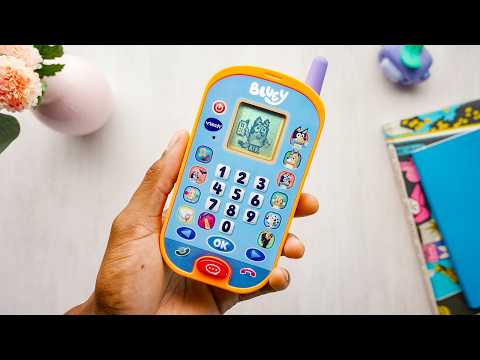
- •The device, made by VTech, has no cellular connectivity, no internet, no camera, no Bluetooth, and a 1.7-inch black and white display operated entirely by physical buttons.
- •In 'The Ultimate Minimal Phone,' MKBHD argues that judging the Bluey phone against conventional smartphones is a category error — its value is precisely what it removes, including doom scrolling, app addiction, and a battery that dies before the week is out.
What Most 'Minimal Phones' Get Wrong
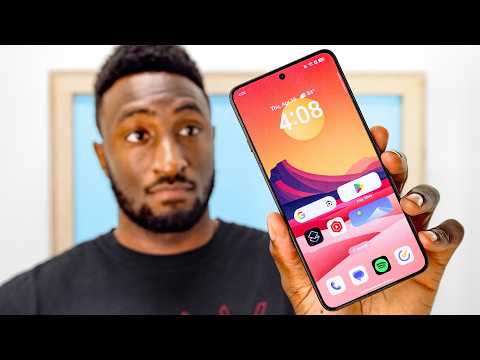
The minimalist phone market has spent years selling restraint as a premium product. Light Phone. Mudita. Various Punkt devices. They strip back the interface, keep some apps, maybe lose social media, and charge you several hundred dollars for the privilege of feeling virtuous. What they almost never do is go all the way. Marques Brownlee (MKBHD) noticed this gap and, in characteristically blunt fashion, pointed at a children's toy to make the argument. In The Ultimate Minimal Phone, he makes the case that the Bluey phone "doesn't compromise" — it simply doesn't have the things everyone else is pretending you don't need.
No Signal, No Wi-Fi, No Argument
The hardware spec list for the Bluey phone reads like a list of things that were never considered in the first place. No cellular radio. No internet connection. No camera. No Bluetooth. A 1.7-inch black and white display. Physical buttons only. VTech built this for toddlers, but the result is a device that out-minimalizes every adult product that uses the word 'minimal' in its marketing copy. The meaningful question isn't whether this phone can do what a smartphone does — it's whether removing all of that actually changes how you interact with your time. According to MKBHD's breakdown, it does. The doom scrolling vector simply doesn't exist if there is no screen worth scrolling and no network to pull content from. It sounds obvious when you say it out loud, and somehow the entire industry has spent a decade not saying it.
Battery Life as a Philosophy
The Bluey phone lasts weeks on a single charge. That isn't a marketing claim requiring an asterisk — it's just physics. When a device has no cellular modem burning through standby power, no background app refresh, no GPS pinging satellites, and no display backlight large enough to matter, the battery has almost nothing to do. MKBHD highlights this as one of the phone's genuine functional advantages, and it's a point worth sitting with. The reason flagship smartphones need daily charging isn't because batteries have failed to improve — it's because every improvement gets absorbed immediately by more demanding hardware. This is the same logic that applies when tech observers notice that
Our Analysis: MKBHD reviews this as a novelty, but the more interesting question is who actually buys it for their kid and whether it changes anything. A $10.99 toy that holds attention for two weeks of battery life is a better screen-time solution than any parental control app.
What nobody is asking is whether the adults want one. The "doom scrolling" problem he mentions at the end is real, and the Bluey phone accidentally solves it better than any $400 Light Phone ever did, purely by being too embarrassing to use ironically.
There's a deeper point lurking here about what the minimalist phone industry is actually selling. When Light Phone or Punkt prices a stripped-back device at $300 or more, they're not really selling simplicity — they're selling the identity of someone who has chosen simplicity. The product has to look deliberate, even aspirational, to justify the cost. The Bluey phone collapses that entire value proposition by achieving the same functional outcome for eleven dollars, wrapped in cartoon dog branding. It doesn't let you feel sophisticated about your choices. That's not a bug in the product; it may be the most honest thing about it.
The industry implication is uncomfortable for everyone who has built a business around premium minimalism. If the actual goal is reducing screen time, reducing distraction, and extending battery life, a children's toy has already won that competition. The premium products are competing on aesthetics and self-image, which is fine, but they should probably stop leading with the functional claims. The Bluey phone has made those claims look a little absurd, and MKBHD's video is effective precisely because he doesn't editorialize — he just holds the two objects next to each other and lets the price tags do the talking.
Frequently Asked Questions
Is a minimalist phone worth it compared to just turning off apps on your smartphone?
Why are people buying dumb phones and basic phones without internet in 2024?
Can going without a smartphone for a few days actually reset how your brain responds to it?
What are the real minimalist phone benefits beyond just having a longer battery life?
Based on viewer questions and search trends. These answers reflect our editorial analysis. We may be wrong.
Source: Based on a video by Marques Brownlee (MKBHD) — Watch original video
This article was created by NoTime2Watch's editorial team using AI-assisted research. All content includes substantial original analysis and is reviewed for accuracy before publication.