Is Smartphone Camera Computational Photography Hitting Its Limit?
Key Takeaways
- •Smartphone cameras are the last major frontier — display, battery, performance, and build quality have largely plateaued for flagship devices.
- •Computational photography is designed to eliminate bad photos, not to replicate the physics of professional camera hardware.
- •The Oppo Find X9 Ultra's five-camera system, including 200MP main and telephoto lenses, shows how far mobile imaging has come — and where it still falls short.
What Computational Photography Actually Does
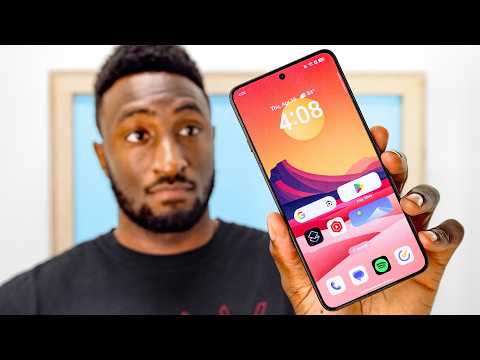
The goal of computational photography isn't to make you a better photographer. It's to ensure you "almost never take a bad photo" — smartphones now run complex algorithms in real time, stacking frames, correcting exposure, and managing noise before you ever see the result. The Oppo Find X9 Ultra, which Marques Brownlee (MKBHD) tested for nearly a month in his video So This is Peak Smartphone, runs a five-camera system with a 200-megapixel main sensor and a matching 200-megapixel telephoto. That's not a camera system built for one great shot — it's built to make every shot defensible.
Marques frames it with a sharp analogy: imagine a basketball hoop that moves to meet the ball. You still threw the ball. You still feel like you scored. But the hoop did a lot of the work. That's computational photography in a sentence. It's not cheating, exactly — but it is a fundamentally different philosophy than pointing a manual lens at something and committing to the result. Related: AI safety alignment risks Anthropic's Mythos AI
The Physics Problem Nobody Can Algorithm Their Way Out Of
Here's where it gets honest. A smartphone sensor is small. A professional camera sensor is large. Light behaves differently across those two surfaces, and no amount of processing can fully manufacture what a bigger sensor captures in a single exposure. Depth of field, dynamic range in extreme conditions, low-light performance without artificial brightening — these aren't software problems. They're physics problems. Marques puts the Oppo's Hasselblad branding next to an actual Hasselblad X2D Mark II to make the point without belaboring it. The branding is real. The gap is also real.
This isn't a knock on what smartphones have achieved — it's just an accurate description of what they are. The analogy that lands here is the iPad-as-laptop comparison. An iPad can do most of what a laptop does for most people. That's genuinely impressive. But 'most' isn't 'all,' and the people who need 'all' know exactly who they are. Smartphone cameras are in the same position, and the computational photography arms race is essentially a very expensive, very sophisticated effort to shrink that remaining gap as far as physics will allow — which, as it turns out, is not all the way. Just as AI systems bridging the sim-to-real gap in robotics hit hard physical constraints that simulation can't fully model, mobile cameras hit a sensor-size ceiling that software can approach but not erase.
Over-Processing: The Price of Consistency
The trade-off for never taking a bad photo is occasionally taking a photo that looks like it was made rather than taken. Skin smoothing that goes a touch too far. Skies that look slightly more dramatic than they were. Sharpness in places where a little softness would have felt more natural. These aren't bugs — they're the system working exactly as intended, optimizing for a result that looks good to most people most of the time. The problem is that 'good to most people' and 'accurate' are not always the same thing, and photographers who care about the latter find it quietly maddening.
Marques doesn't frame this as a fatal flaw, and he's right not to. For the overwhelming majority of smartphone users, computational photography produces results that would have seemed impossible ten years ago. The over-processing critique is real, but it's a niche complaint dressed up as a universal one. Most people aren't comparing their phone shots to RAW files. They're sending them to group chats. Related: Claude Mythos AI zero-day vulnerabilities: Too Dangerous?
Where the Camera Race Goes From Here
The interesting question isn't whether smartphones will keep improving their cameras — they will. The question is what 'better' even means once you've already eliminated most user error. Larger sensors in thinner bodies push up against manufacturing constraints. More megapixels create files that most users never fully use. Computational tricks get more sophisticated but also more invisible, which means the improvements become harder to market and harder to feel. The Oppo Find X9 Ultra sits at the current edge of that curve — genuinely impressive, occasionally stunning, and still fundamentally a phone trying to do what a dedicated camera does by being smarter rather than bigger. The same tension between raw capability and intelligent compensation that makes AI alignment so difficult to pin down shows up here too: optimizing for 'good enough for everyone' and optimizing for 'exactly right' are not the same objective, and the gap between them doesn't close just because the system gets more powerful.
Marques is careful and fair throughout, but the video quietly sidesteps the most interesting version of the computational photography debate: who decides what a 'good' photo looks like? The algorithms are trained on data, which means they're optimizing toward an aesthetic consensus. That's fine until it isn't — until the phone decides your deliberately underexposed shot needed brightening, or your intentionally flat color grade needed punching up. The camera isn't just capturing anymore. It's editing, and it's doing it before you've had a chance to disagree.
The Hasselblad comparison is the sharpest moment in the video, and Marques uses it well. But it also reveals the ceiling of the conversation: professional cameras aren't the right benchmark for most people, which means the 'smartphones can't replace them' conclusion, while true, is also slightly beside the point. The more useful question is whether smartphones are replacing the entry-level dedicated camera market — and that answer is almost certainly yes, and has been for years.
Frequently Asked Questions
How does smartphone camera computational photography actually work?
Why can't smartphone cameras fully replace a professional camera no matter how advanced they get?
Why do smartphone cameras over-process photos and make them look artificial?
Is the Oppo Find X9 Ultra actually one of the best smartphone cameras you can buy?
Does more megapixels actually mean better smartphone camera photos?
Based on viewer questions and search trends. These answers reflect our editorial analysis. We may be wrong.
Source: Based on a video by Marques Brownlee (MKBHD) — Watch original video
This article was created by NoTime2Watch's editorial team using AI-assisted research. All content includes substantial original analysis and is reviewed for accuracy before publication.