How to Overcome Procrastination: 6 Strategies That Work
Key Takeaways
- •Better Ideas breaks down six practical strategies to overcome procrastination in the video '6 things that quickly cured my procrastination,' targeting anyone stuck in the loop of guilt, avoidance, and wasted afternoons.
- •The approaches range from deliberately scheduling your time-wasting to adopting a detached, game-like view of your own life.
- •What makes this different from the usual productivity advice is the emphasis on working with your psychology rather than muscling through it with willpower.
Why You Keep Procrastinating Even When You Actually Want to Work
Most people who struggle with procrastination aren't lazy. They're stuck in a low-grade internal war — a background hum of 'I should be doing something' running underneath whatever distraction they've opened. Better Ideas argues this conflict is the real problem, not the distraction itself. The guilt of unplanned avoidance keeps you locked in a limbo where you're neither resting properly nor working productively. Understanding how to overcome procrastination starts with recognising that the default state isn't relaxation — it's anxiety dressed up as leisure. That's a genuinely uncomfortable reframe, and it tracks.
Schedule the Wasted Time on Purpose
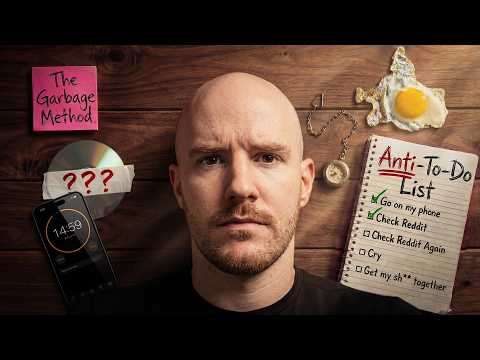
The first strategy Better Ideas offers is counterintuitive enough to actually be interesting: stop fighting procrastination and start planning it. The idea is to build an 'anti-to-do list' — a deliberate schedule for your distractions. Watch the show, scroll the feed, stare at the ceiling, but do it intentionally and at a set time. The moment you make avoidance a conscious decision, you expose it. You're no longer a victim of the habit; you're the one choosing it. And once you're the one choosing it, you can also choose not to. What Better Ideas found is that this awareness often makes people realise they'd actually rather be doing something useful, which is either a clever psychological trick or evidence that most procrastination is just unmanaged guilt with a YouTube subscription.
Two Minutes Is Enough to Change Your Default
The Two-Minute Rule is not new, but the framing here is worth paying attention to. The point isn't to complete meaningful work in 120 seconds — it's to interrupt the inaction pattern. Better Ideas positions this as a tool for chronic procrastinators specifically: find anything vaguely productive that takes two minutes or less, and do it immediately. The value isn't the task itself. It's the new behavioral groove you're cutting. Each small completion builds a sense of forward motion that's more durable than whatever dopamine hit your distractions are providing. For anyone trying to figure out how to overcome procrastination and laziness, starting with something almost embarrassingly small is not a concession — it's the actual mechanism.
The First 15 Minutes Are the Whole Battle
In 6 things that quickly cured my procrastination, Better Ideas introduces what it calls the 15-Minute Suffer Window, and the name does a lot of accurate work. The premise is that most tasks feel genuinely awful to start, and that feeling is temporary. Set a timer for 15 minutes. Commit only to that window. Don't negotiate with yourself about whether the work is going well or whether you feel like continuing — just run out the clock. What tends to happen after those 15 minutes is that the resistance drops, the task gets tractable, and the momentum carries you past the point where you'd normally quit. This is closely related to the identity-level shifts that productivity researchers keep returning to, and if you're curious how mindset recalibration fits into this, the work on
Our Analysis: The garbage version and deliberate time-wasting advice are the two ideas worth keeping. Everything else here gets recycled in every productivity video made since 2018.
The Sims framing sounds clever but quietly lets you off the hook. Watching your character from above is just dissociation with branding. The real work is staying in the body, tolerating discomfort without reframing it as a game.
Sleep, diet, exercise as procrastination fixes is accurate but buried. That should be the lead, not the outro. Fix the biology first and half these mental tricks become unnecessary.
What the video doesn't reckon with is the structural dimension of procrastination. Most of these strategies treat avoidance as a personal failure of psychology or habit — something the individual can solve by being cleverer about scheduling their Netflix time. But a significant portion of chronic procrastination isn't about willpower architecture at all. It's about tasks that are genuinely misaligned with the person doing them: wrong job, wrong project, wrong life direction. No two-minute rule fixes that. You can gamify your way through a 15-minute timer every morning and still spend a decade building the wrong thing efficiently.
There's also a class of procrastinator this video quietly ignores — the one who performs productivity rather than avoiding it. The person who reorganises their task list, reads articles about focus, watches videos about beating procrastination, and calls all of it 'research.' That's not laziness with a YouTube subscription. That's anxiety with better optics. The garbage version method might actually help here, because it short-circuits the perfectionism loop. But the video doesn't name this pattern directly, which means the people most likely to need that framing are also the most likely to watch the video and feel like they've done the work.
Frequently Asked Questions
How do you actually stop procrastinating when willpower keeps failing you?
Is procrastination a symptom of depression or anxiety?
What actually causes procrastination — and does knowing the cause help you stop it?
Does the 15-minute rule actually work for overcoming procrastination?
Based on viewer questions and search trends. These answers reflect our editorial analysis. We may be wrong.
Source: Based on a video by Better Ideas — Watch original video
This article was created by NoTime2Watch's editorial team using AI-assisted research. All content includes substantial original analysis and is reviewed for accuracy before publication.