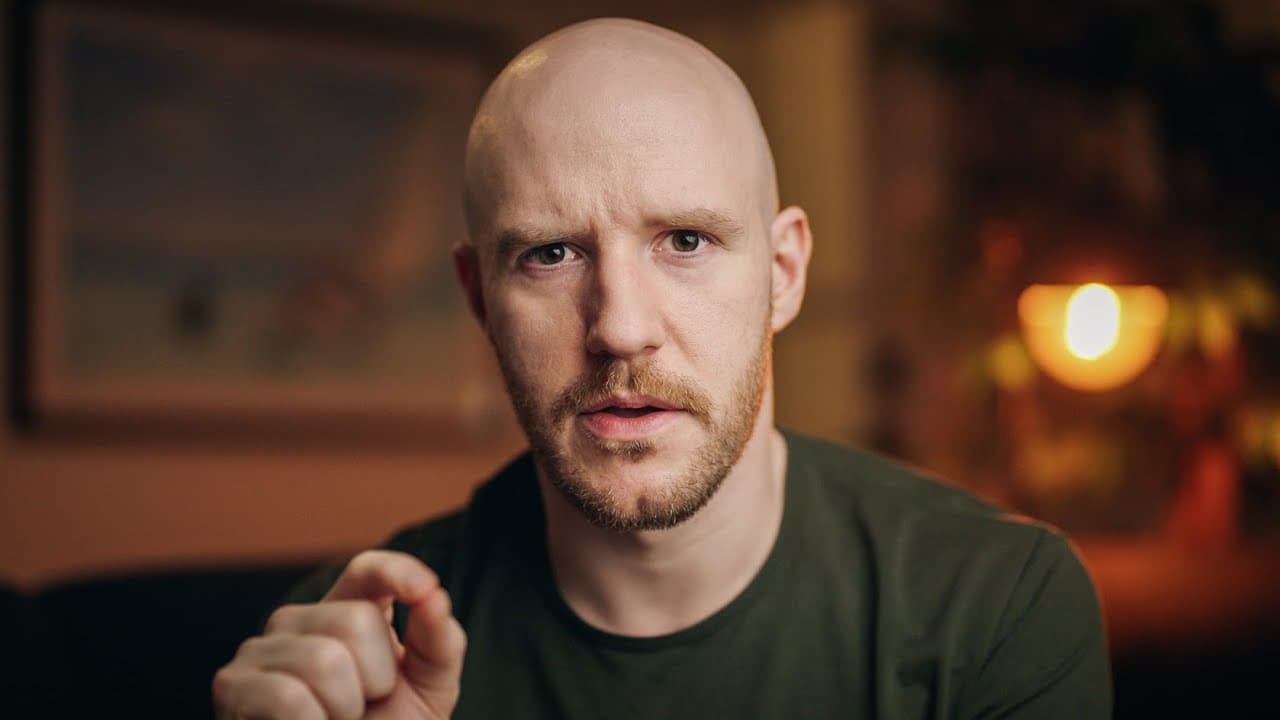
Mel Robbins: Why Your Goals Die Before You Start (and how to achieve goals and stick to them)

Key Takeaways
- •Writing goals down — not just thinking them — activates multiple brain regions and creates stronger neural pathways for follow-through.
- •Grit, per Angela Duckworth's research, is defined by consistency at a sustainable level, not by maximum-effort intensity every day.
- •Internal motivation tied to personal identity outlasts external validation — including support from family — when goals get hard.
Why Your Goals Are Dying in Your Head
Most people treat goal-setting as a mental exercise. Think about what you want, maybe tell someone about it, then wonder six months later why nothing changed. In My Process For Achieving Goals: How to Change Your Life in 5 Simple Steps, Mel Robbins makes a blunter argument than that: a goal that only exists in your head isn't a goal, it's a wish. The first rule in her framework is to write it down — physically, not in a notes app — because the act of writing forces specificity. Vague aspirations like 'get healthier' or 'do more creative work' collapse the moment life gets busy. A written goal has edges. You can look at it, argue with it, refine it.
This isn't just motivational advice dressed up as science. There's a real mechanism behind it.
What's Actually Happening in Your Brain
Robbins references neuroscientist Dr. Jim Dodie and habit researcher James Clear to explain what she calls 'Hebbian learning' — the principle that neurons that fire together wire together. When you write a goal, speak it aloud, and visualize it in detail, you're engaging multiple brain regions simultaneously. That repetition builds stronger neural pathways, gradually shifting the goal from a conscious thought to something closer to a background operating instruction. Olympians and pilots use this same multi-sensory rehearsal before high-stakes performance. The brain, it turns out, doesn't distinguish cleanly between vividly imagined action and real action — which is either fascinating or slightly unsettling depending on how you look at it. If you want to go further on the neuroscience of pushing through discomfort, the research on the anterior mid-cingulate cortex is worth your time.
Our Analysis: Robbins is at her sharpest when she's citing Duckworth and Berkman, because the research actually supports the claims she's making. The Hebbian learning point is real, the identity-based goal framing is well-supported, and the 'will and way' split is a genuinely useful diagnostic tool. Where the video loses some of its grip is in the 'fire your family' section — the advice is sound but the framing is designed for virality more than clarity. The actual point, that you need domain-relevant support rather than just emotionally close support, is less catchy but more precise.
The 'Hot 15' concept — 15 minutes a day on your goal — gets introduced late and treated as self-evident. It deserves more scrutiny. Fifteen minutes works for some goals and is almost meaningless for others. Robbins doesn't make that distinction, which leaves the most practically useful rule in the framework feeling underdeveloped.
There's also a broader tension worth naming that the video doesn't fully address: the gap between goal-setting systems and goal-sustaining conditions. Robbins' framework is front-loaded — it's strongest on how to start and weakest on what to do when you've lost momentum three weeks in. That's not a flaw unique to this video; it's endemic to the genre. Motivation content tends to optimize for the moment of watching rather than the month that follows. The neuroscience she cites is legitimately interesting, but neural pathway formation takes longer and is more fragile than the framework implies. Most people won't fail because they didn't write the goal down correctly. They'll fail because their environment — their schedule, their social circle, their default routines — is structurally hostile to the new behavior. That context gets gestured at in the 'fire your family' section but never fully developed into actionable design principles.
What Robbins does well, and consistently, is translate research into language that doesn't require a psychology background to absorb. That's a real skill, and it's what keeps this kind of content useful even when it's imprecise. The five-step structure gives viewers something to hold onto. Whether that structure survives contact with a difficult Tuesday in February is a different question — and probably a different video.
Frequently Asked Questions
How do you set goals and actually stick with them?
What are the 5 C's of goal-setting?
Does writing down your goals actually work, or is it just motivational advice?
Why do most people fail at achieving their goals?
Can visualization techniques really improve goal achievement?
Based on viewer questions and search trends. These answers reflect our editorial analysis. We may be wrong.
Source: Based on a video by Mel Robbins — Watch original video
This article was created by NoTime2Watch's editorial team using AI-assisted research. All content includes substantial original analysis and is reviewed for accuracy before publication.