US Cuba Sanctions Healthcare Crisis: Russian Oil Tanker
Key Takeaways
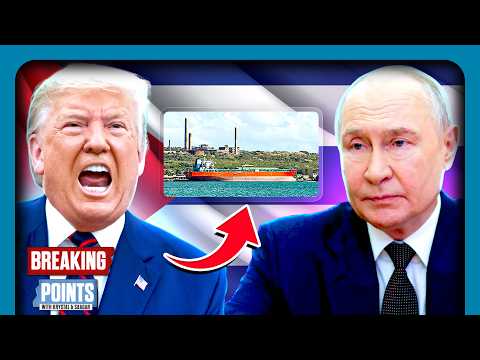
- •A Russian oil tanker recently docked in Cuba with US permission, breaking what had been a near-total oil blockade since January — a move covered by Breaking Points in their video 'Russia BREAKS US Cuba Oil Blockade.' The shipment arrives as Cuba's healthcare system collapses under tightened US sanctions, leaving hospitals without power, pharmacies empty, and patients like Carlos, a 9-year-old with cystic fibrosis, unable to access medications freely available in other countries.
- •The sanctions, tightened under Trump and maintained by Biden, were designed to pressure Cuba's government by making ordinary life unbearable.
- •The human cost is no longer theoretical.
How US Sanctions Dismantled Cuba's Healthcare System
Cuba was not always a medical basket case. For decades, its healthcare outcomes tracked closely with developed nations — a fact the country leaned on heavily as a point of national pride. That changed when the Trump administration significantly tightened sanctions starting around 2019, restrictions that the Biden administration chose to keep in place rather than reverse the Obama-era normalization efforts. The sanctions cut off banking access, restricted tourism revenue, and placed Cuba on the state sponsors of terrorism list, making it nearly impossible for the country to conduct international trade or access credit. What followed was not a slow decline. It was a cliff. As Breaking Points reports in Russia BREAKS US Cuba Oil Blockade, the cascade of consequences hit healthcare fast and hit it hard.
From 60% Self-Sufficient to Empty Shelves
Cuba once produced roughly 60% of its own medications domestically. That capacity required raw materials from international suppliers, and the sanctions effectively severed those supply lines. No raw materials means no pharmaceutical production. No production means pharmacies with nothing on the shelves. Hospitals visited during the reporting lacked basics — syringes, IV bags, replacement parts for medical equipment that was purchased during the brief window of eased relations and has since broken down with no legal path to repair. Cuba had previously developed treatments advanced enough to include a lung cancer vaccine, which makes the current state of its medical infrastructure not just a tragedy but a particularly stark reversal. The cruelest part is that the knowledge is still there; the supplies are not.
Carlos and the Medication That Exists Everywhere Except Cuba
The most direct illustration of what these sanctions mean in human terms is a 9-year-old boy named Carlos. He has cystic fibrosis. The medication that could dramatically extend and improve his life is called Trikafta, and it is available in countries around the world. It is not available to Carlos. His doctors know about it. His parents know about it. Everyone in that Havana hospital knows exactly what he needs and exactly why he cannot have it. He is receiving palliative care instead — comfort measures for a child with a treatable condition. A co-host involved in the Breaking Points reporting arranged for Trikafta to be sent from the US to Havana, and the medication has begun to improve Carlos's condition. That is a genuinely good outcome for one child, and it also perfectly illustrates why individual acts of goodwill cannot substitute for functional policy.
Hospital Wards Running on Improvisation
Visits to two Havana hospitals, including a pediatric unit, found medical staff operating under conditions that most developed-world healthcare workers would consider an active emergency. Energy blackouts hit regularly, forcing staff to manually operate life-support systems while waiting for backup generators to kick in. Equipment purchased years ago has broken down, and replacement parts cannot be legally imported. The sanctions do not include a carve-out for hospital machinery. Cuban doctors and nurses are improvising their way through shifts that would be demanding under normal circumstances and are now something else entirely. What is striking is not the desperation — it is the professionalism still on display inside institutions that are being systematically starved of the resources they need to function. This situation is worth placing alongside other examples of how US foreign policy decisions carry domestic consequences — as explored in the coverage of Our Analysis: The framing of a single Russian oil tanker as a "blockade break" overstates the moment. One ship docking doesn't shift the structural reality for Cuba, and Breaking Points knows that. The Carlos story does the heavy lifting the policy argument can't. What the video sidesteps is the internal accountability question. Sanctions are real and brutal, but Cuba's government has had decades to diversify supply chains and didn't. Both things can be true. Watch whether Trump tightens the exemption that allowed this shipment. That's the actual next move, and it's likely coming. Based on viewer questions and search trends. These answers reflect our editorial analysis. We may be wrong. Source: Based on a video by Breaking Points — Watch original video This article was created by NoTime2Watch's editorial team using AI-assisted research. All content includes substantial original analysis and is reviewed for accuracy before publication.Frequently Asked Questions
How have US Cuba sanctions caused a healthcare crisis?
Why can't Cuban children with cystic fibrosis access Trikafta?
What was the point of the Russian oil tanker docking in Cuba despite US sanctions?
Did Biden reverse Trump's Cuba sanctions?
Does Cuba's healthcare system really have a lung cancer vaccine?