Harry Potter HBO Reboot Casting Controversy: Ben Shapiro's Take
Key Takeaways
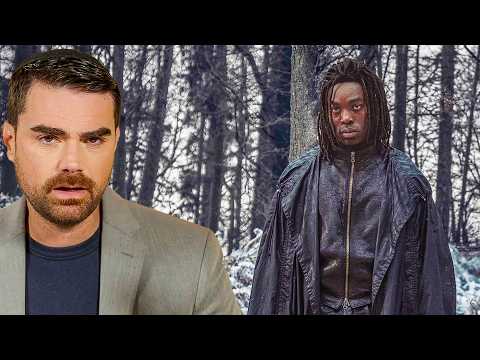
- •Ben Shapiro weighed in on the Harry Potter HBO reboot trailer in a recent video titled 'I'm Not Mad About the New Harry Potter Trailer (Here's Why)', and his take is more measured than the fan outrage surrounding it.
- •While audiences have been vocal about the casting of a Black actor as Severus Snape, a character described with specific physical traits in J.K.
- •Rowling's books, Shapiro argues that Snape's race is not central to who the character is.
The Casting Choice That Has Fans Actually Upset
The HBO Harry Potter reboot trailer dropped, and the conversation immediately collapsed into one specific grievance: Snape. A Black actor has been cast in the role, and book readers were fast to point out that Rowling's text is not vague about the character's appearance. Greasy black hair. Sallow skin. A pallor that the prose practically insists upon. For a segment of the fanbase, that's not a minor detail to sand off, it's a description that sits in their memory alongside the character's entire arc. The casting didn't just change a face. For them, it changed a mental image they've carried for two decades.
What Ben Shapiro Actually Said About the Trailer
In I'm Not Mad About the New Harry Potter Trailer (Here's Why), Ben Shapiro describes himself as the parent of genuine Harry Potter fans, kids who own signed books and recently reread the series, which at least establishes that his opinion isn't coming from nowhere. His reaction to the trailer is, by his own admission, surprisingly calm. He thinks it looks fine. Not great, not a disaster, just fine, and in the current landscape of IP reboots, he frames that as something close to a relief. What's interesting is that his tolerance for the trailer is directly connected to the Snape casting debate — he integrates the two rather than separating them. Because he views Snape's race as not integral to the character, the casting choice simply doesn't bother him, and that reasoning becomes part of why the trailer lands as acceptable rather than alarming.
Is Snape's Race Actually Part of His Character
Shapiro's argument on the Snape controversy is that race is not load-bearing for the character. Snape's identity is built on obsessive love, bitterness, loyalty disguised as cruelty, and a double life that runs through the entire series. None of that is race-dependent. Shapiro draws a distinction between changes that alter a character's essence and changes that alter their appearance, putting the Snape recasting firmly in the second category. It's a coherent position, even if fans who feel that physical descriptions are part of the author's intentional craft will push back on where exactly that line sits. The argument works until someone asks you to define essence, and then it gets complicated fast.
The Black Characters Already in the Books
One point Shapiro raises that tends to get lost in the louder parts of this debate is that the Harry Potter universe already has Black characters written into the source material. Blaise Zabini and Dean Thomas are both explicitly described as Black in the books. This matters because it reframes the conversation. The criticism of the Snape casting isn't about whether Black characters belong in the wizarding world, they always did. It's specifically about whether swapping the established description of an existing character is a different act than writing diverse characters from the start. That distinction is exactly the kind of thing that gets flattened in online discourse, as we've seen play out repeatedly in adaptation debates across franchises.
Our Analysis: Shapiro spends more energy defending a casting choice than actually interrogating why these reboots keep happening. The Snape argument is fine as far as it goes, but race-swapping discourse is the decoy. The real question is whether anyone asked for this at all.
The Lord of the Rings take is where he's genuinely right. Colbert's involvement isn't just an ideological red flag, it's a creative one. Fan enthusiasm is not the same thing as authorial understanding, and that gap tends to produce exactly the kind of hollow nostalgia bait he's describing.
What neither Shapiro nor most of the online discourse around this trailer adequately addresses is the structural problem underneath all of it: studios are not greenlighting these reboots because they have a compelling creative vision for the material. They're greenlighting them because the IP has a guaranteed audience floor. That's a business decision dressed up as fandom service, and it produces a particular kind of mediocrity — competent enough to avoid outrage, shallow enough to avoid risk. The Snape casting debate, whatever its merits, is ultimately a symptom of that dynamic. When the creative mandate is preservation rather than reinvention, every deviation from the source reads as a mistake, because there's no larger artistic argument to contextualize it. HBO's Harry Potter reboot may turn out fine. That's almost the problem.
Both properties deserve better than legacy preservation dressed up as reinvention.
Frequently Asked Questions
Why are fans upset about the Harry Potter HBO reboot casting controversy over Snape?
Is race-swapping an existing Harry Potter character different from including Black characters who were already in the books?
Does Ben Shapiro's argument that Snape's race isn't central to his character actually hold up?
How are fans reacting to the Harry Potter HBO trailer overall, beyond the Snape casting?
What does the Harry Potter HBO reboot casting debate reveal about how audiences think about source material fidelity?
Based on viewer questions and search trends. These answers reflect our editorial analysis. We may be wrong.
Source: Based on a video by Ben Shapiro — Watch original video
This article was created by NoTime2Watch's editorial team using AI-assisted research. All content includes substantial original analysis and is reviewed for accuracy before publication.