Chánov: Romani communities Czech Republic poverty drug addiction
Key Takeaways
- •Drew Binsky visits Chánov, a Romani housing project in Most, Czech Republic, built during the communist era to resettle Roma populations and left to decay through decades of government neglect.
- •In his video 'What It's Like Inside A Gypsy Slum,' Binsky documents life inside a community marked by methamphetamine addiction, extreme poverty, and systemic marginalization, while also encountering residents with real dignity, dark humor, and mutual loyalty.
- •What he finds is messier and more human than the stereotypes suggested.
A Housing Project Built to Contain People
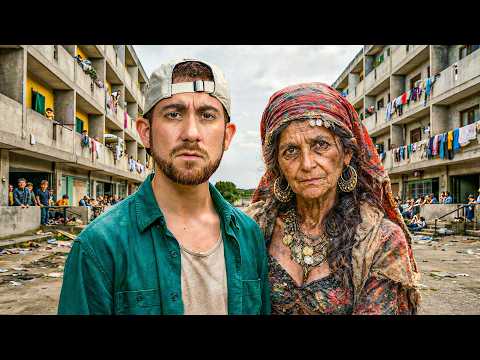
Chánov did not become a struggling enclave by accident. The settlement outside Most was constructed during the communist era with a specific purpose: relocate the Romani population, put a fence around them, and call it housing policy. Drew Binsky and his Czech-speaking companion Peter arrive to find the physical consequences of that decision still standing, from architectural decay to missing doors to a police presence that signals control more than safety. About 500 people live here, according to a local guide who offers them a tour. The guide notes that community workshops and cultural programs have largely faded, but insists the area has improved from its worst years. That tension, between stubborn pride and obvious neglect, runs through the entire visit. It is one thing to read about communist-era segregation as a historical fact and another to stand in its floor plan.
The Gap Between Reputation and Reality at the Gate
Before entering Chánov, Binsky admits on camera that he is anxious. The online reputation of the area, built on crime statistics and secondhand warnings, had done its work. What he actually encounters at the entry point is curious children and a man willing to show two strangers around his neighborhood. Residents who previously worked abroad, including one man who spent time in the UK, push back directly on the idea that Chánov is simply dangerous, arguing that outsiders judge the community without any genuine contact. The Romani people, as Binsky explains, have roots tracing back to Northern India, with a nomadic history across Europe that eventually planted significant populations in the Czech Republic. That history comes with centuries of being treated as outsiders, which makes the current conditions feel less like a coincidence and more like a pattern. The willingness of residents to engage with cameras at all, given that history, says something the reputation does not.
Methamphetamine Is Not a Subtext Here
When Binsky moves from Chánov into another neighborhood in Most, the tone of the video shifts fast. Drug use is not a background detail in this part of the city. It is immediate and visible. He witnesses a drug deal. He speaks with a man whose schizophrenia is attributed to long-term drug use. He meets a man deported from the UK for drug dealing, who left his children behind. Toluene, cheap and accessible, and methamphetamine, deeply embedded, are the two substances defining daily life for a significant portion of the people he meets. At one point, Binsky and Peter give money to residents and watch them leave almost immediately to buy meth. A local contributor explains that the drug problem cannot be separated from the discrimination and lack of economic opportunity that surround it, which is the kind of structural point that tends to get lost when the immediate visual is a drug transaction. For more context on how methamphetamine reshapes cognition and behavior at the individual level, the experiences documented in What It's Like Inside A Gypsy Slum are worth watching directly.
Our Analysis: Binsky walks into Chánov and gets out alive, which he seems genuinely surprised by. That surprise is the real story. The low bar of "nobody robbed me" doing heavy lifting as proof of humanity says more about how these communities are framed before cameras even arrive than anything he films.
What the video can't sit with is causation. It shows the drugs, the peeling walls, the kids running around barefoot, but treats poverty like weather. Something that just happens to people. The communist relocation policy that built Chánov isn't a footnote. It's the whole explanation.
There's also a question the video never quite asks: what does it mean to document a community like this and then leave? Binsky is not an investigative journalist and doesn't pretend to be, but the format — arrive, film, react, depart — has a built-in limitation. The people he meets will still be there when the camera is off. The structural conditions that produced Chánov, decades of state-sanctioned segregation followed by decades of deliberate neglect, don't resolve because a sympathetic outsider showed up and found the residents human. That's the uncomfortable residue the video leaves behind, and it's worth sitting with longer than the runtime allows.
Credit where it's due: he doesn't flinch, and he doesn't moralize. That restraint is rarer than it should be.
Frequently Asked Questions
Are drugs a major problem in the Czech Republic?
What are Czech Roma people called, and where do they come from?
What are the root causes of poverty and drug addiction in Romani communities Czech Republic poverty drug addiction cycles?
How many Romani people live in the Czech Republic?
Why do Roma communities in Eastern Europe remain segregated even after communism ended?
Based on viewer questions and search trends. These answers reflect our editorial analysis. We may be wrong.
Source: Based on a video by Drew Binsky — Watch original video
This article was created by NoTime2Watch's editorial team using AI-assisted research. All content includes substantial original analysis and is reviewed for accuracy before publication.