Building a $250K Pasture-Raised Chicken Farming Business
Key Takeaways
- •Fat Mountain Farms projects $250K–$270K in annual revenue with a ~15% net margin — roughly $35K–$41K in actual take-home profit
- •Eggs are the financial backbone: 400–425 eggs daily from 500 hens generates around $1,700 per week in consistent cash flow
- •Feed is the operation's biggest cost at $5,000–$6,000 monthly, and the Salatin chicken tractor system is what makes the land — and the margins — work
From One Bad Farmers Market to $250K a Year
Jack grew up as a tennis player in West London — about as far from regenerative farming as a background can get. His first farmers market attempt went badly — he sold almost nothing. Most people would have called that a sign. Jack apparently read it as a marketing problem, not a farming problem, and kept going.
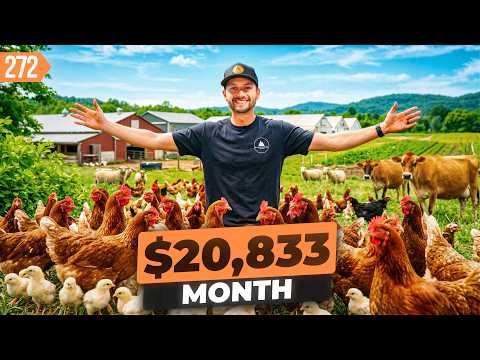
By the time UpFlip filmed He Turned a Few Chickens Into a $250K/Year Farm Business, Fat Mountain Farms was managing 600 meat birds, 500 egg-laying hens, 40 sheep, and two Jersey cows, with beef cattle being introduced on rented land. Projected 2026 revenue sits between $250,000 and $270,000. The pivot from that first dismal market stall to a six-figure operation came down to one shift: stop trying to sell to strangers at a table and start building a direct customer base who come to you.
The Salatin Tractor System Isn't Just Cute — It's the Engine
Chicken tractors — specifically Salatin coups — are the physical infrastructure that makes pasture-raised meat birds viable at scale. Each mobile unit costs around $1,500 and gets moved daily across the pasture. The birds get fresh ground, predators get blocked, and the manure gets distributed evenly across the land like a slow, feathered fertilizer spreader.
Jack learned the hard way what happens when the system fails. He lost 150 birds to heat inside the coups — a single mistake that wiped out a significant batch. That incident pushed him toward investing in a larger, more climate-controlled unit running $10,000–$15,000. His advice on that purchase is blunt: build your customer base first, then buy the infrastructure. Farming debt is how operations collapse before they ever find their footing.
Why Chickens Make the Whole Pasture Work Better
This is the part that sounds like marketing until you see the data. When Jack introduced chickens to pastures that were struggling, the land improved — measurably. Chickens scratch, peck, and deposit nitrogen-rich manure without consuming the forage that sheep and cows depend on. The result was healthier pasture, healthier sheep, and a drop in lamb mortality. One species doing its thing made every other species on the property perform better. That's not philosophy — that's just what happened.
The Brooding House: A Converted Vet Clinic Doing Real Work
The brooding operation runs out of a repurposed veterinary clinic — which is either the most practical reuse of a building or the most on-brand thing a farm could do. Inside, 600 Cornish Cross chicks are raised under automated feeding and watering systems that keep labor requirements low. Chicks are sourced from a hatchery at roughly $2 each, putting the monthly chick cost at around $1,200.
Jack manages a 7% mortality rate, with rats identified as the primary culprit. Automated systems help, but they don't solve everything — and the gap between what technology handles and what still requires human attention is where most of the daily grind lives. Converting an existing structure instead of building new kept startup costs down in a way that a lot of first-time farm operators don't think to do.
Labor Is Mostly Family, and That's Not an Accident
Peak season runs from 5:30 AM to 5 or 6 PM. Jack manages most of it with his wife and father-in-law. That's not a staffing oversight — it's a deliberate cost control strategy. Payroll is one of the fastest ways to erode thin margins, and at 15% net, there isn't much room to absorb it. The family labor model is common in small-scale farming for exactly this reason, and it works until it doesn't — which is usually when the operation tries to scale past what three people can physically manage.
Eggs vs. Chicken: Which One Actually Pays the Bills
Chicken sales are projected at $140,000 for the year. Eggs come in at $80,000–$85,000. On paper, chicken wins. In practice, eggs are the product that keeps the lights on. Chicken sales are batch-based — you raise a flock, process them, sell them, then wait for the next cycle. Eggs generate $1,700 every single week without a processing event. That consistency matters enormously when feed bills arrive monthly regardless of what you've sold.
The egg operation runs 500 red sex link hens producing 400–425 eggs daily. They're sold unwashed and unrefrigerated — which preserves the natural bloom on the shell and extends shelf life without refrigeration. Sales go direct to consumers through farm pickups and subscriptions, cutting out the restaurant middleman and keeping the margin intact. If you're looking for a model of how to build a food business around a single reliable product, the egg side of this operation is a cleaner case study than the chicken side.
The Numbers: Honest About What $250K Actually Means
Revenue of $250,000–$270,000 sounds like a lot until you subtract feed costs of $60,000–$72,000 annually, processing costs (around $8 per chicken on-farm, $110 per lamb, $1,500 per beef animal at USDA facilities), chick sourcing, marketing spend of $500–$600 monthly on Meta ads and email, and whatever the land costs. What's left is a 15% margin — $35,000 to $41,250.
Jack processes roughly 1,200 chickens on-farm per year, using apple cider vinegar in chill tanks instead of chlorine to maintain what he describes as natural cleanliness and beneficial bacteria. It's a quality control choice that also functions as a marketing point for direct consumers who care about how their food was handled. The revenue breakdown by product: $140K chicken, $80K–$85K eggs, $30K beef, $10K lamb. Lamb is almost a rounding error at that scale, which raises a fair question about whether 40 sheep are earning their keep relative to the land and labor they consume.
Scaling Without Blowing Up the Operation
The farm is adding dairy cows — two pregnant Jerseys at $6,000 each — and six beef cows on rented land. Jack's approach to both is identical: start small, learn the process, don't overextend. It's the same logic he applied to the large chicken coupe investment. Build the customer demand first, then add the infrastructure or the animals to meet it.
Marketing runs lean: $500–$600 monthly on paid ads, with organic social media storytelling doing the heavier lifting for customer acquisition. That ratio — low paid spend, high organic effort — is sustainable at this scale but gets harder to maintain as the operation grows and the founder's time gets consumed by the animals themselves. The ceiling on this model isn't land or livestock. It's hours. That's the constraint nobody in the video quite names directly, which is exactly why it's the one worth watching.
The 15% net margin is the number the video breezes past fastest, and it deserves more scrutiny. Jack is generating a quarter million in revenue and taking home somewhere between $35K and $41K. That's below median household income in most of the US. The operation works as a lifestyle business — it clearly does — but the video frames $250K in revenue as the headline without spending much time on what that actually means for someone trying to build financial security, not just a fulfilling daily routine. The gap between gross and net here is doing a lot of quiet work.
The organic social media strategy is also underexplored. Jack spends $500–$600 monthly on Meta ads, but the real customer acquisition engine is storytelling — which means it runs on his time, not his budget. That's fine at current scale. The moment he needs to hire someone to manage it, that cost center changes shape entirely, and the margin gets thinner before it gets better.
Frequently Asked Questions
Are pasture-raised chickens profitable?
How much land do you need for pasture-raised chickens at scale?
What is a Salatin chicken tractor and why does it matter for a pasture-raised chicken farming business?
How do you start a chicken farm business with no farming experience?
Is egg production or meat chicken sales more important to a small farm's cash flow?
Based on viewer questions and search trends. These answers reflect our editorial analysis. We may be wrong.
Source: Based on a video by UpFlip — Watch original video
This article was created by NoTime2Watch's editorial team using AI-assisted research. All content includes substantial original analysis and is reviewed for accuracy before publication.