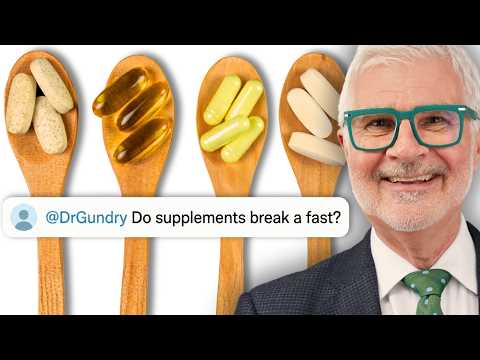
Supplement Quality Online Fraud Exposed: Dr. Gundry's Warning
Key Takeaways
- •Steven Gundry warns that a large number of supplements sold online simply do not contain what the label claims, and the health consequences can show up clearly in blood work.
- •In his video 'Taking All Your Supplements at Once?
- •Here's What a Doctor Says...', Gundry describes patients whose nutrient levels collapsed after switching to cheaper online alternatives, with one CoQ10 case standing out as a stark example.
What's Actually in That Bottle You Ordered
The supplement industry has a fraud problem, and it is not subtle. Dr. Steven Gundry points out in Taking All Your Supplements at Once? Here's What a Doctor Says... that multiple studies have examined supplements sold through major online retailers and found that a significant portion of them do not contain the active ingredients they advertise. Not underdosed. Not slightly off. Just absent. You are paying for a capsule of filler while your actual deficiency goes unaddressed. The fact that this has been demonstrated repeatedly in published research and people are still mostly unaware of it is genuinely baffling.
The CoQ10 Patient Who Thought He Was Covered
Gundry shares a specific case that makes the abstract problem very concrete. A patient who had been maintaining healthy CoQ10 levels decided to switch to a cheaper supplement found online. The reasoning was logical enough: same ingredient, lower price, why not. His next blood panel told a different story. CoQ10 levels had fallen dramatically, not because he stopped taking the supplement, but because the new product was not delivering what it claimed. CoQ10 is not a trivial nutrient to let slide, particularly for anyone concerned about cardiovascular or mitochondrial health, and this is the kind of case that should make anyone rethink the bargain-hunting instinct when it comes to what they put in their body.
Why the Stakes Are Higher Than Most People Realize
Here is the part that adds pressure to the quality issue. Gundry argues that getting all necessary nutrients from food alone is not realistic in the current agricultural environment. Soil depletion from modern farming practices has reduced the nutrient density of crops significantly, including organic ones. So if someone is already dealing with a dietary gap and then fills it with a supplement that contains no active ingredient, they are essentially in freefall with a parachute that was never packed. This connects to a broader pattern of hidden health risks in everyday products, not unlike what we covered examining Our Analysis: Gundry is at his best here when he stops selling and starts being honest. The point about supplement quality online is genuinely useful and under-discussed. A lot of people are paying real money for sawdust in a capsule, and that deserves more alarm than it usually gets. The fasting claim is the one worth pushing back on. "Supplements don't break a fast" is a lot cleaner than the science actually supports, and it depends heavily on what you're taking and why you're fasting. He breezes past that nuance. The blood test framing is the keeper. Proof over faith. That's the right standard. What deserves more attention than the video gives it is the structural problem underneath all of this. The FDA does not require supplements to be proven effective or even accurately labeled before they hit the market. That is not a bug someone snuck in — it is the law, specifically the Dietary Supplement Health and Education Act of 1994, which handed the industry a level of regulatory deference that would be unthinkable for pharmaceuticals. So when Gundry points to studies showing that bottles contain none of what they claim, he is describing a predictable outcome of a system that was designed with essentially no pre-market accountability. The surprise is not that fraud exists. The surprise is that anyone is surprised. This also raises a question the video does not quite get to: third-party testing. Organizations like USP, NSF International, and ConsumerLab exist precisely because the regulatory floor is so low. A supplement carrying one of those seals has at least been verified to contain what it says and not to be contaminated with something it should not be. That is a meaningfully different product from a random listing on a marketplace platform, and it is a practical filter that most consumers have no idea to apply. That gap between available verification and consumer awareness is where a lot of the real harm lives. The soil depletion argument is worth taking seriously even if it sometimes functions as rhetorical scaffolding for supplement recommendations. The data on declining mineral content in crops over the past several decades is real and has appeared in peer-reviewed agricultural literature. Whether it creates deficiencies severe enough to require supplementation across the board is a different question, and one that probably deserves more precision than it gets here. But the directional point — that food alone may not be sufficient for everyone — is not fringe thinking, and dismissing it because it comes from someone who also sells supplements would be its own kind of lazy. Based on viewer questions and search trends. These answers reflect our editorial analysis. We may be wrong. Source: Based on a video by Steven Gundry — Watch original video This article was created by NoTime2Watch's editorial team using AI-assisted research. All content includes substantial original analysis and is reviewed for accuracy before publication.Frequently Asked Questions
How do you verify supplement quality before buying online?
What are the red flags when buying supplements online?
How common is supplement label fraud on major online retail platforms?
Does supplement quality fraud affect specific supplements like CoQ10 more than others?
Where is the safest place to buy supplements online to avoid fakes?