Kevin O'Leary's Take on Entrepreneurial Traits Successful CEOs
Key Takeaways
- •Kevin O'Leary sat down on Young and Profiting to rate the traits that actually separate successful CEOs from everyone else — and the results are more counterintuitive than most entrepreneurship content will admit.
- •Risk tolerance scores low.
- •Charisma barely registers.
The 9 Essential Traits That Define Successful CEOs
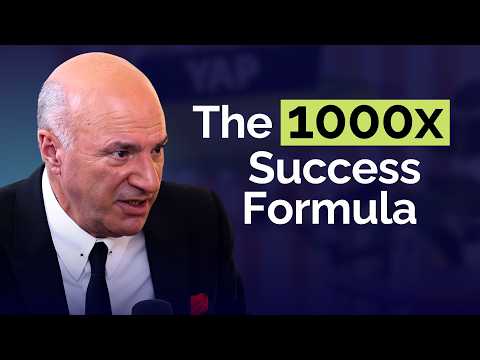
Kevin O'Leary ran through the traits most people associate with entrepreneurial success and assigned each a score. The exercise is more useful than it sounds. By forcing a number onto something like 'risk tolerance' or 'charisma,' you expose which conventional wisdom holds up and which is just recycled conference-panel mythology. This breakdown comes from his appearance on Kevin O'Leary: The Exact Health, Habit & 1000x Traits of Successful CEOs! on the Young and Profiting channel.
Why Creativity Matters More Than You Think
Creativity earns the only perfect ten in O'Leary's ranking. Not creativity in the artistic sense — creativity as a problem-solving mechanism. When the supply chain collapses, when a competitor undercuts you, when a co-founder walks: creative thinkers find a path that wasn't on anyone's roadmap. According to O'Leary, this isn't a nice-to-have trait. It's survival equipment. The entrepreneurs who make it aren't necessarily the ones with the best original idea — they're the ones who can rebuild the idea multiple times without losing the thread of what they were trying to do. Related: AI Consulting for Small Businesses: Huge Opportunity Now
This one lands because it reframes creativity as a stress response, not a personality type.
Risk Mitigation Over Risk-Taking: The Real Secret
Here's the one that trips people up. Risk tolerance gets a low score. The logic is clean: yes, you need a burst of courage to launch — to quit the job, sign the lease, make the pitch. But once the business exists, the job description changes entirely. Successful CEOs spend most of their time reducing exposure, not increasing it. The gambling mentality that gets a company started will destroy it once there's actually something to lose. O'Leary's framing is that risk-taking is a launch mechanism, not a management philosophy. Related: Quantum Computing Threat to Bitcoin: Is Your Crypto Safe?
Most entrepreneurship content conflates starting a business with running one — O'Leary draws a hard line between the two. Related: First-time home buyer affordability crisis: $300k homes
Storytelling as a Business Superpower
Storytelling gets a fifteen. Out of ten. The point is deliberate: in a landscape where every product has a website and a social presence, the companies that win are the ones whose narrative customers can repeat back. Not the tagline — the actual story. Why it exists. What problem it solves. Why this team. O'Leary argues that your ability to convey that narrative directly determines how fast you acquire customers and how deeply your brand registers. This is particularly relevant for founders exploring new growth channels where differentiation is increasingly difficult to sustain on product alone.
Our Analysis: What makes O'Leary's scoring exercise genuinely useful isn't any single rating — it's the implicit argument running underneath all of them. Most entrepreneurship frameworks are built around the launch phase: the pitch, the leap, the origin story. O'Leary is doing something different. He's scoring traits against the full arc of company-building, which means the qualities that look heroic at the starting line (risk appetite, bold vision, magnetic personality) naturally deflate once the business has employees, obligations, and something real to lose.
The creativity-as-problem-solving reframe deserves more attention than it typically gets. When people talk about creativity in a business context, the conversation usually drifts toward marketing, branding, or product design — surface-level applications. O'Leary is pointing at something structural: the ability to hold the core purpose of a company steady while completely rerouting how you get there. That's a different cognitive skill than coming up with a clever campaign. It's closer to what good engineers call systems thinking — understanding which variables are fixed and which are negotiable under pressure.
The storytelling score of fifteen out of ten is the kind of deliberate hyperbole that tends to get clipped out of context, but the underlying point is sound and increasingly well-supported by how markets actually behave. In categories where functional differentiation is shrinking — and that's most categories now — narrative coherence becomes a durable competitive asset in a way that features rarely are. Customers don't just buy products; they buy explanations they can give other people for why they bought the product. Founders who understand that dynamic early build distribution leverage that compounds. Those who figure it out late spend a lot of money on acquisition trying to compensate for a story that never stuck.
The health and physical discipline angle is where O'Leary pushes furthest against the standard CEO mythology. The idea that sleep, diet, and deliberate discomfort function as competitive edges rather than lifestyle choices is still treated as fringe content in most business media — but the logic isn't complicated. Decision quality degrades under fatigue and chronic stress. If your edge is judgment, and judgment is a biological output, then the inputs matter. What's interesting is that O'Leary frames this not as wellness content but as performance infrastructure — the same category as a good CFO or a reliable supply chain. That reframe is worth sitting with.
The broader takeaway from this framework isn't that O'Leary has identified some secret list. It's that the traits most consistently rewarded in entrepreneurship culture — boldness, risk appetite, charisma — are weighted heavily toward the beginning of a company's life. The traits that actually determine whether a company survives and compounds — creative problem-solving, accountability, narrative clarity, physical resilience — are quieter, less photogenic, and harder to perform on a conference stage. That gap between what gets celebrated and what actually works is probably the most important thing this conversation surfaces.
Frequently Asked Questions
What are the characteristics of a successful CEO according to Kevin O'Leary?
What are the entrepreneurial traits that separate successful CEOs from average founders?
Is risk-taking actually important for entrepreneurial success?
Why does storytelling matter so much for building a successful business?
Do health habits like sleep and diet actually give successful entrepreneurs a competitive edge?
Based on viewer questions and search trends. These answers reflect our editorial analysis. We may be wrong.
Source: Based on a video by Young and Profiting — Watch original video
This article was created by NoTime2Watch's editorial team using AI-assisted research. All content includes substantial original analysis and is reviewed for accuracy before publication.