Crypto ETF Centralization Governance Risk: Wall St. vs DeFi
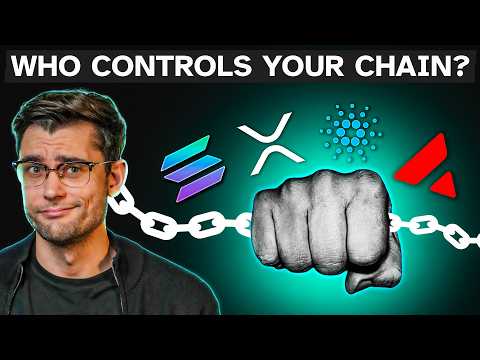
Key Takeaways
- •Altcoin ETFs are flooding the market with institutional money, but Coin Bureau (Guy) argues in 'Wall Street vs DeFi: Who Votes?' that the trade-off is far more dangerous than most retail investors realize.
- •With the SEC's approval of generic listing standards and 16 cryptocurrencies classified as digital commodities, over 126 ETF filings are now pending from firms like BlackRock and Grayscale.
- •The problem is structural: when you buy an ETF share, you don't own the underlying token or its voting rights.
126 ETF Filings and Nobody's Asking the Right Question
The SEC's approval of generic listing standards, combined with the classification of 16 cryptocurrencies as digital commodities, blew the door open for altcoin ETFs. Suddenly BlackRock, Grayscale, and a parade of institutional names are filing for regulated products tied to DeFi protocols. The market read this as validation. More filings, more liquidity, more legitimacy. What Guy from Coin Bureau is pointing out in Wall Street vs DeFi: Who Votes? is that nobody stopped to ask what happens to governance when Wall Street starts holding the keys. That question turns out to be the only one that matters.
The Custodian Owns the Vote, Not You
Here is how ETFs actually work, and why it matters here. When a retail investor buys shares in an altcoin ETF, they do not hold the underlying tokens. A centralized custodian holds them. And in the overwhelming majority of cases, voting rights attached to those tokens stay with the ETF sponsor, not the shareholder. For regular equities, this is a mild inconvenience. For Proof-of-Stake blockchain networks, where token holders literally vote on protocol upgrades, fee structures, and validator policies, this is a structural transfer of power. You bought exposure to the price. Wall Street got the governance. As a deal, that's a bit one-sided. As institutional ETF holdings scale up across altcoins like Solana, the concentration of that voting power stops being a footnote and starts being the whole story.
Fiduciary Duty Is Not Compatible With Decentralized Ideals
Firms like BlackRock are not bad actors by design. They are legally bound to maximize returns for their shareholders. That fiduciary duty is the entire point of their existence. The problem is that the foundational principles of DeFi — censorship resistance, network neutrality, permissionless access — are not line items on a balance sheet. When those two value systems share governance power over the same protocol, one of them is going to lose. Coin Bureau (Guy) highlights that BlackRock has already acquired Uniswap governance tokens and used them in DAO votes that serve BlackRock's operational interests. This isn't speculation about future behavior. It already happened. The question is just how much bigger that footprint gets as ETF assets under management grow, and whether anyone in the DeFi community has a credible answer to it.
Our Analysis: Guy nails the governance capture problem but buries the most dangerous part. This isn't a slow drift toward centralization. BlackRock and Fidelity don't need a majority stake to control a protocol. In low-turnout DAO votes, 10-15% is often enough to swing outcomes. Altcoin ETFs hand institutions exactly that.
The Howey test angle deserved more airtime. If institutional staking pools start commanding 30%+ of a network's staked supply, the 'decentralized' defense that kept Ethereum off the SEC's securities list starts looking very thin. That's not a hypothetical. That's a filing cycle away.
What also goes underexplored is the feedback loop this creates. As ETF inflows grow, custodians accumulate more governance tokens. More governance tokens mean more influence over protocol decisions — including decisions that affect fees, validator economics, and liquidity incentives. Those outcomes directly shape the ETF's performance, which attracts more inflows. The cycle isn't just possible; it's structurally incentivized. Nobody has to be corrupt for this to become a problem. The incentives build the cage themselves.
There's a generational stakes issue here too. The developers and early communities who built these protocols did so under a specific set of assumptions about who would hold power and why. Those assumptions are being quietly invalidated by a product wrapper that most retail buyers don't fully understand. Buying an altcoin ETF feels like participating in crypto. In terms of governance, it's closer to opting out of it entirely and handing your proxy to an asset manager whose primary allegiance is to quarterly returns. That distinction matters enormously, and right now it's barely part of the public conversation.
Frequently Asked Questions
What is the crypto ETF centralization governance risk that DeFi investors should know about?
Does buying a crypto ETF mean you give up your voting rights in the protocol?
Has BlackRock actually used DeFi governance tokens to influence DAO votes?
Why can't BlackRock just act in the best interests of DeFi protocols it holds tokens in?
How many altcoin ETF filings are currently pending with the SEC and which cryptocurrencies are involved?
Based on viewer questions and search trends. These answers reflect our editorial analysis. We may be wrong.
Source: Based on a video by Coin Bureau (Guy) — Watch original video
This article was created by NoTime2Watch's editorial team using AI-assisted research. All content includes substantial original analysis and is reviewed for accuracy before publication.