Trinity Doctrine Biblical Arguments: God Logic vs. Hansen
Key Takeaways
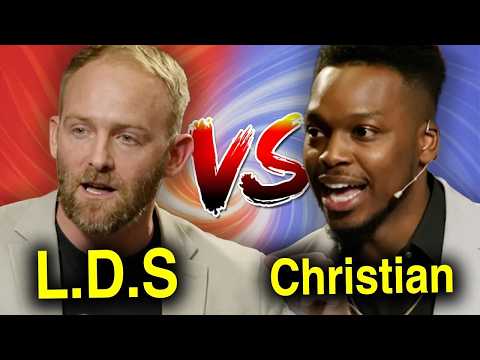
- •A formal theological debate hosted by Ruslan KD pits God Logic against Jacob Hansen on the question of whether the Trinity doctrine is genuinely biblical.
- •In the video 'DEBATE: God Logic Vs.
- •Jacob Hansen - Is The Trinity Biblical?', God Logic defends the classical Trinity using Old Testament plural pronouns and Hebrew grammatical evidence, while Hansen counters with an alternative 'Godhead' model that accepts three divine persons but rejects the claim that they constitute a single being.
The Argument Nobody Expects to Have in 2024
Two people who both believe Jesus is divine sitting across from each other arguing about whether God is one being or three — that is the actual debate. Ruslan KD hosted God Logic and Jacob Hansen to work through one of Christianity's oldest and most technically demanding questions about the Trinity's biblical foundations. God Logic took the affirmative, Hansen the negative, and what followed was less a shouting match than a slow-motion collision of interpretive frameworks that have been building since the Council of Nicaea. The disagreement is sharper and stranger than most people realize going in. You can watch the full exchange in DEBATE: God Logic Vs. Jacob Hansen - Is The Trinity Biblical? on the Ruslan KD channel.
Plural Pronouns and the Hebrew Fine Print
God Logic opens with the textual case, and it is more granular than the usual Genesis 1:26 citation. Yes, he points to 'Let us make man in our image' and the Babel passage in Genesis 11 where God says 'Come, let us go down.' But the more interesting move is his examination of Hebrew words translated as 'maker' and 'creator' in Job, Psalms, and Ecclesiastes, words that appear in grammatically plural forms. The argument is that this plurality is not poetic accident but a consistent grammatical signal embedded in the text about the nature of the one God. This is the kind of evidence that requires you to actually trust your Hebrew lexicon, which most people in the debate audience are not in a position to verify in real time, and God Logic knows it.
Who vs. What — Hansen's Semantic Trap
Hansen's core critique is a philosophical one dressed as a grammatical one. He draws a line between God as a 'who' — meaning the Father, the Son, or the Holy Spirit as individual persons — and God as a 'what' — meaning the divine nature or essence those persons share. His charge is that Trinitarian language constantly collapses these two categories, saying things like 'God suffered' or 'God was born,' when what is technically meant is 'the second person of the Trinity, in his human nature, suffered.' Hansen's alternative is a 'Godhead' model: three fully divine persons operating in unified council, without the metaphysically loaded claim that they are the same being. His analogy of three dogs sharing canine nature still being three dogs is blunt but lands harder than it should.
Our Analysis: Hansen lands the harder punches here. His argument that Trinitarians conflate 'same God' with 'same being' is a genuine philosophical problem, not a semantic quibble, and God Logic never fully escapes it.
The two-natures defense is where Trinitarianism strains most. Saying Jesus is simultaneously omniscient and ignorant because he has two natures is not a resolution, it is a restatement of the problem with extra steps.
Both sides skip the real question underneath all of this: whether second-temple Jewish monotheism even permits the framework either of them is working from. That absence haunts the whole debate.
What makes this exchange worth studying beyond its theological particulars is what it reveals about the limits of proof-texting as a method. Both debaters treat scripture as a court document — something to be parsed for admissible evidence — when the texts themselves were written into communities that already held working assumptions about divine identity that neither side fully reconstructs. God Logic's Hebrew grammatical argument is genuinely interesting, but grammatical plurality does not automatically resolve into metaphysical unity. Hansen's three-dogs analogy is memorable precisely because it is too blunt: it smuggles in a framework of discrete individual substances that ancient Jewish and early Christian authors may not have shared either.
The deeper problem is that 'being' is doing enormous philosophical work in this debate and neither participant pauses long enough to interrogate where that category came from. The Nicene formulation borrowed Greek metaphysical vocabulary — homoousios, substance, essence — for reasons that were politically and polemically urgent in the fourth century. Whether that vocabulary maps cleanly onto what Genesis or Job's authors meant is a separate question that the debate gestures toward but never actually enters. That is not a criticism unique to this video; it is a structural problem with the entire genre of Trinity debates conducted primarily through biblical citation. The argument you actually need to have is a historical one, and those are harder to win in front of a YouTube audience.
Frequently Asked Questions
What is the difference between the Trinity doctrine and the Godhead model in biblical arguments?
Do the plural pronouns in Genesis actually prove the Trinity doctrine, or is that a stretch?
How do Trinitarian theologians explain Jesus having a God if he is also fully God himself?
Is divine impassibility — the idea that God cannot suffer — compatible with the Trinity doctrine and the crucifixion?
Is the Trinity biblical, or was it invented at the Council of Nicaea?
Based on viewer questions and search trends. These answers reflect our editorial analysis. We may be wrong.
Source: Based on a video by Ruslan KD — Watch original video
This article was created by NoTime2Watch's editorial team using AI-assisted research. All content includes substantial original analysis and is reviewed for accuracy before publication.