Yeah Right Skateboarding Film VFX Invisible Skateboard
Key Takeaways
- •Yeah Right! (2003) made skateboards invisible by painting them green and manually rotoscoping them out frame by frame — before automated masking tools existed.
- •Motion control cameras recorded the exact camera path for each shot, then replayed it without skaters to capture a clean background plate for compositing.
- •The technique was so well-executed that the method remained a mystery to viewers for years after the film's release.
The Groundbreaking VFX Behind Yeah Right's Invisible Skateboard Trick
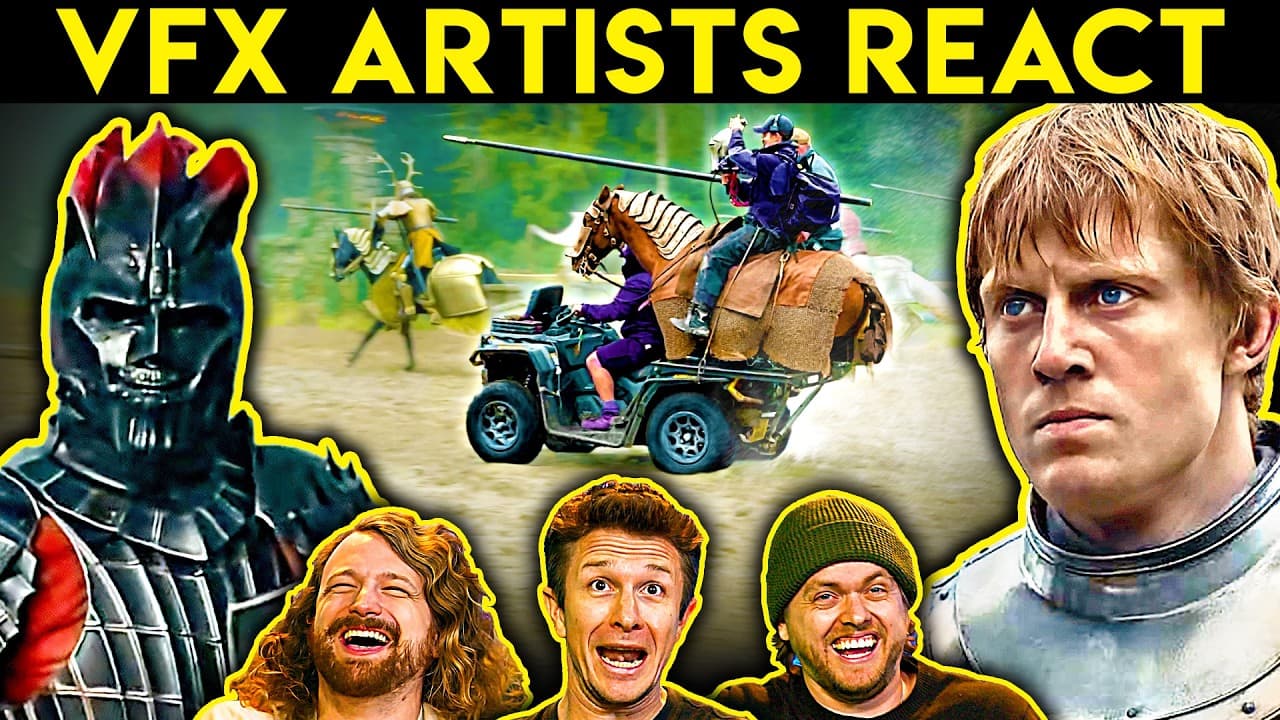
The 2003 skateboarding film Yeah Right! did something that had no real precedent in its world: it made the skateboards disappear. Not as a gimmick. As a sustained, convincing illusion across multiple shots. In their video VFX Artists React to Bad & Great CGi 220, the Corridor Crew team were visibly impressed — and slightly stunned — by what the production actually pulled off with the tools available at the time.
Green Paint Did the Heavy Lifting
The starting point was deceptively simple: paint the skateboards green. That gave compositors a consistent color to key out in post-production, the same basic logic behind green screen work. But a skateboard isn't a static backdrop. It moves, it tilts, it catches light differently on every frame. Keying it out cleanly wasn't a one-click operation. Every single frame required individual attention, and the boards weren't the only problem — their shadows had to go too. Painting out a moving shadow across pavement, frame by frame, is the kind of task that makes modern VFX artists wince just thinking about it.
Manual Rotoscoping: The Work Nobody Saw
Rotoscoping — tracing the outline of an object frame by frame to isolate it — is tedious even with today's AI-assisted tracking tools. In 2003, those tools didn't exist in any meaningful form. The artists working on Yeah Right! were doing this by hand. Every frame. Every board. Every shadow. According to the Corridor Crew analysis, this wasn't just technically demanding — it was the kind of sustained manual effort that most productions would have walked away from. The fact that the effect holds up is a direct result of that invisible labor, which is exactly why nobody could reverse-engineer it just by watching.
Motion Control: The Camera Trick That Made It All Work
Green paint and rotoscoping could remove the board from a shot. But they couldn't, on their own, give compositors a clean version of the background underneath. That's where motion control came in — and this, according to the Corridor Crew breakdown, was the discovery that explained everything.
Recording the Camera Path, Then Running It Again
Motion control rigs record the precise mechanical movements of a camera during a shot — every pan, tilt, and dolly move — and can replay that exact path with millimeter accuracy. For Yeah Right!, this meant filming the skaters performing their tricks, then running the camera through the identical movement again with the skaters absent. The result was a perfectly matched clean plate: the same background, same lighting angle, same framing, with nothing in the way. Drop that plate behind the rotoscoped footage and the board simply ceases to exist. The logic is elegant. The execution was anything but. This kind of rig wasn't cheap or fast to operate, which makes the scale of what Yeah Right! attempted even more striking for a skateboarding film.
Why 2003 Made This So Much Harder
Context matters here. The mid-2000s were a transitional period for VFX — digital tools existed, but the automated tracking and masking software that makes modern compositing dramatically faster was still years away from being standard. Productions working in this window were often doing digitally what earlier filmmakers had done optically: carefully, slowly, and with a lot of human hours. As we've seen in other analyses of period-specific effects work — like the engineering constraints behind Disney's animatronic character technology — the gap between what an audience sees and what it took to produce it is often enormous.
No Shortcuts Available
Modern rotoscoping software can track edges, predict movement, and propagate masks across frames automatically. In 2003, none of that was on the table. Every mask was drawn. Every shadow was painted. The Corridor Crew team noted that this kind of manual effort is almost incomprehensible by current standards — not because it was impossible, but because the time investment required would be considered wildly inefficient today. The people who made Yeah Right! weren't working around a limitation. They were just doing the work, the hard way, because there was no other way.
The Legacy of an Effect Nobody Could Explain
What's telling about Yeah Right!'s invisible skateboard effect is how long it remained genuinely mysterious. This wasn't a case where the technique was obvious and people just hadn't thought about it. Viewers and even industry people couldn't pin down exactly how it was done. That's a mark of execution quality — when the seams are invisible not because the trick is simple, but because the craft is good enough to hide them. The film sits in an interesting position in VFX history: too early for the digital tools that would have made it easier, but technically ambitious enough that it still gets analyzed two decades later. Much like the low-budget Japanese mockumentary filmmakers who built tension through constraint rather than resources, the Yeah Right! team turned limitation into a creative forcing function. The invisible skateboard wasn't a product of abundance. It was a product of stubbornness.
Our Analysis: The Corridor Crew breakdown lands on something that gets underplayed in most VFX retrospectives: the motion control revelation is the actually interesting part. Green screen logic is familiar enough that audiences can reconstruct it in their heads. But the idea that a production on a skateboarding film was running motion control rigs — technology associated with big-budget commercial work — to capture clean plates for a trick that most viewers would never consciously notice? That's a production decision that reflects a specific kind of obsessive commitment to the effect working, not just existing.
What the video doesn't fully sit with is how unusual the client was. Skateboarding films in 2003 weren't prestige productions with VFX budgets to match the ambition. Someone greenlit a genuinely expensive and labor-intensive process for an audience that largely didn't know or care how effects were made. The invisible skateboard worked because someone decided it had to, in a context where nobody would have blamed them for doing less.
Frequently Asked Questions
How did the Yeah Right skateboarding film VFX invisible skateboard effect actually work?
Why was the invisible skateboard trick in Yeah Right so hard to reverse-engineer?
What is rotoscoping and why did it make the Yeah Right VFX so labor-intensive?
Could the Yeah Right invisible skateboard effect be done more easily today?
How does motion control camera work in VFX filmmaking?
Based on viewer questions and search trends. These answers reflect our editorial analysis. We may be wrong.
Source: Based on a video by Corridor Crew — Watch original video
This article was created by NoTime2Watch's editorial team using AI-assisted research. All content includes substantial original analysis and is reviewed for accuracy before publication.