Disney animatronic characters technology failure: Living Characters
Key Takeaways
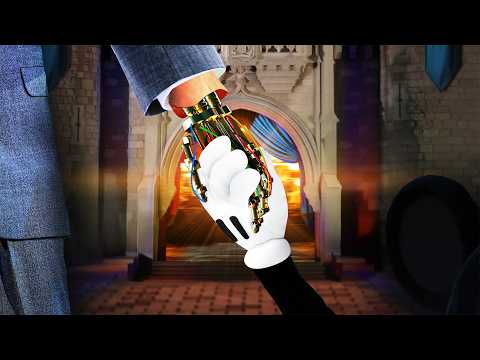
- •Disney has spent decades and enormous R&D budgets trying to build truly interactive 'Living Characters' for its theme parks, and it keeps almost getting there.
- •Defunctland's video 'Disney's Living Characters: A Broken Promise' traces this obsession from Walt Disney's Abraham Lincoln animatronic through EPCOT Center's SMRT-1 robot, the short-lived Talking Mickey Mouse meet-and-greet, and the hyped but mostly absent droids of Star Wars: Galaxy's Edge.
- •The pattern is consistent: impressive prototype, promising demo, then quiet retirement.
Walt Wanted Them Alive, Not Just Moving
The Abraham Lincoln animatronic that debuted at the 1964 World's Fair was genuinely unsettling in the best possible way. It stood, gestured, and delivered a speech with physical conviction nobody had seen from a machine before. But it was entirely pre-programmed. Lincoln wasn't listening. He wasn't responding. He was performing a script on a loop, which is impressive engineering but a very different thing from what Walt Disney actually wanted. According to Defunctland's breakdown in Disney's Living Characters: A Broken Promise, Walt's real ambition was to create lifelike figures beyond mere automatons, with the video framing a spectrum running from 'scripted behaviors' through 'puppeteered behaviors' all the way to 'autonomous behaviors.' While the Lincoln figure landed firmly at the scripted end, Walt was reluctant to pursue truly autonomous figures in his time, and that gap between what Disney could build and what Disney wanted to build has basically never closed.
EPCOT Tried to Be a Lab and a Theme Park Simultaneously
EPCOT Center gets treated like a noble failure in a lot of retrospectives, but Defunctland points out it was also the first real testing ground for interactive character technology at Disney scale. SMRT-1, an early robotic character installed there, used dialogue trees and rudimentary speech recognition to hold something approximating a conversation with guests. By modern standards it's quaint. In context, it was an early example of autonomous characters that demonstrated basic interactive capabilities running inside an operational theme park. Remote-controlled roaming robots like Sico and GYRO followed, operated by puppeteers in real time, which made them more dynamic but also introduced the staffing problem that would haunt every version of this idea going forward. Every step forward in the technology seemed to drag an equal step forward in operational complexity behind it.
The Character Selection Problem Nobody Talks About
One of the sharper observations in Defunctland's video is that the choice of which character gets the interactive treatment is not creatively neutral. Mickey Mouse is the crown jewel of the Disney brand, which makes him the worst possible character to put in an unpredictable, live-interaction format. Mickey's Toon Elevator tried it anyway and demonstrated exactly why that's a bad idea — any weird moment, any puppeteer flub, any interaction that goes slightly wrong is a weird moment involving the single most recognizable character in the company's history. Stitch and Crush, by contrast, are chaotic and eccentric by design. A puppeteer improvising a strange response as Crush is just Crush being Crush. This is the kind of strategic thinking that's more interesting than it sounds, and it's the reason Turtle Talk with Crush became the template for virtual puppetry rather than anything involving Mickey.
Talking Mickey Was a Technical Win and an Economic Loss
The Talking Mickey Mouse meet-and-greet experience is probably the clearest illustration of the whole Living Characters problem. Technologically, according to Defunctland, it worked. Guests got a genuinely interactive, responsive Mickey who could hold a conversation. The official reason given for its removal was character consistency across parks, which is a real concern but also the kind of explanation that does a lot of heavy lifting. The actual math was brutal: four Cast Members required per single guest interaction. Four people, one conversation, one Mickey. That is not a ratio any accountant at a major entertainment company can look at without physically wincing. The technology delivered the dream. The staffing model made it impossible to scale, and that combination — impressive capability, operationally unsustainable — is practically the motto of the entire Living Characters initiative.
Our Analysis: Defunctland nails the central irony here. Disney's been pitching "Living Characters" as the future for about sixty years while quietly burying every version that got too expensive or too weird to scale. That's not innovation. That's a press release cycle.
The Talking Mickey removal is the tell. The tech worked. Guests loved it. Disney killed it anyway because training enough operators was inconvenient. That's a staffing problem dressed up as a technology problem, and the video is too generous in not saying so plainly.
BDX droids at Galaxy's Edge are charming. They're also merchandise with wheels. Don't get it twisted.
What's worth adding here is that this pattern isn't unique to Disney — it's endemic to any company that conflates a successful demo with a deployable product. The demo lives in a controlled environment with trained operators and hand-picked participants. The park floor has screaming kids, language barriers, cast member turnover, and eight-hour shifts. The gap between those two realities is where Living Characters go to die. Disney's mistake, repeated across decades, is treating the prototype as proof of concept for the product rather than proof of concept for the problem. The problem — unpredictable humans, unsustainable staffing ratios, brand-risk aversion — never actually gets solved. It just gets rebranded as the next generation of the initiative.
Frequently Asked Questions
Why does Disney animatronic characters technology keep failing to scale even after decades of R&D investment?
Why was Talking Mickey Mouse removed if it actually worked?
Why does Turtle Talk with Crush work when other Disney interactive character experiences failed?
What actually happened to the Star Wars Galaxy's Edge interactive droids — are they still in the parks?
How does Disney's autonomous animatronics approach compare to what other theme parks have tried?
Based on viewer questions and search trends. These answers reflect our editorial analysis. We may be wrong.
Source: Based on a video by Defunctland — Watch original video
This article was created by NoTime2Watch's editorial team using AI-assisted research. All content includes substantial original analysis and is reviewed for accuracy before publication.