Ray Tracing Light Simulation How It Works: Broken?
Key Takeaways
- •Two Minute Papers host Károly Zsolnai-Fehér uses ray tracing, a physics-based light simulation technique, to demonstrate why even a technically perfect system can look completely broken at first.
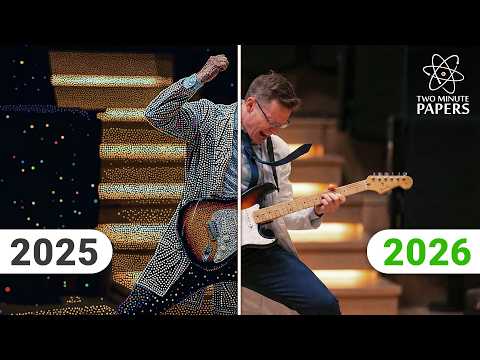
- •In a video titled 'The Algorithm That Made Me Cry,' he walks through how simulating just one light ray per pixel produces an incomprehensible mess, and how only after pushing sample counts into the millions does a photorealistic image finally emerge.
- •The progression from noise to clarity is the whole point: it's a working demonstration of why persistence in complex systems isn't optional.
What Ray Tracing Actually Does to Light
Ray tracing is not magic and it is not AI. It is physics. The system works by tracing the paths individual light rays take through a scene, bouncing them off surfaces, tracking how they interact with materials, and predicting what the final image should look like based on those interactions. Two Minute Papers describes it as a light transport simulation, and that framing matters because it sets the right expectation: this is a calculation, not a guess. The physics is real. The math is sound. The results, at least initially, are absolutely terrible, and that gap between correctness and quality is exactly what makes this interesting.
Why Your First Render Looks Like Static
Start with one light ray per pixel. One sample. The result, according to Two Minute Papers, is a noisy, incomprehensible image that looks less like a rendered scene and more like a television losing signal. This is not a bug. The simulation is doing exactly what it is supposed to do. With only one data point per pixel, you are essentially making a single guess about what color that pixel should be, and most of those guesses are wrong. The image is not broken. It is just starved for information. This is the part that trips people up, because a system that looks this bad while technically functioning correctly is very easy to walk away from.
The Sample Count Problem
Increasing the number of samples per pixel is what transforms that static into something recognizable. Two Minute Papers walks through the progression: a handful of samples gives you a rough shape. A few hundred and you start seeing light and shadow with some coherence. Push into the thousands and the noise begins to smooth out into something that resembles a real scene. Hit the millions and the image converges into a photorealistic render that looks indistinguishable from a photograph. The relationship between sample count and image quality is not linear and it is not instant, which is the entire structural point of the video. If you want to understand why modern hardware like NVIDIA RTX cards dedicates entire processing cores to ray tracing acceleration, this progression is the answer.
Convergence Is the Mechanism, Not a Metaphor
The technical term for what happens as sample counts increase is convergence. Each additional light ray sample narrows the gap between the simulation's estimate and the correct answer for each pixel, with variance collapsing as the law of large numbers takes over. At low sample counts, that variance is enormous, which is why the image looks random. As samples accumulate, the image stabilizes toward its true appearance. Two Minute Papers makes this visible rather than just describing it, which is a better teaching tool than any equation. The interesting implication here is that the algorithm was never wrong, it was always just unfinished, and there is no shortcut to finished. For readers curious about how AI is being applied to close that gap faster, watch The Algorithm That Made Me Cry to see the full progression firsthand.
Our Analysis: The most interesting part of this video isn't the ray tracing at all. It's the quiet argument that patience has a physics to it, that some outputs literally cannot exist until enough effort accumulates. That's a strange and underappreciated idea.
What the video undersells is how rare it is to have a feedback loop where you know you're right before the result looks right. Most people quit exactly there. The emotional payoff Károly describes isn't sentimentality. It's what happens when effort finally crosses a threshold most people never reach.
There's also something worth noting about what this means for how we evaluate tools and systems in general. Ray tracing makes the failure state visible and measurable — you can watch the image improve in real time. Most complex systems don't offer that. You're flying blind, accumulating effort without any signal that convergence is actually happening. The reason this video resonates beyond the technical audience is that it offers something unusually rare: proof, in the most literal visual sense, that the mess precedes the clarity by design. That reframe has implications well beyond rendering pipelines.
Frequently Asked Questions
How does ray tracing light simulation actually work, and why does it start out looking so bad?
How many samples per pixel does ray tracing need to produce a photorealistic image?
What does 'convergence' mean in ray tracing, and is it really just a technical term or does it matter practically?
Is AI being used to reduce the noise in ray-traced images so fewer samples are needed?
Can you learn to build a ray tracer from scratch without a computer science background?
Based on viewer questions and search trends. These answers reflect our editorial analysis. We may be wrong.
Source: Based on a video by Two Minute Papers — Watch original video
This article was created by NoTime2Watch's editorial team using AI-assisted research. All content includes substantial original analysis and is reviewed for accuracy before publication.