AI-generated product scams online shopping: Corridor Crew
Key Takeaways
- •Products advertised with AI-generated images routinely arrive as cheaper, sometimes hazardous substitutes — high ratings on the seller's site mean nothing.
- •Return policies on scam listings are engineered to be unusable — international return shipping costs more than the product is worth.
- •'Lab-grown' and 'sterling silver' claims in cheap jewelry listings are frequently outright lies — a scratch test revealed a 'lab ruby' to be plain red glass.
The Advertised Product Does Not Exist
The core mechanic of these scams is simple: show buyers something that was never manufactured. A wolf sweater listed with what appeared to be an intricately knitted design — the kind of thing that would take real craft — arrived as a flat printed image on thin fabric. The listing had strong ratings. The product bore almost no resemblance to the photos. That gap between image and object isn't a quality control failure; it's the entire business model.
AI-generated imagery makes this easier than ever. Sellers can produce photorealistic product shots of items that don't exist, or dress up a $4 piece of junk to look like a $60 artisan piece. In a recent video, Corridor Crew ran several of these listings through detection tools including SynthID, though the hosts were clear that no tool catches everything — manual inspection for anatomical weirdness, impossible textures, and lighting that doesn't match the background is still your best defence.
The Five-Star Rating Is Part of the Scam
A sweater with a suspiciously high rating arrived completely different from its advertised image. Not slightly off. Different. The reviews were meaningless — either fabricated, incentivised, or left by buyers who didn't bother to compare what they received against what was shown. Platforms like Etsy and eBay have review systems built on the assumption that sellers are operating in good faith. Scam operations exploit that assumption deliberately, and the platforms have been slow to close the gap.
Temu has faced similar criticism for listings where the review count and star rating are structurally disconnected from product accuracy. If the photos look too good and the reviews are uniformly enthusiastic with no photos attached, that combination alone should make you pause.
The Complication Is the Return Policy
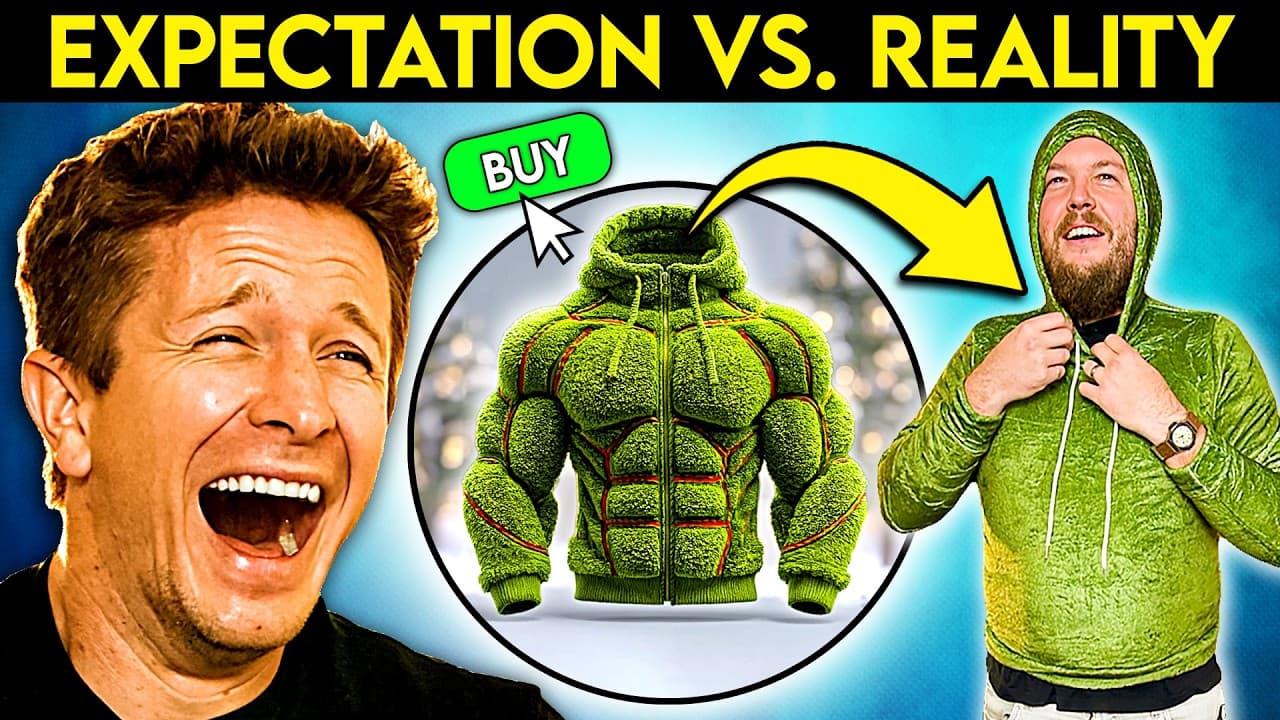
The Hulk sweater arrived in the wrong size. When the team looked into returning it, the process required shipping the item back internationally — at the buyer's expense. For a cheap sweater, that cost likely exceeds the original purchase price. This isn't an oversight. A return policy that costs more to use than the item is worth is a policy designed never to be used. It's a one-way door dressed up as consumer protection.
This is worth understanding structurally: the scam doesn't end at the sale. The return process is a second layer of the same trap, and it's just as deliberate as the fake product photo that got you there.
Vague Words Are Doing Heavy Lifting
A robot dog toy was marketed using phrases like 'mini motors' and 'intelligent electronics.' The actual product was a small, vibrating plush toy that made noise. No robotics. No intelligence. Just a description engineered to sound technical without committing to anything verifiable. Excessive emojis in product listings serve a similar function — they create visual noise that distracts from the absence of real specifications.
The same pattern shows up in furniture and home goods listings across major platforms. 'Handcrafted,' 'artisan,' and 'premium materials' are phrases that mean nothing without evidence. If a listing can't tell you what something is actually made of, that's because the answer would end the sale. This kind of linguistic vagueness is worth treating the same way you'd treat an AI-generated image — as a signal that something is being hidden, not just poorly described. As we've seen with AI systems designed to simulate authenticity, the gap between what something claims to be and what it actually is can be engineered to be almost invisible until you're already committed.
Cheap Materials That Cross Into Hazardous
A 'stained glass' dog lamp turned out to be plastic that barely lit up. A yak-shaped charcuterie board arrived unsanded and made from wood that wasn't food-safe. A book-themed mug advertised as glass was painted ceramic — and when microwaved, it smoked and smelled bad. That last one isn't just a disappointment. A mug that produces fumes when heated is a product that could hurt someone.
The charcuterie board is the quieter danger. People buy these for food. Unsanded, non-food-safe wood sitting under cheese and cured meat isn't a novelty fail — it's a health risk that the listing gave no indication of. The gap between 'not what I expected' and 'actually dangerous' is smaller in these product categories than most buyers assume.
The Gemstone Lie Has a Taxonomy
A ring listed as 'sterling silver lab ruby' failed a basic scratch test — the stone scratched easily, confirming it was glass, not ruby of any kind. The hosts broke down why this matters: a natural ruby, a synthetic (lab-grown) ruby, and an imitation ruby are three entirely different things with vastly different values. Calling red glass a 'lab ruby' exploits the fact that most buyers don't know that lab-grown gems are still real gemstones with real hardness, just grown in a controlled environment rather than mined. Even a genuine lab ruby would cost more than these listings charge. The terminology is chosen specifically because it sounds scientific while meaning nothing legally enforceable. If you're buying gemstone jewellery from an unfamiliar seller on platforms like eBay or Etsy, a scratch test is cheap insurance — glass scratches, corundum doesn't.
How to Actually Protect Yourself
Reverse image search every product photo before buying. If the same image appears across dozens of unrelated storefronts, you're looking at a stock or AI-generated image, not a photo of real inventory. Run suspicious images through detection tools like SynthID, but don't rely on them exclusively — look for hands with wrong finger counts, backgrounds that don't match the lighting on the product, and fabric textures that look painted rather than woven.
Check whether the seller has a physical address and a coherent return policy before you buy, not after. If the return policy requires international shipping at your expense, price that into your decision — you may be buying with no realistic ability to return. On platforms like Etsy and eBay, filter for sellers with photo reviews and look for listings that include actual material specifications rather than marketing language. 'Premium quality' is not a material. 'Beech wood, food-safe finish' is. The difference in how a listing is written tells you almost everything about whether the seller expects to stand behind what they're selling. For more on how AI-generated content is being used to obscure the truth in ways that go beyond shopping, the recent Anthropic code exposure is a useful reminder that even sophisticated systems have gaps between what they present and what's actually happening underneath.
Our Analysis: The robot dog segment is the most revealing part of this whole exercise, and not because the toy was bad. It's because the marketing used the word 'intelligent' to describe a vibrating plush animal. That word has no legal definition in a product listing. Neither does 'lab ruby,' 'stained glass,' or 'food-safe.' Scam sellers aren't just using AI to fake images — they're using the absence of enforceable language standards to say almost anything. The platforms aren't fixing this because ambiguous listings aren't technically false, and adjudicating 'intelligent electronics' would require more moderation infrastructure than any of them want to fund.
What the video doesn't address is where these products go after the buyer gives up on returning them. Most end up in landfill — the non-food-safe wood, the smoking ceramic, the plastic 'stained glass.' The environmental cost of this supply chain is real and nobody in the scam ecosystem pays it.
Frequently Asked Questions
How can you tell if a product image is AI-generated before buying online?
Are AI online stores and AI-advertised products on platforms like Etsy and eBay actually legit?
What are the biggest red flags for fake product listings and misleading descriptions online?
Can a product bought from a scam listing actually be dangerous, not just disappointing?
What should you do if you receive a product that looks nothing like its listing?
Based on viewer questions and search trends. These answers reflect our editorial analysis. We may be wrong.
Source: Based on a video by Corridor Crew — Watch original video
This article was created by NoTime2Watch's editorial team using AI-assisted research. All content includes substantial original analysis and is reviewed for accuracy before publication.