Solar Power Economics Cost Comparison: Renewables Win
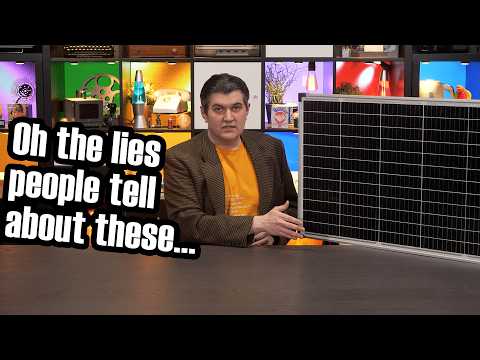
Key Takeaways
- •Technology Connections' video 'You are being misled about renewable energy technology' makes a blunt economic case that solar power has already won the cost battle against fossil fuels — most people just haven't been told.
- •The channel breaks down solar power economics with cost comparisons showing that once panels are installed, the fuel is free forever, and the long-term numbers aren't even close.
- •Misconceptions about land use, material scarcity, and infrastructure keep public opinion murkier than the data warrants, and the video isn't shy about saying so.
Why Petroleum Is Losing an Economic Argument It Used to Own
Here is the part nobody frames clearly enough. Burning fuel isn't just an environmental problem. It's a financial structure problem. Every time a petroleum-powered machine runs, the fuel is gone. You don't get it back. You go buy more. That's not a quirk of the system — it's the entire business model for everyone selling you the fuel, built around "something that destroys itself on contact with usefulness." The economics only look reasonable if you never compare them to anything else over a full timeline.
CapEx vs OpEx and the Solar Switchover
The framing that actually makes solar power economics click is the split between capital expenditure and operating expenditure. A solar installation costs real money upfront. The inverters, the racking, the panels, the installation labor — none of that is cheap. But once it's up, the fuel costs exactly nothing, because the fuel is sunlight. In You are being misled about renewable energy technology., Technology Connections walks through the comparison using a car as the anchor: the total lifetime gasoline cost for a conventional vehicle is staggering when you add it up, and that same money, redirected toward solar infrastructure, would cover the electricity for far longer than most people assume. The payback period on residential solar has dropped sharply as panel costs have collapsed, and utility-scale solar farms are now regularly underbidding gas plants on power purchase agreements. That's not advocacy — that's what the contracts say.
The Dramatic Math Behind Panel Cost Decline
Solar panels were genuinely expensive not long ago. That's a real historical fact, and critics of solar economics often anchor there and refuse to update. The cost per watt for photovoltaic panels has dropped by something in the range of 90 percent over the last fifteen years, which is one of the fastest cost declines ever recorded for an energy technology. Technology Connections points out that the panels themselves are also remarkably durable — a well-installed solar array can produce electricity for 25 to 30 years with minimal degradation. You're not buying a consumable. You're buying infrastructure, in the same category as the roof over the panels, not the gasoline in the car beneath them.
Our Analysis: Technology Connections makes a solid economic case for renewables, but buries the most actionable point. Solar is already the cheapest electricity humans have ever produced. That's not a future projection. That's now. Most people still don't know this.
What the video glosses over is the installation gap. The economics are settled. The hardware works. The bottleneck is permitting, grid interconnection queues, and a contractor shortage that nobody making YouTube videos about solar wants to talk about.
The battery recycling section is the strongest part. The "batteries are wasteful" argument was always bad faith, and he dismantles it cleanly.
There's a broader information failure worth naming here. The cost collapse in solar happened fast enough that even well-informed people are operating on data that's five to ten years out of date. The public mental model of solar as expensive, niche, and subsidy-dependent was accurate once. It just hasn't been accurate for a while. That gap between what's true and what people think is true is exactly the kind of thing a video like this is positioned to close — and why the framing of "you are being misled" lands harder than a straightforward explainer would. The misleading isn't always active. Sometimes it's just inertia. The old story stuck around after the facts changed, and nobody with a financial interest in fossil fuels rushed to correct it. That's the structural problem underneath the economic one, and it's what makes content like this genuinely useful rather than just editorially satisfying.
Frequently Asked Questions
How much cheaper is solar power actually compared to fossil fuels on a long-term, levelized-cost basis?
What happens to solar panel economics when you factor in the cost of battery storage?
Is the 90% drop in solar panel costs over 15 years a real figure, or is it cherry-picked?
Why don't more people know that solar is now cheaper than fossil fuels if the data is so clear?
Does solar energy require too much land to realistically replace fossil fuels?
Based on viewer questions and search trends. These answers reflect our editorial analysis. We may be wrong.
Source: Based on a video by Technology Connections — Watch original video
This article was created by NoTime2Watch's editorial team using AI-assisted research. All content includes substantial original analysis and is reviewed for accuracy before publication.