Runway Pavement Engineering Design: A Deep Dive
Key Takeaways
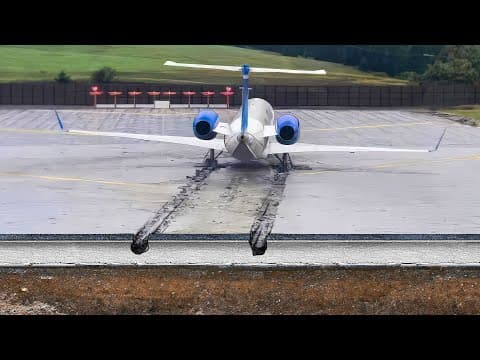
- •Several aircraft overran runways in September 2025, and the safety systems worked exactly as designed — no fatalities, just a lot of crushed foam and news coverage.
- •Practical Engineering's video 'The Hidden Engineering of Runways' uses these incidents as a jumping-off point to explain why runway pavement engineering is far more complex than a long strip of tarmac.
- •Modern aircraft top a million pounds and hit 180 mph on the ground.
The Hidden Complexity of Runway Pavement Engineering Design
A runway looks like a road. It is not a road. The engineering difference between the two is roughly the same as the difference between a garden shed and a suspension bridge.
In The Hidden Engineering of Runways, Practical Engineering breaks down exactly what's going on beneath that flat grey surface — and it turns out runway pavement engineering design involves more layers, more load calculations, and more materials science than most people ever consider while waiting for their gate.
Why Runways Are Built Like Multi-Layer Cakes
The pavement system under a runway isn't one material — it's a stack of deliberately chosen layers, each doing a specific job.
From the top down, you've got the wearing surface, then base courses, subbases, drainage layers, and finally an engineered subgrade at the bottom. Every layer exists to pass load downward and spread it outward, so the ground beneath doesn't fail under something the weight of a loaded A380.
Load-Bearing Requirements: From Highway to Runway
Highways are built to handle around 80,000 pounds. That sounds like a lot until you're talking about an aircraft that weighs over a million pounds sitting on a relatively small number of wheels.
The load concentration is the real problem. A runway pavement system has to distribute that weight fast, repeatedly, without deforming — then do it again for the next departure.
Base Courses, Subbases, and Drainage Layers Explained
The base course sits directly under the surface and handles the bulk of load distribution, typically made from compacted aggregate or stabilized material.
Below that, the subbase acts as a transition layer and — critically — helps manage water. Poor drainage is a structural failure waiting to happen, which is why this part of runway pavement engineering gets serious attention.
Our Analysis: Practical Engineering nails the layered pavement breakdown — most people genuinely have no idea runways are basically load-distributing wedding cakes sitting on engineered subgrades. The EMAS explainer is where it earns its keep, because that material rarely gets serious treatment outside aviation circles.
This fits the broader DIY trend of infrastructure literacy — people want to understand the systems around them, not just the ones they build.
The forward-looking piece nobody's talking about: as electric aircraft change weight and load profiles, runway structural specs will need rethinking from the subbase up.
There's also a maintenance angle that deserves more attention. Runway pavement isn't just an upfront engineering challenge — it degrades under repeated load cycles in ways that are structurally different from road wear. The freeze-thaw problem alone is significant at northern airports, where subbase moisture management isn't a nice-to-have but a survival requirement for the pavement system. A runway that looks fine on the surface can be compromised underneath in ways that aren't visible until something fails.
And the certification side is worth flagging. The FAA's pavement design standards for commercial airports are exhaustive, but they're built around current aircraft weight classes and gear configurations. The industry assumption has long been that new aircraft get heavier over time — but that's not a guaranteed trajectory anymore. If regional electric aircraft come in significantly lighter with different wheel loading geometry, the engineering conversation flips. Lighter isn't automatically better for pavement design; it changes the stress distribution math in ways that haven't been fully stress-tested against existing infrastructure specs.
Most infrastructure content stops at 'here's how it works.' The better question — and the one this video gestures toward without quite landing — is who decides when a runway is no longer adequate, and what that retrofit process actually looks like operationally. That's the conversation the September 2025 overruns should probably be starting.
Frequently Asked Questions
What is the FAA method of pavement design for airport runways?
Why does runway pavement engineering design need so many layers when roads handle heavy trucks just fine?
How do Engineered Materials Arresting Systems (EMAS) actually stop a plane, and are they reliable?
Why are some runways concrete and others asphalt — does the material actually matter for safety?
How do runways prevent hydroplaning, and why does it matter more for aircraft than cars?
Based on viewer questions and search trends. These answers reflect our editorial analysis. We may be wrong.
Source: Based on a video by Practical Engineering — Watch original video
This article was created by NoTime2Watch's editorial team using AI-assisted research. All content includes substantial original analysis and is reviewed for accuracy before publication.