Log Cabin Construction from Natural Materials: Forest Build
Key Takeaways
- •The entire cabin — walls, foundation, roof, and fireplace — is built using only materials gathered from the forest, with no modern fasteners or power tools.
- •Logs are notched and interlocked at the corners using traditional joinery, creating structural stability without nails or metal hardware.
- •A fully functional stone fireplace and chimney are integrated into the build, making the cabin viable for long-term habitation in a forest environment.
The Site, the Stone, and the Starting Point
Before a single log goes up, the builder spends a serious amount of time just preparing the ground. He surveys the forest, picks his site, and starts digging a trench by hand. Then comes the stone collection — not a few rocks, but enough to form a continuous, level foundation perimeter. Each stone is placed deliberately, fitted against its neighbours to create a stable base that will carry the weight of log walls, a roof, and a fireplace. This isn't the glamorous part of the build, and it takes longer than you'd expect. The fact that he gets the foundation right before touching a single wall log is probably why the whole thing doesn't lean sideways by the end.
The Notch That Holds Everything Together
Log cabin walls don't stay up because of gravity alone. The corners are where it all lives or dies. The builder notches each log — cutting a curved or angled recess near the end — so that when two logs cross at a corner, they lock into each other rather than just sitting on top. No nails. No metal brackets. Just wood shaped to grip wood. The walls rise course by course, each log measured and fitted before the next one goes on. It's slow, physical, repetitive work, and the precision required is easy to underestimate when you're watching it in fast-forward. For anyone interested in the craft side of hand-tool construction, this build — documented in Man Builds Amazing STONES and LOGS House In the Forest | Start to Finish @lesnoy_craft8607 on the Quantum Tech HD channel — is about as pure an example as you'll find online. The entire cabin — walls, foundation, roof, and fireplace — is built using only materials gathered from the forest, with no modern fasteners and minimal use of power tools.
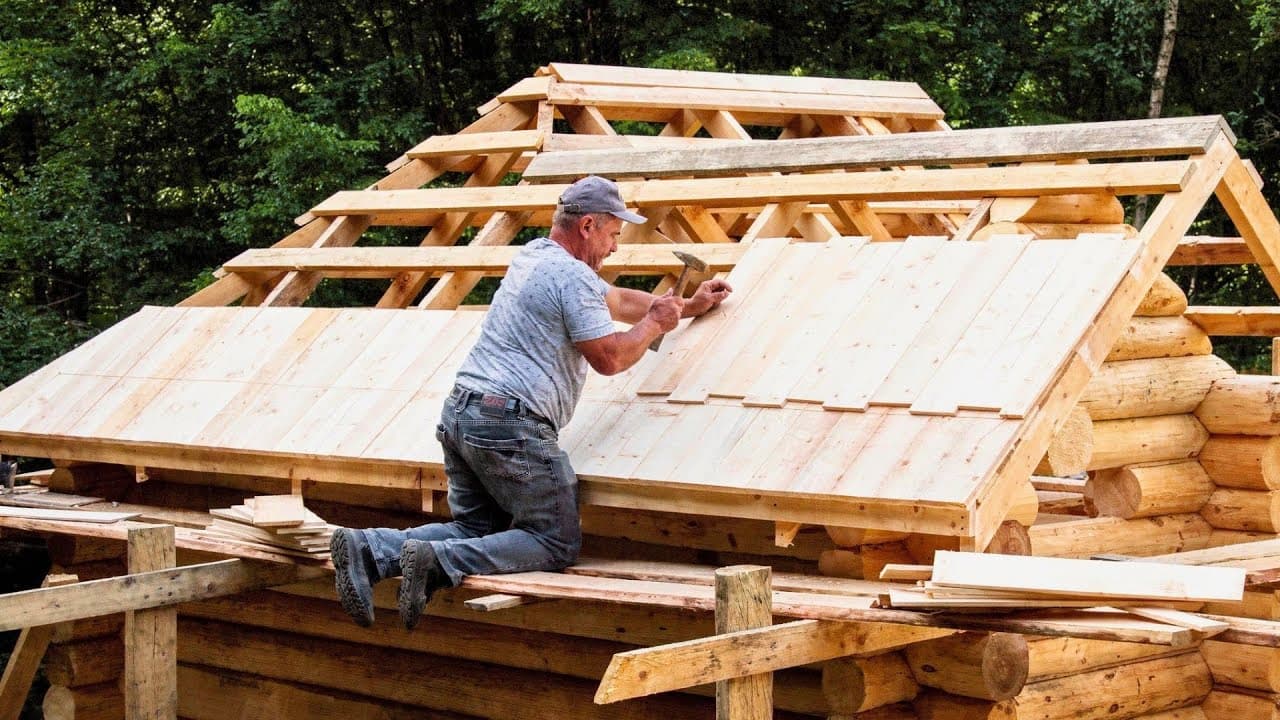
Our Analysis: The build is genuinely impressive, but the video leaves one practical question largely unanswered: waterproofing. The roof layering is shown but never fully explained — what's actually under those branches? Clay? Bark? Moss? Traditional log cabins used all of these, and the choice matters enormously for how long the structure survives its first wet season. Showing the process without naming the material is the one place where the inspirational framing works against the instructional value.
There's also something telling about the absence of any other person in the footage. Every log lifted, every stone placed, every notch cut — solo. That's either an editing choice or the literal reality of the build, and if it's the latter, the physical demand is being significantly undersold by the time-lapse format. The cabin looks peaceful. Getting it there clearly wasn't.
What the video does capture well — even if unintentionally — is how much modern construction has optimised away the problem-solving. Every material here required a decision: which tree, which stone, which angle on the notch. There was no spec sheet, no pre-cut lumber, no pre-mixed mortar. The builder had to read the environment and adapt continuously. That cognitive load rarely comes through in the finished product, but it's arguably the most transferable skill on display. Anyone can follow instructions. Improvising a functioning shelter from raw forest material is a different discipline entirely.
It's also worth noting what this kind of content does for the broader conversation around self-sufficiency. Quantum Tech HD has built a substantial audience around exactly this genre — long-form, process-driven builds that resist the usual social media pressure to cut to the highlight reel. The slow pace is the point. Viewers aren't just watching a cabin go up; they're absorbing a methodology. Whether or not anyone watching could actually replicate it is almost beside the point. The value is in demonstrating that the knowledge still exists, that it's transmittable, and that it doesn't require a hardware store or a YouTube sponsor to put a roof over your head — at least in principle.
Frequently Asked Questions
How do you start log cabin construction from natural materials without any modern equipment?
What is log notching and why does it matter for off-grid log cabin construction?
Can you build a stone foundation for a log cabin using only rocks collected from the surrounding forest?
How is a log cabin fireplace and chimney built using only natural materials?
Is it actually possible to build a fully weatherproof cabin in the forest using only hand tools like an axe, saw, and hammer?
Based on viewer questions and search trends. These answers reflect our editorial analysis. We may be wrong.
Source: Based on a video by Quantum Tech HD — Watch original video
This article was created by NoTime2Watch's editorial team using AI-assisted research. All content includes substantial original analysis and is reviewed for accuracy before publication.