DIY Go-Kart: How to Build a Go-Kart From Scratch
Key Takeaways
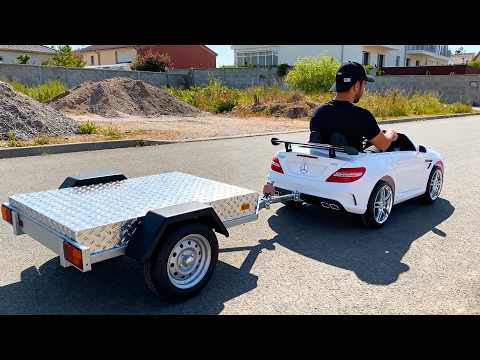
- •A builder known as Leandro from the channel Motorizando transforms a worn-out toy car into a fully functional, gas-powered go-kart in a build documented by Quantum Tech HD in the video 'Man Builds an AMAZING Go-Kart From an Old Toy Car | Start to Finish by @Motorizando'.
- •Starting with nothing but an old plastic toy car frame, Leandro fabricates a custom metal chassis, builds a steering linkage system from scratch, mounts a small gasoline engine with a chain drive sprocket, and installs a disc brake rotor with a hand-operated lever.
- •The finished go-kart gets a red paint job, an upholstered seat, and racing number plates before a child takes it for its first real drive.
How to Build a Go-Kart Frame From Scratch, Starting With Garbage
The first move Leandro makes is the one most people would never consider: he pulls apart an old red plastic toy car and treats the metal skeleton underneath as legitimate raw material. Everything plastic, decorative, or useless gets stripped away. What remains is a small but real metal frame, and that frame becomes the spine of the entire build. From there, he cuts and welds metal tubing directly onto it, extending the chassis forward and rearward to accommodate an engine, a seat, and a real human being. Grinding smooths the joints. The whole thing starts looking less like a toy and more like something with intent. It is the kind of move that makes you wonder how many usable structures are sitting in landfills right now.
Welding a Custom Steering System That Actually Works
Building a steering system from raw metal is where a lot of DIY go-kart builds quietly fall apart, and Leandro does not skip the hard parts. He fabricates a pivot point for the front axle using cut metal plates and tubing, then builds custom tie rods that connect to the original toy car's front wheels. Every component gets measured individually before it gets welded, because "a steering system that binds or pulls under load is not a steering system, it is a liability." If you are researching how to build a go-kart frame from scratch and hoping to reuse existing wheels, this section is the one to study closest. The fact that the original toy wheels are retained and made functional is either brilliant engineering or stubborn resourcefulness, and honestly it might be both.
Mounting the Engine and Running the Chain Drive
A small gasoline engine goes onto a custom-fabricated mount at the rear of the chassis. Leandro fits a sprocket to the engine's output shaft, attaches a larger sprocket to the rear axle, and runs a chain between them. The size difference between the two sprockets is what determines the final gear ratio, which controls how fast the kart accelerates versus its top speed. Chain tension and lateral alignment are not optional steps here — a misaligned chain either jumps the sprocket or destroys it, usually at the worst possible moment. This is the section of the build where precision stops being about aesthetics and starts being about whether the thing actually moves without injuring anyone. Anyone researching how to build a go-kart engine from scratch should note that Leandro does not fabricate the engine itself, he sources a small gasoline unit and engineers everything around it, which is the practical approach for a build like this. The same methodical thinking about drivetrain alignment applies whether you are building a go-kart or working through any project where a chain or belt transfers power between two shafts. Quantum Tech HD documented the full process in Man Builds an AMAZING Go-Kart From an Old Toy Car | Start to Finish by @Motorizando, and it is worth watching in full if this kind of fabrication is on your radar.
Our Analysis: The build is genuinely impressive, but the video glosses over the chain drive tension setup like it's a minor detail. It isn't. A poorly tensioned chain on a child's go-kart doesn't just slip, it fails at the worst possible moment.
The steering geometry also gets the glamour treatment without any real explanation of the Ackermann principle at work. That matters if you're trying to replicate this. Ackermann geometry determines how the inside and outside front wheels turn at different angles through a corner — get it wrong and you either scrub tires or, on a small kart with stiff wheels, introduce understeer that a child cannot correct. The build reuses the original toy car's front wheel geometry without addressing this, which may be fine at low speeds but is worth understanding before you scale the concept up.
What it nails is making metal fabrication feel approachable. A grinder and a welder, not a factory. That framing alone will get more parents into the garage than any tutorial ever written. There is also something worth noting about the sourcing philosophy here: Leandro does not try to build everything from raw stock. The engine is bought, not fabricated. That decision quietly teaches a more important lesson than any single welding technique — knowing which problems are worth solving yourself and which ones already have good solutions is half of what separates a finished project from an abandoned one.
Frequently Asked Questions
What do you need to make a homemade go-kart?
Is it cheaper to build a go-kart from scratch or just buy one?
How long does it typically take to build a go-kart from scratch?
Can you actually build a working go-kart steering system without buying specialized parts?
How does chain drive sprocket sizing affect go-kart speed and acceleration?
Based on viewer questions and search trends. These answers reflect our editorial analysis. We may be wrong.
Source: Based on a video by Quantum Tech HD — Watch original video
This article was created by NoTime2Watch's editorial team using AI-assisted research. All content includes substantial original analysis and is reviewed for accuracy before publication.