Engine Oil Pressure Warning Light: What It Really Means
Key Takeaways
- •That little red oil can symbol on your dashboard is not a suggestion — it's an engine-about-to-die notification.
- •In <a href="https://youtube.com/watch?v=mmCfOazZCNQ">Oil pressure is the only thing keeping an engine alive</a>, Technology Connections breaks down what happens inside an internal combustion engine when oil pressure drops, why the damage is so fast and so permanent, and what any driver can do right now to avoid a four-figure repair bill.
- •If you've ever wondered why mechanics treat an oil pressure warning light like a five-alarm emergency, this video has the mechanical receipts.
What the Engine Oil Pressure Warning Light Actually Means
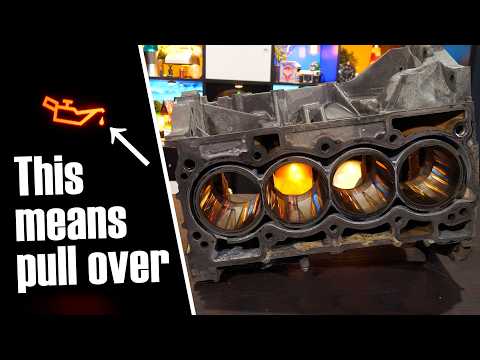
The red oil can icon on your dashboard is one of the most misunderstood warning lights in a car. A lot of drivers assume it means oil is low and they can limp home or to the nearest gas station. Technology Connections is pretty direct about this: it means your engine has critically low oil pressure right now, and the correct response is to pull over safely and shut the engine off. Not at the next exit. Not after this song ends. Now. The distinction between "low oil" and "low oil pressure" sounds technical, but the practical difference is whether your engine survives the next five minutes.
Why Low Oil Pressure Is an Immediate Mechanical Emergency
Inside a running engine, metal components are moving at speeds that would destroy them almost instantly without a protective layer between them. The oil pump pulls oil from the pan, pushes it through a filter, and distributes it under pressure to every bearing, journal, and surface that needs it. That pressurized oil forms what engineers call a fluid bearing — a thin film that keeps metal from ever touching metal directly. When pressure drops, that film collapses. Pistons, crankshaft journals, connecting rod bearings — they all start grinding against each other. The heat generated is intense, the wear is rapid, and the endpoint is engine seizure, which is exactly as bad as it sounds. It's almost elegant how quickly a running engine can destroy itself without that one thing keeping it alive.
Where Oil Pressure Actually Goes Missing
Pump failure is possible but relatively rare. The more common culprits behind a low engine oil pressure warning light are mundane and avoidable. Oil burns off gradually in older engines, or leaks out slowly through worn seals, until the level gets low enough that the pump starts pulling air instead of oil. There's also the human error category: a botched oil change where the drain plug wasn't torqued properly, or the filter wasn't seated right, can empty a crankcase faster than you'd expect. Technology Connections points out that the warning light appearing while braking or cornering — a symptom some drivers search specifically for — can indicate oil that's low enough to slosh away from the pickup tube under lateral load, which is the engine's way of telling you it's already on the edge.
What Oil Actually Does Inside an Engine
It helps to think of engine oil as less of a coating and more of a structural material. Under pressure, it doesn't just sit on surfaces — it fills the microscopic gaps between moving parts and supports load hydrostatically. The crankshaft, for instance, doesn't actually rest on its bearings in a running engine; it rides on a pressurized film of oil. The moment that pressure is gone, the shaft drops onto the bearing surface and the damage clock starts. This is also why oil viscosity matters so much. Ratings like 5W-30 describe how the oil flows at cold temperatures versus operating temperature — a 5W flows thin enough at startup to pressurize the system quickly, while the 30 rating keeps it viscous enough at heat to maintain that protective film. Using the wrong viscosity for your engine is a slower version of the same problem. You can watch the full breakdown in Oil pressure is the only thing keeping an engine alive from Technology Connections.
Our Analysis: Technology Connections gets the oil pressure light right where most car content gets it wrong. It's not a suggestion. It's already too late to keep driving. That framing alone makes this worth watching.
What's missing is the practical gap between knowing this and actually acting on it. Plenty of drivers freeze when a warning light appears, unsure if pulling over immediately will cause more chaos than the fault itself. A quick word on how to safely stop the car in traffic would have grounded all the theory in a real scenario.
Frequently Asked Questions
Can you drive with an oil pressure warning light on?
What does the engine oil pressure warning light actually mean — is it the same as low oil?
How much does it cost to fix low oil pressure damage?
Why does the oil pressure warning light come on only when braking or turning?
Does using the wrong oil viscosity actually damage your engine?
Based on viewer questions and search trends. These answers reflect our editorial analysis. We may be wrong.
Source: Based on a video by Technology Connections — Watch original video
This article was created by NoTime2Watch's editorial team using AI-assisted research. All content includes substantial original analysis and is reviewed for accuracy before publication.