Best Thermal Camera Accuracy Test: Project Farm Review
Key Takeaways
- •Project Farm's latest video, 'I Found the Best Thermal Camera!
- •One Clear Winner!', tested nine thermal cameras on accuracy, image quality, and durability to answer one question: does spending more actually get you a better tool?
- •The short answer is no — not reliably.
Thermal Camera Accuracy Testing Methodology for the Best Thermal Camera Accuracy Test
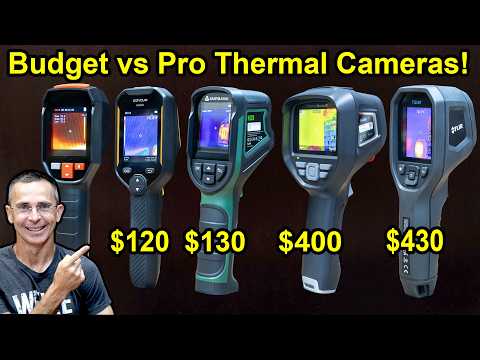
In I Found the Best Thermal Camera! One Clear Winner!, Project Farm tested nine thermal cameras ranging from $110 to over $400, covering models from HSFTOOLS, AMPBANK, TOPDON, MILESEEY, FOXWELL, GOYOJO, FLIR, Flagfront, and Teslong.
Each camera was run through a consistent series of temperature measurement challenges — ambient surfaces, high-heat steel, frozen objects, and reflective aluminum — to build a full picture of real-world accuracy rather than spec-sheet performance.
Ambient and High Temperature Measurement Tests
The baseline test measured a concrete slab sitting at 64.9°F. From there, cameras were pointed at steel heated to 440.2°F to stress-test their upper range.
The Flagfront nailed the concrete reading almost exactly. On the high-temp steel test, the MILESEEY and AMPBANK H128 came in close to the actual figure, while other models drifted noticeably off.
Cold Object and Reflective Surface Accuracy
A frozen steel block at 14°F separated the precise from the approximate — the HSFTOOLS HF96, AMPBANK H128, and FLIR all performed well here.
The shiny aluminum wheel test at 23.1°F, run with adjusted emissivity settings, is where things got interesting: Teslong and TOPDON posted the strongest numbers, while the Thermal Master — at $399 — struggled to get it right. That's a bad look for a nearly $400 tool.
Best Thermal Cameras by Price Point
Across all test categories combined, three cameras stood out for different reasons, and only one of them is expensive.
HSFTOOLS HF96: Best Value Overall
The HF96 ranked highest when you stack accuracy, display quality, and boot-up speed against its price. It also tied for the fastest boot time alongside the AMPBANK H128, which matters more than people expect when you're mid-job and just need a quick reading.
HSFTOOLS F2W: Premium Image Resolution
If image clarity is your priority, the F2W is the one. Its color palette is wider than anything else tested, giving you far more detail in temperature gradients across a surface.
It costs more — and unlike some of the pricier cameras here, it actually earns it. Think of it as the thermal camera you buy when the job genuinely requires seeing exactly where a problem starts and stops.
Flagfront: Budget Accuracy Leader
At $130, the Flagfront posted the most accurate ambient temperature reading in the entire test. That's the kind of result that makes the $399 Thermal Master look like a bad joke.
It doesn't win on image quality or features, but if raw temperature accuracy is what you need and you'd rather not spend big, the Flagfront is hard to argue against.
Beyond Temperature: Practical Thermal Camera Applications
A thermal camera isn't just a thermometer with a screen — the testing highlighted a few use cases that are genuinely useful around the house or in a shop.
Night Vision Capability
Thermal cameras don't need visible light to work, which makes them effective for checking equipment or spaces in complete darkness. Useful for anyone doing electrical or HVAC checks in crawlspaces or at night.
Leak Detection and Electrical Diagnostics
The cameras were used to spot hot circuit breakers, identify engine hotspots, and find wet patches behind drywall — the kind of hidden damage that looks like nothing until it becomes expensive.
Wet drywall holds temperature differently than dry drywall, and a thermal camera picks that up instantly. Same logic applies to finding where a roof or pipe is leaking. This kind of methodical, instrument-based diagnosis isn't far off from how engineers approach problems systematically.
Our Analysis: Project Farm got the core right — the HF96 wins on value, and the F2W is for people who actually need that image resolution, not just want bragging rights. The surprise is how badly price predicts accuracy; some budget cams outshot pricier ones on temp readings, which should embarrass a few brands.
This fits the broader DIY shift toward thermal imaging as a standard tool, not a specialty toy — leak detection and night vision are genuinely useful, not gimmicks.
As sensors get cheaper, expect the mid-range to eat the premium tier alive within two years.
Frequently Asked Questions
Which thermal camera is best for the money right now?
How accurate are budget thermal cameras compared to expensive ones in independent testing?
Is FLIR still worth buying when cheaper thermal cameras perform just as well?
Does thermal camera boot time actually matter for practical use?
Can a cheap thermal camera really find water leaks or electrical problems behind walls?
Based on viewer questions and search trends. These answers reflect our editorial analysis. We may be wrong.
Source: Based on a video by Project Farm — Watch original video
This article was created by NoTime2Watch's editorial team using AI-assisted research. All content includes substantial original analysis and is reviewed for accuracy before publication.