7Asian's off-grid floating home self-sufficient living
Key Takeaways
- •A builder known as 7Asian left modern civilization to construct a completely self-sufficient floating village on a remote lake using only natural materials and hand tools.
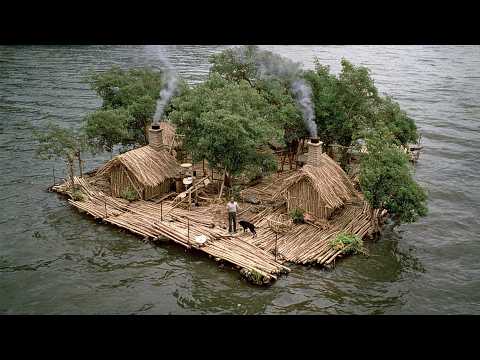
- •Over the course of 12 months, documented by Quantum Tech HD in 'He Left Civilization to Build a Floating Self-Sustaining Island,' he built a bamboo raft platform, a fish farm, rice paddies, vertical gardens, and a beehive — sourcing nearly everything from the surrounding wilderness.
- •The project is less a survival stunt and more a working proof that ancient building methods and resourceful engineering can produce a genuinely livable, productive home on water.
Bamboo Does Everything Here, and That Is Not an Exaggeration
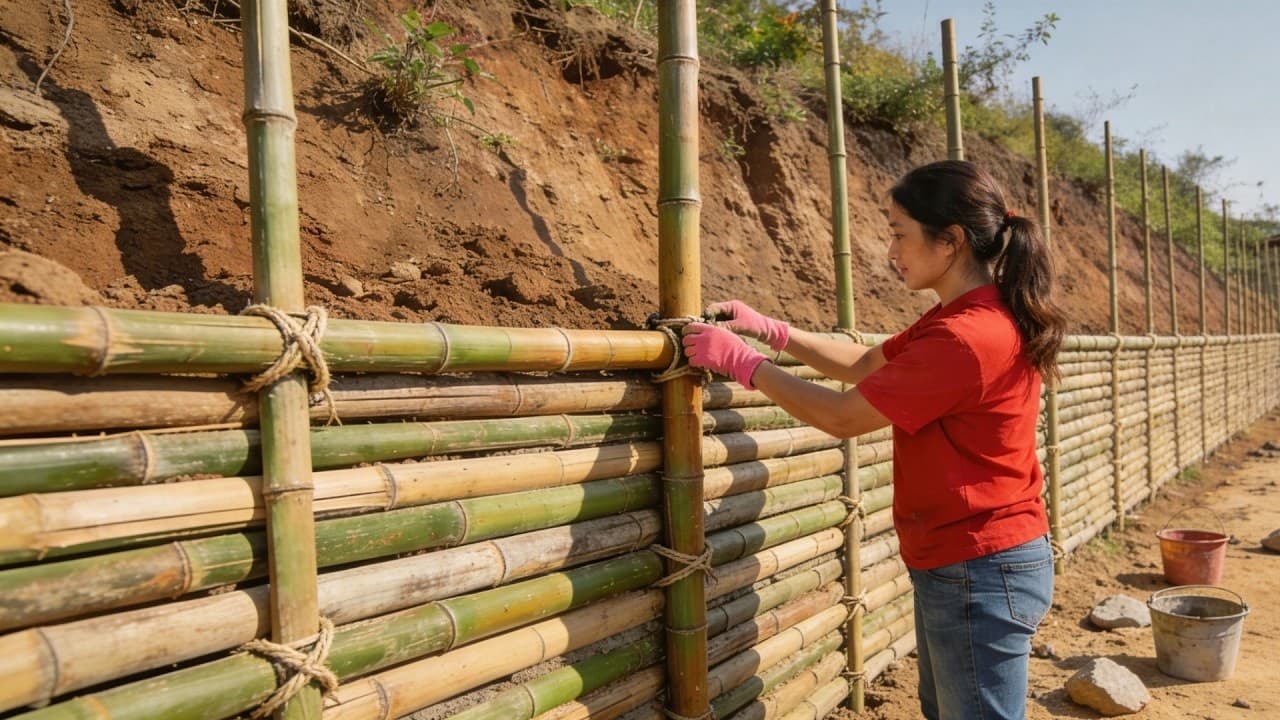
The entire floating platform starts with bamboo. Not as a fallback material because nothing else was available — as a deliberate first choice. 7Asian selected it for buoyancy, structural strength, and sheer abundance near the lake. The foundation, the wall frames, the roof supports — all bamboo, all joined with traditional joinery techniques that use notching and natural fiber cordage instead of screws or brackets. The most clever detail is the flooring method: hollow bamboo culms are split and unrolled flat, producing wide, smooth planks from a round tube. It sounds like a trick, and it kind of is, except it works perfectly and has probably been done in Southeast Asia for centuries without anyone writing a Medium post about it.
No Nails, No Problem — The Joinery Logic
Traditional joinery gets dismissed in modern DIY circles as a heritage curiosity, something you do when you want to cosplay a medieval carpenter. What this build makes clear is that it is a load-bearing engineering decision. Without access to hardware stores, the structural integrity of every joint depends entirely on the geometry of the connection and the material holding it together. Fire-hardened wood features throughout the construction as well, a process that densifies the outer surface of timber to resist moisture and rot. If you've ever wondered how structures lasted centuries before galvanized fasteners existed, this project is essentially a live demonstration. For anyone interested in how material properties drive construction choices, Quantum Tech HD documents the full progression in He Left Civilization to Build a Floating Self-Sustaining Island | by @7Asian — and watching the joinery sequences alone is worth the runtime.
Our Analysis: The build is genuinely impressive, but the video glosses over the single biggest long-term threat to this entire project: bamboo rot. Submerged bamboo in freshwater degrades faster than most people expect, and fire-hardening only gets you so far. The foundation timeline matters more than anything else shown here.
The food systems are where this gets interesting. A floating fish farm feeding a rice paddy feeding a vegetable garden is a closed-loop worth studying seriously. That part the creator gets right, and it holds up to scrutiny.
Missing entirely is any honest accounting of labor hours. Without that, this is inspiration, not instruction.
There is also a broader conversation this video is quietly participating in without acknowledging it. Off-grid and self-sufficiency content has exploded online over the last several years, and the overwhelming majority of it is aesthetic rather than functional — beautifully shot footage of someone chopping wood or lighting a fire that communicates a vibe rather than a method. What separates this project from that genre is that the systems actually interlock. The fish produce waste that fertilizes the rice, the rice paddies filter the water, the bees service the gardens. That is not content strategy. That is permaculture logic applied under real constraints, and it deserves to be named as such.
What the video also never confronts is the question of replicability. 7Asian operates in a specific geographic and ecological context — the bamboo density, the lake conditions, the climate — that cannot simply be transplanted elsewhere. A builder attempting something similar in a different watershed would face entirely different material availability, water chemistry, and seasonal pressures. The build is instructive as a framework, not as a blueprint, and that distinction matters if anyone watching is seriously considering a comparable project rather than just enjoying the footage.
Finally, the absence of failure documentation is worth flagging. Twelve months of construction almost certainly produced structural setbacks, material failures, and design revisions that never made the final cut. That editing choice is understandable from a watchability standpoint, but it quietly distorts the difficulty curve for anyone treating this as a how-to. The finished island looks inevitable. It almost certainly was not.
Frequently Asked Questions
How do you build an off-grid floating home that is actually self-sufficient for long-term living?
What bamboo techniques are actually used to build a floating raft platform strong enough to live on?
Does traditional joinery without nails or screws actually hold up structurally, or is it just a novelty?
Can you actually grow rice and keep bees on a floating structure far from land?
What is the most practical off-grid food production system to build on water without modern equipment?
Based on viewer questions and search trends. These answers reflect our editorial analysis. We may be wrong.
Source: Based on a video by Quantum Tech HD — Watch original video
This article was created by NoTime2Watch's editorial team using AI-assisted research. All content includes substantial original analysis and is reviewed for accuracy before publication.