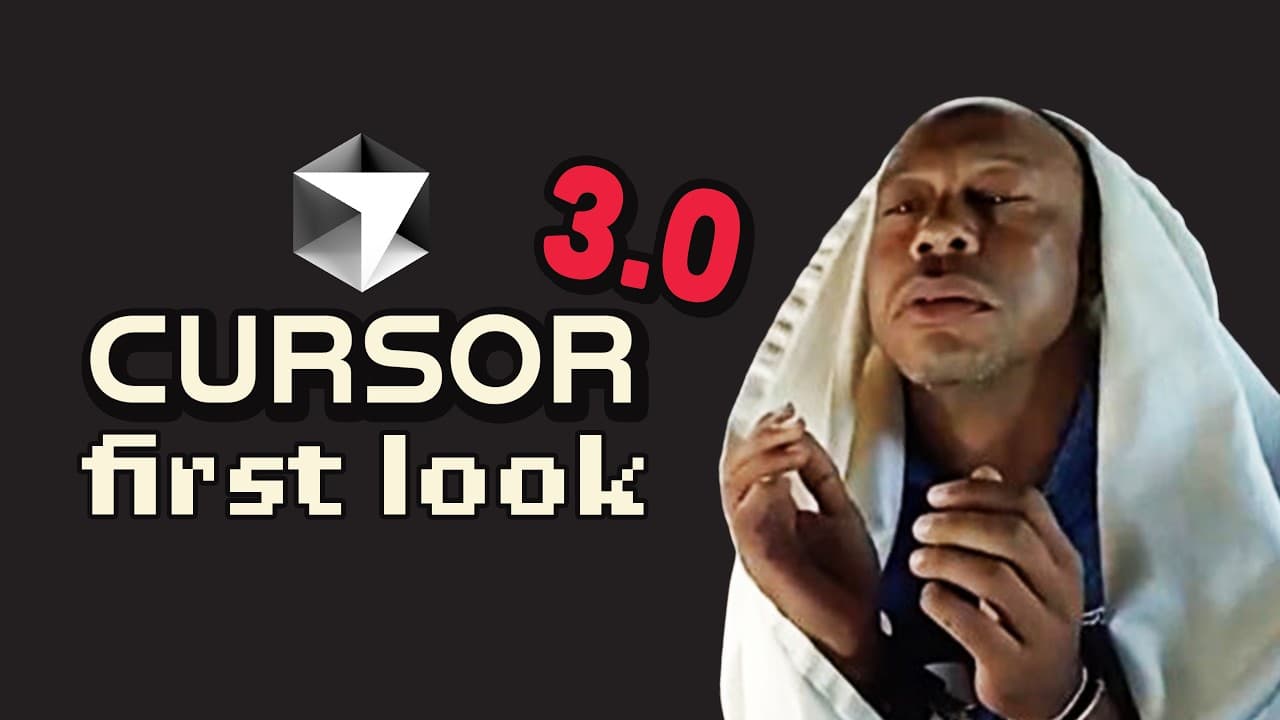
Cursor 3.0 AI Agent Orchestration: Rewritten in Rust
Key Takeaways
- •Cursor 3.0 is a full Rust rewrite — no longer a VS Code fork — built around orchestrating multiple AI agents simultaneously rather than assisting with manual coding.
- •Composer 2, Cursor's flagship new model, was quietly built on Moonshot's Kimmy K2, not developed in-house as initially implied — Cursor later apologized and released a technical report.
- •The new interface lets developers run parallel agents handling architecture, UI, and remote server tasks at once, with a dot-based status system to flag when human input is needed.
From VS Code Fork to Something Else Entirely
Cursor started as a VS Code fork with smarter autocomplete. That was version 1.0. Version 2.0 added a chat interface that could touch the terminal and build features. Cursor 3.0 is a different product category. The application has been completely rewritten in Rust and TypeScript, and the VS Code editor is now just the substrate underneath a new interface designed for something closer to project management than programming. In Cursor ditches VS Code, but not everyone is happy..., Fireship frames the pitch as developers becoming 'air traffic controllers' — directing AI agents rather than writing code themselves.
The underlying VS Code editor is still there, but it's no longer the point. That's a significant philosophical shift for a tool that built its reputation on making coding faster, not replacing it.
The Composer 2 Situation
What Cursor Said vs. What Was Actually True
When Cursor announced Composer 2, the framing was confident. Benchmarks showed it outperforming Claude Opus on intelligence, speed, and cost. The implication was that Cursor had built something genuinely new. Then the AI community started poking around and found that Composer 2 is built on Moonshot's Kimmy K2 model. Cursor apologized for the lack of transparency and released a technical report explaining what enhancements they'd made on top of the base model.
The apology came, the report came, and technically the model may still be good — but the sequence of events is exactly the kind of thing that makes developers distrust AI tool companies, and Cursor handed that distrust to critics on a plate.
Our Analysis: The Composer 2 situation is the part of this story that deserves more scrutiny than it's getting. Cursor didn't just fail to mention the base model — they released benchmark comparisons designed to make Composer 2 look like an original creation. That's not an omission, it's a positioning choice. The technical report they released afterward may be accurate and detailed, but it arrived after the community caught them, not before. That ordering matters when you're asking developers to trust your tool with their entire codebase.
The Rust rewrite is the more interesting long-term signal. Abandoning a VS Code fork is a real commitment — it closes off a huge compatibility surface and forces Cursor to own every part of the experience. If the agent orchestration model lands, that bet pays off. If developers decide they'd rather have a familiar editor with good AI plugins, Cursor has made itself harder to fall back on.
There's also a bigger question lurking underneath all of this: what is the actual value proposition of an AI dev tool company in 2025? When the models themselves are commodities — or close enough that you can quietly license one from Moonshot and benchmark it against Anthropic — the differentiation has to come from workflow, trust, and integration depth. Cursor's agent orchestration vision is a credible answer to that question. But trust is exactly what took a hit with the Composer 2 rollout. You can have the right product strategy and still fumble the execution badly enough that it colors how developers interpret every future announcement. That's the real risk Cursor is managing right now — not whether the Rust rewrite works, but whether the community gives them enough benefit of the doubt to find out.
Frequently Asked Questions
What is Cursor 3.0 AI agent orchestration and how is it different from a regular code editor?
Why did Cursor ditch its VS Code fork for the 3.0 rewrite?
What is Composer 2 actually built on, and does the Moonshot Kimmy K2 connection matter?
Can you still use Cursor 3.0 as a normal AI development environment without using the agent workflow?
How does Cursor's parallel AI agent workflow actually function in practice?
Based on viewer questions and search trends. These answers reflect our editorial analysis. We may be wrong.
Source: Based on a video by Fireship — Watch original video
This article was created by NoTime2Watch's editorial team using AI-assisted research. All content includes substantial original analysis and is reviewed for accuracy before publication.