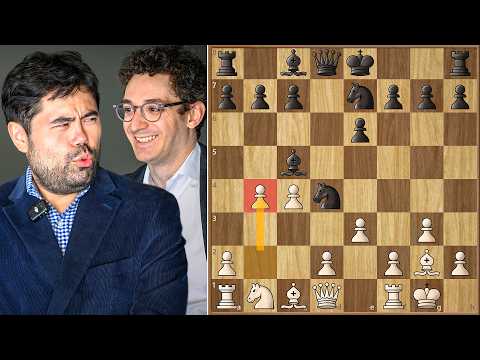
FIDE Candidates Tournament 2026 Caruana vs Nakamura
Key Takeaways
- •Nakamura's King to E7 in the endgame, instead of King to C7, was the decisive error that converted a drawable opposite-colored bishop ending into a loss against Caruana.
- •Caruana's pawn sacrifice with B4 in the opening came from deep pre-tournament preparation, forcing Nakamura into uncomfortable territory as early as move five.
- •Three of four first-round games in the 2026 FIDE Candidates Tournament ended decisively, signaling an unusually aggressive start to the competition.
Why Caruana and Nakamura Met in Round One
The FIDE Candidates Tournament 2026 operates under a pairing rule that mandates players from the same country face each other in the opening round. The logic is straightforward: get the countrymen out of the way early, before either player is in a desperate position where a convenient result might raise eyebrows. For American chess, that means Fabiano Caruana and Hikaru Nakamura, two of the strongest players in the world, had to settle things before the tournament even had time to breathe. It is a sensible rule that also happens to produce exactly the kind of high-stakes first-round game nobody expected to see until the final stretch.
The E3 Sidestep Nobody Saw Coming
Caruana opened with Knight to F3 and steered into an English Opening variation, and everything looked normal until it wasn't. The standard continuation in that structure is pawn to D3. Caruana played E3 instead, a less common choice that immediately yanked the game off any well-worn theoretical track. From there, he offered a pawn with B4, an early sacrifice backed by extensive preparation that signaled he had spent serious time on this specific matchup. Nakamura accepted the pawn, and the position became sharp and unfamiliar fast. As Agadmator breaks down in "My Win Would Be A Huge Boost for Chess" || Fabiano vs Hikaru || FIDE Candidates Tournament 2026, the move order might look subtle on paper, but throwing a prepared opponent into unknown waters in round one of the Candidates is not subtle at all.
Nakamura Played It Safe and It Almost Worked
Faced with several lines that branched into wild, tactical chaos, Nakamura repeatedly chose the engine-recommended, lower-risk continuation rather than grabbing material or entering complications. In the first round of a long, grueling tournament, that kind of caution is not cowardice, it is resource management. Nakamura was essentially saying he would rather play a slightly worse position he understood than a theoretically equal one where Caruana clearly knew every branch by heart. The problem is that Caruana kept improving his position anyway, and by the time the middlegame was fully underway, the cautious approach had not actually bought much safety.
The Rook on F7 That Ended the Argument
Caruana had been methodically dismantling Nakamura's kingside for several moves, activating his rook, pushing his queen into aggressive squares, and chipping away at the F7 pawn. When the moment came, he played Rook takes F7, a sacrifice that gave up the rook for a pawn in the immediate sense but triggered a forced sequence that left Nakamura's king exposed and his pieces overwhelmed. The queen did not get captured right away, which matters because the value of the move was never about one clean exchange. It was about coordination, momentum, and the fact that Nakamura's position simply had no good answer once the sequence started. Opposite-colored bishops were still on the board, which in most positions hints at a draw, but Caruana's active pieces made that observation irrelevant.
One King Move, One Lost Game
The endgame is where the game became a lesson in precision. Nakamura was down a pawn but the opposite-colored bishops still offered a realistic path to a draw, if he found the right defense. After Caruana pushed his F6 pawn, Nakamura needed King to C7 to hold the position and keep Caruana's king out. He played King to E7 instead, a move that looks logical and is completely wrong. That one decision allowed Caruana to penetrate with his king, and from there the position was beyond saving. Nakamura resigned shortly after, and the difference between a hard-fought draw and a full-point loss came down to a single square on a board where both players had been navigating correctly for most of the game.
What Three Decisive Games in Round One Actually Means
The Candidates Tournament opened with three decisive results out of four games, which is not how these events typically start. Players usually spend the early rounds feeling each other out, trading half-points, preserving energy. Three decisive results in round one suggests either exceptional preparation across the board or a competitive field willing to take risks earlier than usual. For Caruana specifically, the win pushed his live rating close to 2800, while Nakamura's dropped just below that threshold. Rating implications aside, winning the American derby in the first round of the Candidates with a theoretical novelty, a pawn sacrifice, and a rook sacrifice is the kind of statement that the rest of the field will have noticed before the next round even begins.
Our Analysis: Caruana came into round one with a knife. The E3 preparation wasn't a surprise for surprise's sake. It was a message that Fabiano is building toward a World Championship run with purpose, and Hikaru felt it immediately.
Nakamura's instinct to dodge the sharpest lines kept him alive longer, but it also handed Fabi the tempo to slowly dismantle him. That's a dangerous pattern for Hikaru across a full candidates cycle.
Three decisive games in round one sets a tone. This field is not here to draw. Watch the rating swing between these two Americans. That rivalry is going to define the whole tournament.
What makes Caruana's win particularly significant is the psychological dimension. Beating your most prominent national rival with a home-cooked preparation in the very first game sends a message to every other player in the field simultaneously. It signals depth of preparation, willingness to spend resources early, and confidence that more ammunition is waiting. In a long tournament where mental attrition matters as much as chess skill, landing that kind of blow in round one is a compounding advantage. The rest of the field now has to factor in that Caruana arrived ready to fight from move one, and that changes how they approach their own preparation for when they eventually face him.
Frequently Asked Questions
Why did Caruana and Nakamura play each other in Round One of the FIDE Candidates Tournament 2026?
What was the key mistake that cost Nakamura a draw in the endgame against Caruana?
How did Caruana's Rook F7 sacrifice decide the Caruana vs Nakamura Candidates 2026 game?
Did Nakamura's cautious play against Caruana's E3 opening actually backfire?
How did the Caruana vs Nakamura result affect both players' live ratings heading into the 2026 Candidates?
Based on viewer questions and search trends. These answers reflect our editorial analysis. We may be wrong.
Source: Based on a video by Agadmator — Watch original video
This article was created by NoTime2Watch's editorial team using AI-assisted research. All content includes substantial original analysis and is reviewed for accuracy before publication.