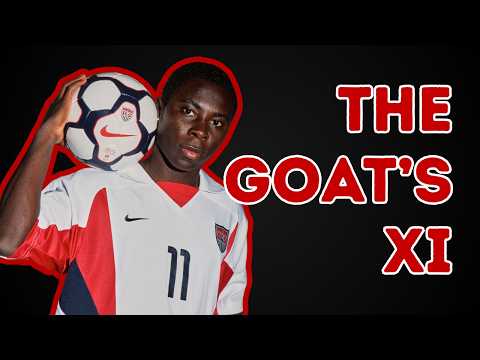
Adu's Legendary XI: Best Players Who Played With Freddy Adu
Key Takeaways
- •The XI is built on peak-form logic — players are chosen for career excellence, not what they did while actually playing alongside Adu.
- •Benfica dominates the squad: David Luiz, Luisão, Maxi Pereira, Fabio Coentrão, Rui Costa, and Oscar Cardozo all passed through the same dressing room as Adu.
- •Ángel Di María and Rui Costa in central midfield together is genuinely compelling — this team would not embarrass itself.
Freddy Adu's Legendary XI: The Best Players From His Career
Freddy Adu played for a lot of clubs. More than you probably remember, and more than he probably wanted. DC United, Benfica, Beşiktaş, Aris, Monaco, Notts County, Philadelphia Union, Bahia, Helsinki — the list reads like someone was alphabetically working through a football atlas. But here's the thing: the sheer volume of clubs means the pool of teammates is enormous, and HITC Sevens went digging to find the best of them in The Best XI Who Played With Freddy Adu.
Selection Criteria: Peak Performance Over Concurrent Form
The rules matter here, because without them this exercise falls apart immediately. Players are selected for their overall career peak, not whatever form they happened to be in when Adu was around. That's a sensible call. Asking 'what was David Luiz like during his three months at Benfica alongside Adu' is far less interesting than acknowledging Luiz became one of the most talked-about defenders in world football. The methodology does the heavy lifting so the team can actually be worth discussing. Related: Fact Check: Dana White Lying About Son Birth Story?
Defensive Powerhouse: Tim Howard, Maxi Pereira, and the Brazilian Center-Back Pairing
Tim Howard: American Goalkeeper Excellence
Tim Howard gets the gloves. His career touched Manchester United and Everton at club level, and his performances for the US national team — particularly at the World Cup — cemented his status as the most prominent American goalkeeper of his generation. He and Adu both flew the flag for US soccer, which gives this selection a certain narrative tidiness alongside the footballing logic.
Right-Back, Then the Wall
Maxi Pereira slots in at right-back. Four Portuguese Premier League titles and an extensive international career with Uruguay — Pereira was exactly the kind of tenacious, two-way fullback that makes coaches sleep soundly. Beside him, David Luiz and Luisão form what is arguably the most Benfica-flavoured center-back pairing possible. Luiz went on to command transfer fees that made people argue on the internet for years; Luisão simply stayed at Benfica and won everything going, becoming a genuine club legend. The fact that both of them were at Benfica during Adu's time there says more about the quality of that squad than it does about Adu's influence — but it makes for a very solid back four. Related: Arman Tsarukyan vs Ilia Topuria fight announced!
The Benfica Connection: David Luiz and Luisão
Fabio Coentrão completes the defensive line at left-back. He played limited minutes alongside Adu, but his subsequent move to Real Madrid confirmed the talent was real. The entire back four, bar Howard, traces directly back to Adu's Benfica years — which is either a coincidence or evidence that Benfica were quietly building something serious while Adu was trying to find his footing in Europe. Probably the latter, if we're being honest.
The Midfield Engine: Di María, Rui Costa, and Defensive Anchor Katsouranis
Creative Forces in Central Midfield
Costas Katsouranis anchors the midfield. Euro 2004 winner, Benfica stalwart, the kind of player whose name you forget until you remember exactly how important he was to any team he played for. He is the foundation that allows the players ahead of him to do something genuinely exciting. And what sits ahead of him is genuinely exciting. Ángel Di María in central midfield — a role he successfully occupied under Carlo Ancelotti at Real Madrid, picking up Champions League medals along the way — alongside Rui Costa, one of the more gifted playmakers Portuguese football has ever produced. That combination would cause problems for almost any opponent you care to name. Rui Costa in particular feels like a selection that rewards anyone who actually paid attention to football in the late nineties and early 2000s. Related: Andreas Seidl: Audi F1 2026 Project Leader Confirmed
Wing Wizards: Joe Cole and Clint Dempsey
Joe Cole on one wing, Clint Dempsey on the other. Cole's selection feels like a small act of justice — a player whose technical ability never quite translated into the sustained recognition it deserved at club level, despite everyone who watched him knowing what he was capable of. Dempsey brings something different: genuine goal threat, versatility, and a career that straddled the Premier League and US soccer in a way very few players have managed. Cole and Dempsey as wide men gives this team flair without sacrificing work rate, which is exactly what Di María and Rui Costa need behind them. It's a fun combination to think about, and thinking about it is probably more enjoyable than watching some of Adu's actual games were.
Striking Power: Oscar Cardozo's Prolific Goal-Scoring Record
Oscar Cardozo leads the line. His goal record at Benfica was the kind that makes strikers from bigger leagues quietly uncomfortable — consistent, powerful, and built over a long enough period to confirm it wasn't a fluke. He is the logical pick for any XI assembled from the Benfica years, and given how heavily this team draws from that period, his inclusion feels inevitable. A physically imposing striker who could finish — put him in front of Di María and Rui Costa and the chances would arrive regularly.
Squad Depth and Honorable Mentions
The 23-man squad extends the quality further. Landon Donovan and Nuno Gomes appear among the honorable mentions, which tells you something about how wide the net needed to be cast. Donovan defined a generation of American football; Gomes was a reliable presence across a long career in Portugal and with the national team. Neither made the first XI, which is either a reflection of the overall quality available or a sign that the selection criteria produced a team slightly more European than Adu's actual career trajectory might suggest. Either way, the depth is real — this is not a squad held together by nostalgia alone.
Our Analysis
The most interesting thing about this exercise isn't the players themselves — it's what the list reveals about where Adu actually was during the most talent-dense parts of his career. The Benfica years dominate. Six of the starting eleven connect directly back to that stint, which means Adu was surrounded by serious footballers at a serious club during what should have been his breakthrough period. That context matters. The conversation around his career tends to focus on what didn't happen, but this XI is a quiet reminder that the environment wasn't the problem. The talent was around him. The trajectory just didn't follow.
Di María and Rui Costa together in central midfield is the selection that sticks. It's the kind of combination that works on paper in a way that makes you want to immediately simulate the match, which is the hallmark of any decent hypothetical team exercise. Katsouranis as the anchor is the less glamorous but equally important call — without that defensive base, the whole thing becomes a possession carousel that concedes on the counter. The selection process clearly thought about balance, not just names.
Joe Cole's inclusion is the choice that most reflects a point of view rather than just a résumé. He's not the obvious pick over several players who could have taken that spot, but the argument for him — technical quality, creative output, a career that deserved more than it got — is a legitimate one. It's the kind of selection that makes a list feel like it was made by someone with actual opinions rather than a spreadsheet. Whether you agree with it probably depends on how much early-2000s Premier League football you watched, and how much of it involved wincing every time Cole picked up the ball and you knew something brilliant was about to be slightly wasted.
Frequently Asked Questions
What team did Freddy Adu play for?
How old was Freddy Adu when he debuted?
What were Freddy Adu's weaknesses as a player?
Who are the best players who played with Freddy Adu during his career?
Was Freddy Adu the youngest professional soccer player ever?
Based on viewer questions and search trends. These answers reflect our editorial analysis. We may be wrong.
Source: Based on a video by HITC Sevens — Watch original video
This article was created by NoTime2Watch's editorial team using AI-assisted research. All content includes substantial original analysis and is reviewed for accuracy before publication.